




If your laminate is lifting, peaking, gapping or feeling bouncy after fitting, it is almost always because it cannot expand and contract freely — usually due to a missing expansion gap or boards that were not acclimatised before fitting. It is rarely a faulty floor. At Seamless Floors in Bristol, we have lifted and refitted many laminate floors, and we know that a problem appearing soon after installation is usually a workmanship issue rather than something you should simply live with.
Peaking, lifting, gapping, cupping or bouncy: which do you have?
Laminate problems can look similar, but the correct diagnosis points to the right repair:
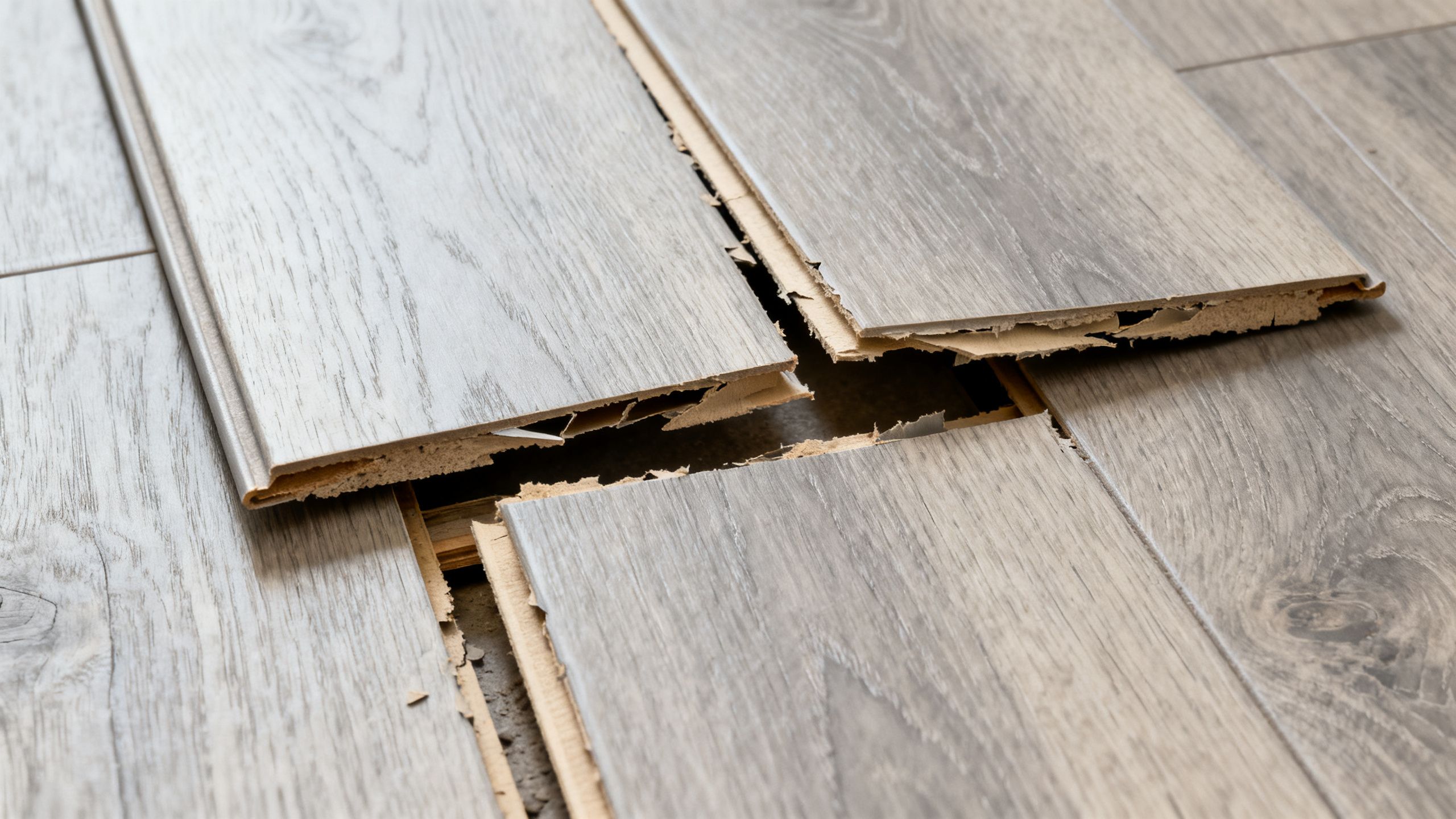
Peaking: plank edges or joints push upwards, creating raised ridges or an A-shaped seam. This is often caused by boards expanding into a wall, doorway or fixed trim.
Lifting: a wider section rises away from the subfloor. It may feel firm, or it may move when you walk over it.
Gapping: joints pull apart and visible lines appear between boards. This can follow poor acclimatisation, dry conditions, movement in the subfloor or an installation that was not locked together properly.
Cupping: the edges of a board rise while the centre dips. Moisture is the main suspect, particularly if the floor is exposed to damp underneath or repeated spills above.
Bouncy or spongy flooring: the floor moves underfoot, feels soft or gives slightly in one spot. A hollow or uneven subfloor, poor underlay or a damaged locking joint may be responsible.
A little movement is not the same as a floating floor working properly. Laminate should move within its planned expansion space, not buckle, separate or feel unstable. Our guide to common flooring mistakes in Bristol homes covers why rushed preparation causes problems later.
The quick press-test to find the cause
You can do a basic check before moving furniture or lifting boards. Press firmly on the raised or bouncy area, then watch what it does:
It springs straight back up: pressure is probably trapped in the floor. A missing or undersized expansion gap, or a skirting board pinning the laminate, is likely.
It stays flat for a moment, then rises again: moisture may be getting into the board or subfloor. Check for spills, leaks, damp walls and moisture underneath.
It feels hollow and makes a squeak: the subfloor may be uneven, loose or poorly prepared. The underlay may also be wrong for the surface.
This test is only a useful first indication. It cannot replace a moisture reading or lifting a small section to inspect the subfloor. Our subfloor preparation guide for Bristol homes explains what should be checked before flooring is fitted.
Expansion gaps: the number one cause after fitting
Laminate is a floating floor. It is not glued, screwed or nailed to the subfloor. As the room becomes warmer, cooler, more humid or drier, the boards expand and contract as a group.
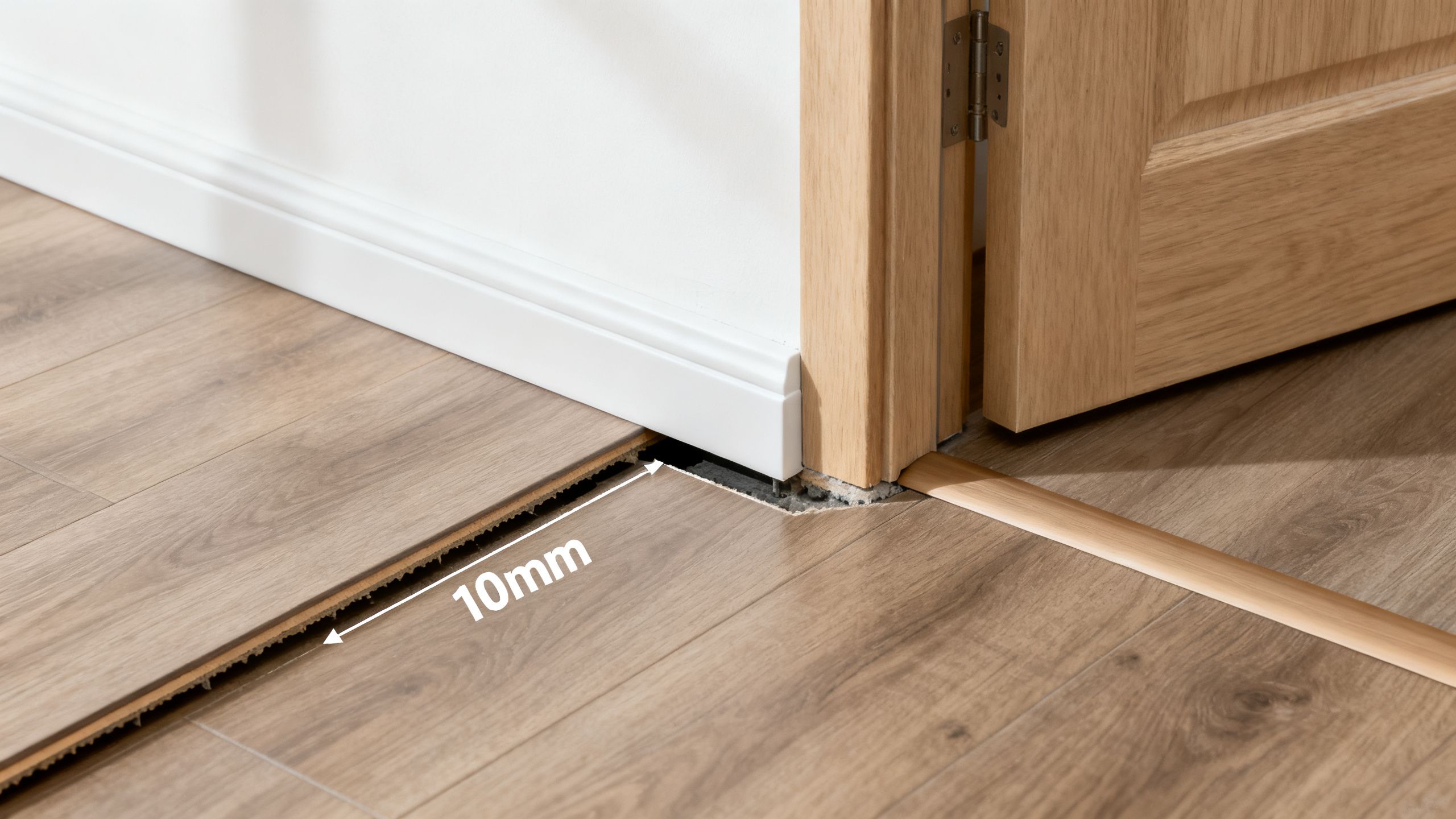
They need room to do that. For most laminate, the usual allowance is 8–10mm around every fixed edge, broadly matched to the board thickness and always checked against the manufacturer’s instructions.
That gap is needed at:
Walls and skirting boards
Door frames and architraves
Around radiator pipes and other pipes
The edge of cupboards and fixed units
Doorways between rooms, where an expansion joint may be required
Trims, scotia and beading should be fixed to the wall or subfloor — never through the laminate. If a skirting board or door lining pins the floor down, the boards have nowhere to move and can push upwards at the weakest joint.
As one example, Quick-Step’s installation guidance commonly specifies an 8–10mm expansion gap and expansion joints between rooms. Always follow the instructions for the exact product. Rigid LVT usually needs a smaller gap, often around 5mm, so laminate and LVT should not be fitted using the same assumptions.
A gap that is hidden by skirting is not a defect. A laminate floor that has been tightly wedged against the wall is.
Boards that were not acclimatised
Laminate boards need time to adjust to the temperature and humidity of the room where they will be fitted. They should normally be stored flat, in their unopened packaging, for 24–72 hours before installation. The manufacturer’s instructions take priority.
If boards are fitted straight from a cold warehouse, garage or delivery van, they may change size after installation. Once they warm up or absorb moisture from the room, the floor can swell, peak or lift. If conditions then become much drier, joints may pull apart.
Acclimatisation is not the same as leaving loose boards in a damp shed. The room should be enclosed, reasonably dry and at a normal living temperature. Packs should be supported flat rather than leaned against a wall.
Skipping this step is a common reason for a floor that looks fine on fitting day but starts lifting weeks later. It is also a fitting responsibility, not an acceptable shortcut. For more on selecting and installing floors, see our comparison of laminate and vinyl flooring for UK homes.
Other causes of laminate lifting and gapping
Expansion gaps and acclimatisation are the first checks, but they are not the only possible causes. A proper repair looks at the whole floor: moisture, underlay, subfloor, room conditions and anything fixed on top of the boards.
Moisture from above or below
Cause: Spills, leaking appliances, plumbing problems, damp walls, a damp concrete slab or moisture rising through a floor without a suitable damp-proof membrane (DPM).
Why it happens: Laminate has a wood-based core. Moisture can make it swell, distort or damage the locking system. Moisture below the floor can be just as serious as a spill on top.
Tell-tale signs: Cupped edges, darkened joints, swollen board ends, a musty smell, damage near a sink or washing machine, or problems concentrated over a ground-floor slab.
Fix: Stop the water source first. Boards may need to be lifted so the subfloor can dry and be tested. A damp slab may need a suitable DPM or moisture barrier before new underlay and boards are installed. Swollen laminate usually cannot be made flat again.
DIY or professional? Finding and cleaning up a small spill is DIY work. Testing a slab, checking for rising damp or replacing a larger damaged area is best handled by a flooring professional.
If moisture has made laminate unsuitable for a kitchen, vinyl flooring in Bristol may be a more practical option, but the subfloor still needs to be dry and prepared properly.
Wrong or missing underlay
Cause: No underlay, the wrong thickness, overlapping sheets, underlay laid on an uneven surface, or a product that does not suit the laminate and subfloor.
Why it happens: Underlay provides support, minor cushioning and sometimes moisture protection. It does not level major dips, and too much softness can allow the joints to flex and fail.
Tell-tale signs: General bounce across a room, clicking or squeaking, movement along board joints, or a floor that feels worse in the centre of a room rather than at the edges.
Fix: Lift enough flooring to inspect the underlay and check the subfloor. Replace unsuitable material with the correct product, use a DPM where specified, and repair uneven areas rather than trying to hide them beneath thicker underlay.
DIY or professional? Replacing underlay in a clear, small room can be manageable. If the laminate needs to be taken up and relaid, take care: damaged locking edges may prevent a clean refit.
Subfloor problems and seasonal movement
Cause: An uneven timber or concrete subfloor, loose floorboards, damp patches, seasonal humidity changes, or heavy fitted furniture trapping the floating floor.
Why it happens: Laminate follows the surface below it. A dip can create a hollow, while a high spot places pressure on the joints. Large humidity swings also change board dimensions. Heavy kitchen islands, wardrobes or partitions can stop the floor moving naturally.
Tell-tale signs: Bounce in a particular line or patch, hollow sounds, squeaks, movement that follows old floorboards, or peaking that appears beside fixed furniture.
Fix: Lift the affected area, secure loose boards, level the surface within the manufacturer’s tolerance, dry damp areas and create the correct movement gaps. Fixed units should not clamp a floating floor in place.
DIY or professional? Minor loose floorboards may be straightforward for a competent DIYer. Levelling compounds, moisture issues and a full refit need careful preparation. The laminate versus LVT guide also explains why different products respond differently to moisture and movement.
How to fix lifting or peaking laminate
The correct repair depends on what caused the movement:
Remove the source of pressure. Take off skirting, scotia or trims around the affected edge and check whether the correct gap is present.
Check doorways and pipes. These are common places where installers accidentally leave too little room.
Check for moisture. Look above and below the floor before relaying boards.
Lift the boards carefully. Start at the nearest wall and work backwards through the click system. Do not force a swollen or damaged joint.
Replace damaged boards. A single plank may be changed if matching stock is available and the locking edges are intact.
Correct the subfloor or underlay. A new board will not cure a dip, damp patch or unsuitable underlay.
Refit with the correct gaps. Reinstall trims against the wall, leaving the laminate free to move.
Do not screw, nail or glue a floating laminate floor down to stop it moving. That can transfer pressure elsewhere and cause further peaking or broken joints. If the floor has lifted soon after fitting, photograph the affected areas and contact the installer before dismantling it. Seamless Floors provides independent assessment and repair across Bristol, including floors fitted by another company.
DIY vs professional repair
Problem | DIY-able? | Fix | Rough cost* |
|---|---|---|---|
One loose or damaged plank | Sometimes | Carefully remove boards, check the joint and replace if matching stock is available | £80–£180 |
Small peaking section | Limited | Release trapped edges, check gaps and refit the section | £150–£350 |
Bounce caused by underlay or a local subfloor dip | Usually professional | Lift boards, correct the subfloor or underlay, then relay | £250–£600 |
Widespread lifting, moisture damage or failed installation | No — usually | Moisture check, subfloor preparation and partial or full refit | £600–£1,500+ |
*Indicative UK fitter-labour and small-repair ranges, excluding materials, furniture moving and major damp or subfloor work. The actual price depends on room size, access, board availability and how much flooring can be reused.
What laminate repair costs in Bristol
A rough Bristol guide for fitter labour is:
Single plank or small adjustment: around £80–£180, if the floor can be accessed without damaging surrounding boards.
Small section repair: around £150–£350, depending on the number of boards and whether trims need removing.
Larger section or full refit: around £600–£1,500 or more for a larger room, particularly if the subfloor needs levelling or drying.
Materials, replacement boards, moisture barriers, floor preparation and furniture moving can change the total. A floor with the wrong expansion gap may be repairable without replacing everything; buying a complete new floor should not be the automatic answer.
For a broader guide to flooring costs in Bristol, arrange a free assessment so the cause is identified before a price is given. You can also call Seamless Floors on 07901751755.
How to stop laminate lifting again
A reliable laminate installation includes the following:
Acclimatise boards flat and in their packaging for 24–72 hours.
Leave the correct 8–10mm expansion gap, or the exact gap specified by the manufacturer.
Continue the gap around walls, door frames, pipes and fixed units.
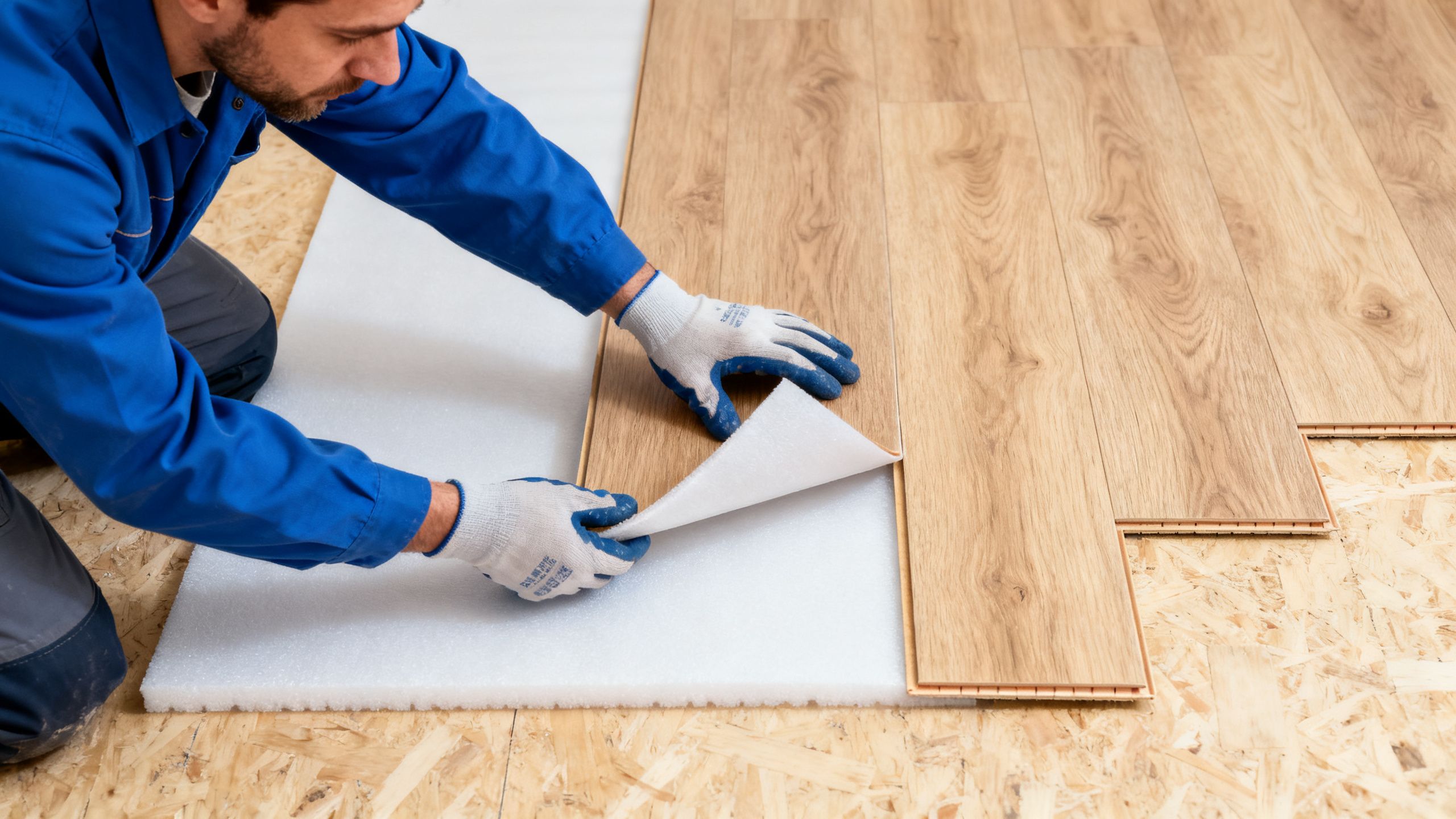
Use the correct underlay for the board and subfloor.
Test concrete floors for moisture and use a suitable DPM where required.
Level and repair the subfloor before boards are laid.
Fix skirting, scotia and beading to the wall or subfloor, not through the laminate.
Use expansion joints between rooms where the product instructions require them.
Avoid trapping the floor beneath heavy fitted furniture.
Keep indoor humidity reasonably stable and clean spills promptly.
Good preparation takes a little longer, but it is cheaper than lifting a whole floor later. The carpet and flooring fitting guide for Bristol homeowners explains the same principle: installation quality matters as much as the product selected.
Was it fitted wrong? How to tell
A workmanship fault is more likely when:
The floor started lifting or peaking soon after installation.
There is no visible expansion gap at one or more walls.
Skirting, scotia or door frames are holding the boards down.
The boards were fitted immediately after delivery, without acclimatisation.
No one checked the subfloor level or moisture.
The wrong underlay was used or no underlay was fitted.
A floating floor has been nailed, screwed or glued in place.
Moisture or owner-related damage is more likely when there has been a leak, repeated standing water, a damp problem that developed later, or major changes in room humidity. Even then, the original installation should have included suitable moisture checks and advice.
If the problem appeared shortly after fitting, contact the installer, keep your invoice and take dated photographs. Ask them to inspect the expansion gaps, underlay, subfloor and moisture levels rather than simply pushing the boards flat. The cheap versus premium carpet fitting guide covers a similar point: the cheapest installation can become expensive if essential preparation is skipped.
Seamless Floors is an independent local fitter, not a retailer trying to sell a replacement floor. We acclimatise boards, prepare subfloors, leave the correct movement gaps and use suitable underlay on every laminate installation.
Laminate lifting and gapping FAQ
Can lifting laminate be fixed without replacing the whole floor?
Often, yes. If the boards are undamaged and the cause is a trapped expansion gap, a fitter may be able to release the edge and relay part of the floor. Swollen boards, broken locking joints and widespread moisture damage usually require replacement boards or a larger refit.
Will gaps in laminate close on their own?
Usually not reliably. Seasonal movement may make a small gap less visible, but gaps caused by damaged joints, poor installation, dry conditions or an uneven subfloor need to be diagnosed. Do not hammer boards together without finding the cause.
How big should the expansion gap be?
For most laminate, allow around 8–10mm around fixed edges, including walls, pipes and door frames. Follow the product instructions, as some boards require a different allowance or expansion joints between rooms.
Do you have to acclimatise laminate flooring?
Yes. Store the unopened packs flat in the room for the period specified by the manufacturer, commonly 24–72 hours. Fitting boards before they adjust to the room can lead to swelling, gapping and lifting later.
How much does laminate repair cost?
Small repairs may start around £80–£180 for labour. A section repair may be £150–£350, while a larger refit can cost £600–£1,500 or more. Room size, access, materials, furniture and subfloor repairs all affect the price. A free assessment gives a more useful figure.
Can laminate be fitted in a kitchen?
It can be, provided the product is suitable and the installation is carefully sealed and protected from standing water. Kitchens still need a dry, level subfloor, correct underlay and movement gaps. Vinyl or LVT may be a better choice where frequent spills are likely.
Is laminate lifting covered by a fitting guarantee?
It may be, particularly if the problem is linked to missing expansion gaps, poor preparation or failure to acclimatise the boards. Check the installer’s terms and contact them promptly. Moisture damage, leaks and misuse may be treated differently.
How long does laminate repair take?
A single plank or small adjustment may take a few hours. A section repair can take a day, while a full refit with subfloor preparation may take several days. Drying a damp subfloor can add time.
Get your laminate sorted in Bristol
Seamless Floors fits laminate properly and assesses or repairs lifting, peaking, gapping and bouncy floors across Bristol. We offer honest advice, fixed quotes where possible and a free assessment before recommending repair or replacement. Call 07901751755 or use our contact page to request a quote — we will look for the cause first.