




After fitting both across around 900 carpet and vinyl floors in Bristol over the last five years, our verdict is that this isn’t a competition — it’s a plan for the house. Soft rooms generally suit carpet, wet and busy rooms suit vinyl, and the hallway is where people most often regret choosing carpet.
Carpet and vinyl, quickly
Carpet is a textile floor covering fitted over underlay; vinyl is a wipe-clean, water-resistant floor covering, available in sheet, tile and plank formats. Carpet usually wins on softness and sound. Vinyl usually wins where water, dirt and hard use are part of daily life. That’s the spec-sheet version. The useful difference shows up after a few years of boots, pets, furniture and cleaning. For a wider room-by-room view, see our guide to choosing flooring for every room.How we judged this
This comparison comes from around 900 carpet and vinyl floors fitted across Bristol, Bath and surrounding areas over five years: roughly 600 carpets and 300 vinyl floors. Most houses end up with both, so the real question is usually which floor belongs in which room. We’ve fitted carpet in bedrooms, lounges, halls and on stairs, and vinyl in kitchens, bathrooms, utilities, cloakrooms and busy hallways. On callbacks, carpet trouble tends to show as a flattened or darkened traffic track, particularly in hallways. Vinyl callbacks are more often about damage or movement, or a finish that feels colder and harder than the customer expected. Neither material escapes problems caused by a poor installation or the wrong room choice. The fitting is different, and so is the subfloor preparation. Carpet is held on gripper rods around the perimeter, laid over underlay and power-stretched. It can bridge small dips and disguise an old floor that’s not quite level — useful in many Bristol period houses. Vinyl is templated and cut to fit, then loose-laid, tacked or fully bonded. Because it’s thin and flexible, it can show screw heads, board joints and lumps beneath it. On suspended timber boards, it often needs a smooth ply overlay; screed may need repair or levelling, and moisture must be checked before installation. Carpet is often a quicker fit on an uneven floor. Vinyl can need extra preparation and drying time, which affects the quote. For more on what proper preparation involves, read our guide to vinyl flooring in Bristol.What most comparison guides say vs what we’ve found
“Carpet upstairs, vinyl downstairs, it depends” is a decent starting point, not a rule. It works for a dry bedroom and a splash-prone kitchen. It breaks down in busy hallways, open-plan ground floors and homes where warmth, pets or a consistent look matter more than a simple upstairs/downstairs split.| Factor | What guides say | What we’ve found in real homes |
|---|---|---|
| Warmth | Carpet is warm; vinyl is cold. | Carpet feels softer, but a good cushioned vinyl can feel perfectly comfortable. Underlay, subfloor and ventilation affect how warm either floor feels. |
| Durability | Hard flooring lasts longer. | Carpet often lasts around 8–15 years; vinyl or LVT around 15–25 years in suitable conditions. Room choice and fitting matter as much as the headline lifespan. |
| Water | Carpet dislikes water; vinyl is waterproof. | Vinyl is the practical choice for spills, but water can still cause problems at edges, seams or beneath a poorly fitted floor. Carpet is a poor fit for rooms with regular splashes. |
| Noise | Carpet is quieter. | Usually true: carpet and underlay soften footsteps and room echo. Vinyl reflects more sound, though a suitable underlay or subfloor build-up can help. |
| Cost | Carpet is cheaper. | Mid-range fitted options can be broadly comparable. Vinyl can cost more if the floor needs substantial preparation; budget products and room sizes change the result. |
| Best rooms | Carpet upstairs, vinyl downstairs. | Bedrooms and stairs usually favour carpet; wet rooms favour vinyl. The hallway is the common exception: family traffic often makes vinyl or LVT the more practical choice. |
The two compared, from real jobs
Carpet in practice
Carpet feels soft and forgiving underfoot. In a bedroom or lounge, that comfort and its ability to soften sound are the reasons people keep choosing it. The wear pattern to watch is matting: in a busy route, fibres flatten and can look dark or shiny even after cleaning. A hallway takes the worst of it, especially when wet shoes, buggy wheels, dogs and bikes come straight in from the street.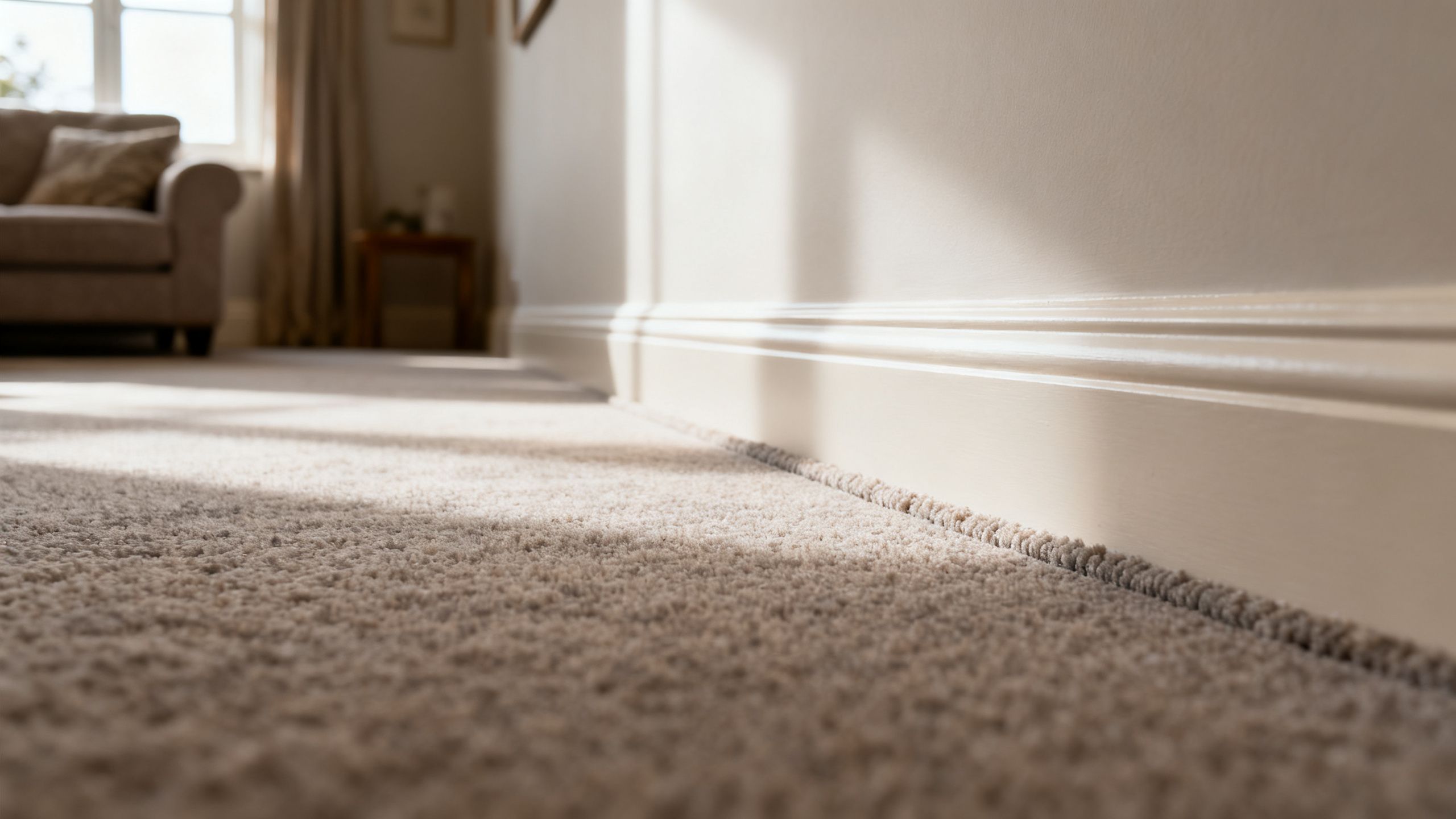 Warmth and noise: Carpet and a well-chosen underlay make a room feel softer and quieter, particularly in a terrace with neighbours or a flat below. But carpet alone won’t fix a cold suspended timber floor. Underlay and the condition of the floor and ventilation beneath it matter. Our guide to choosing carpet underlay explains the options.
Moisture and cleaning: Carpet needs prompt attention after spills and more effort to keep clean than a wipeable surface. Regular vacuuming and sensible spot cleaning help; a wet room or frequently muddy entrance is still the wrong place for it.
Where it wins: Bedrooms, lounges, stairs and landings — especially where comfort, quieter acoustics or an uneven period-property floor matter. It can also be the lower-cost way to make a large dry room feel finished.
Where it lets you down: Busy entrances, kitchens and bathrooms. A heavily used hall can develop a worn track that cleaning won’t reverse. Stairs are also harder to fit well than a straightforward room, so the fitter’s work matters.
Best suited to: Bedrooms, lounges, stairs and landings. For a hall in a busy family home, the answer often flips to vinyl or LVT.
Warmth and noise: Carpet and a well-chosen underlay make a room feel softer and quieter, particularly in a terrace with neighbours or a flat below. But carpet alone won’t fix a cold suspended timber floor. Underlay and the condition of the floor and ventilation beneath it matter. Our guide to choosing carpet underlay explains the options.
Moisture and cleaning: Carpet needs prompt attention after spills and more effort to keep clean than a wipeable surface. Regular vacuuming and sensible spot cleaning help; a wet room or frequently muddy entrance is still the wrong place for it.
Where it wins: Bedrooms, lounges, stairs and landings — especially where comfort, quieter acoustics or an uneven period-property floor matter. It can also be the lower-cost way to make a large dry room feel finished.
Where it lets you down: Busy entrances, kitchens and bathrooms. A heavily used hall can develop a worn track that cleaning won’t reverse. Stairs are also harder to fit well than a straightforward room, so the fitter’s work matters.
Best suited to: Bedrooms, lounges, stairs and landings. For a hall in a busy family home, the answer often flips to vinyl or LVT.
Vinyl and LVT in practice
Vinyl is easy to wipe and copes well with everyday spills. It’s a practical choice for rooms where muddy shoes, splashes or pet mess are normal. The downside is feel: it’s harder than carpet, and some people find it cold or clinical. A cushioned product over a properly prepared floor can feel warmer than expected, but it won’t have carpet’s softness.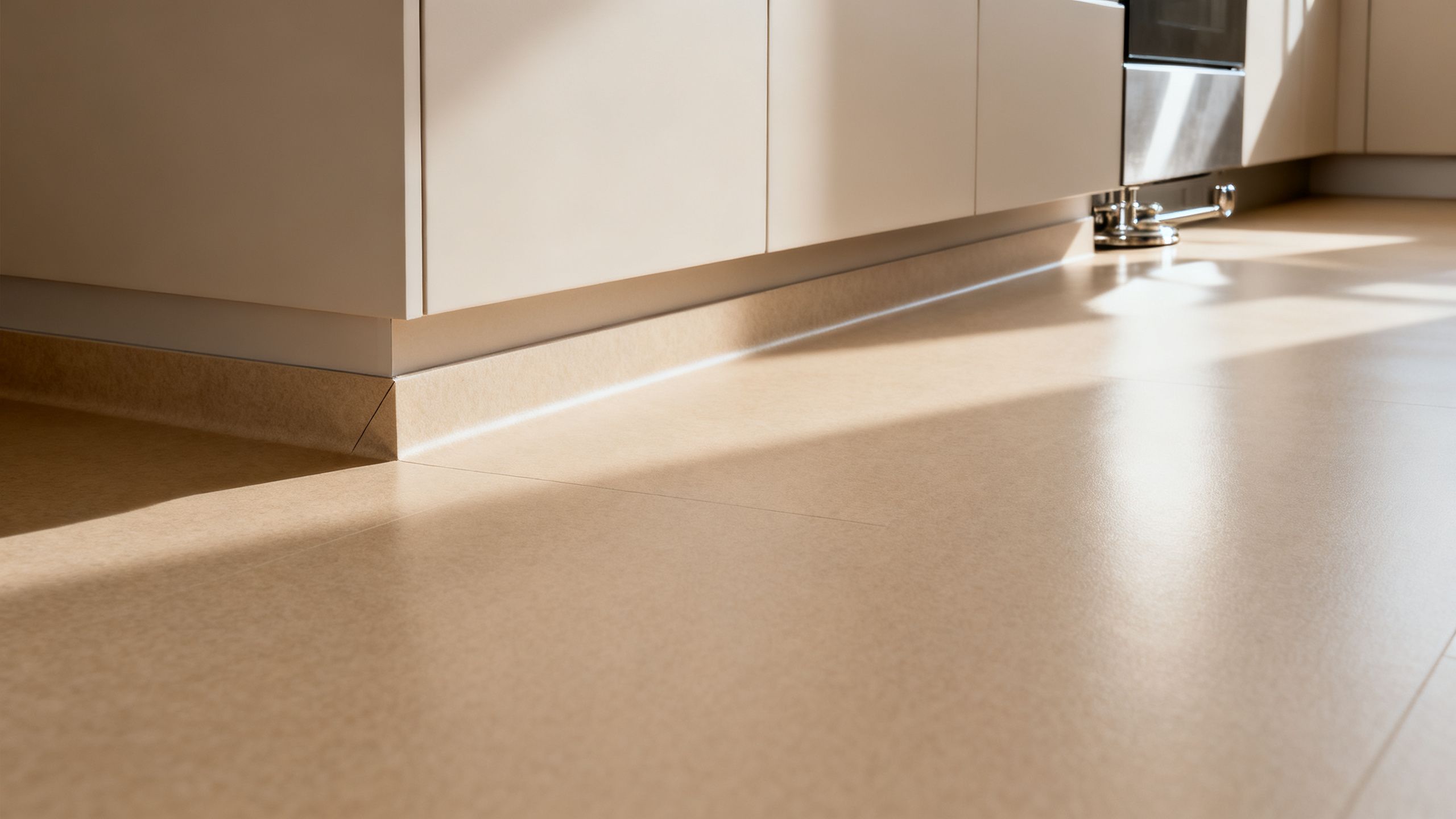 Durability and wear: Vinyl and LVT can last around 15–25 years when the product suits the room and the subfloor is properly prepared. Dents or visible marks can happen under heavy furniture, and flaws in the floor below can show through. Good preparation is not an optional extra.
Warmth and noise: Vinyl has a firmer, more reflective feel underfoot and can sound harder than carpet. A cushioned construction can take the edge off. Check that the product is approved for underfloor heating and follow its temperature limits; not every floor covering or installation method is suitable.
Moisture and cleaning: Vinyl is straightforward to sweep and mop, making it a strong choice for kitchens, bathrooms, utilities and cloakrooms. Water resistance does not mean every installation is immune to water getting underneath: seams, perimeter edges and the condition of the subfloor still matter.
Where it wins: Wet and busy rooms, family hallways, homes with dogs, rentals and landlord properties where quick cleaning matters. It’s also a sensible choice for allergy households where someone needs to avoid carpet. For product and fitting options, see our guide to vinyl floor tiles in Bristol.
Where it lets you down: It can feel hard and less cosy in bedrooms and lounges, and it won’t disguise a rough floor. Getting a close fit around fixtures takes care and skill; stairs are not a suitable place for vinyl.
Best suited to: Kitchens, bathrooms, utilities, cloakrooms, conservatories and high-traffic entrances. For more on choosing between sheet vinyl and other formats, see our honest comparison of LVT and laminate.
Durability and wear: Vinyl and LVT can last around 15–25 years when the product suits the room and the subfloor is properly prepared. Dents or visible marks can happen under heavy furniture, and flaws in the floor below can show through. Good preparation is not an optional extra.
Warmth and noise: Vinyl has a firmer, more reflective feel underfoot and can sound harder than carpet. A cushioned construction can take the edge off. Check that the product is approved for underfloor heating and follow its temperature limits; not every floor covering or installation method is suitable.
Moisture and cleaning: Vinyl is straightforward to sweep and mop, making it a strong choice for kitchens, bathrooms, utilities and cloakrooms. Water resistance does not mean every installation is immune to water getting underneath: seams, perimeter edges and the condition of the subfloor still matter.
Where it wins: Wet and busy rooms, family hallways, homes with dogs, rentals and landlord properties where quick cleaning matters. It’s also a sensible choice for allergy households where someone needs to avoid carpet. For product and fitting options, see our guide to vinyl floor tiles in Bristol.
Where it lets you down: It can feel hard and less cosy in bedrooms and lounges, and it won’t disguise a rough floor. Getting a close fit around fixtures takes care and skill; stairs are not a suitable place for vinyl.
Best suited to: Kitchens, bathrooms, utilities, cloakrooms, conservatories and high-traffic entrances. For more on choosing between sheet vinyl and other formats, see our honest comparison of LVT and laminate.
Where the result surprised us
The rooms people agonise over are rarely the ones that matter most. Nobody usually debates the bathroom for long: vinyl is the practical answer. Bedrooms are commonly carpeted. The hallway is where we most often see regret. In a Bristol terrace where the front door opens straight onto the street, a carpeted hall gets hit by wet boots, buggy wheels, dogs and bikes. Within a few years, a dark track can form down the middle that cleaning won’t lift. For a busy entrance, we’d usually choose vinyl or LVT. The other surprise is that vinyl can feel warmer than people expect, while carpet can feel less warm than they assume. A cushioned vinyl over a well-prepared floor can be comfortable. Carpet over a cold suspended timber floor with blocked airbricks may still feel cold: the floor, underlay and airflow beneath it are all part of the picture. We also get asked for vinyl because of allergies. Carpet traps dust rather than letting it circulate freely, but it still needs regular, effective vacuuming. Allergy needs vary, so follow advice for your household; Allergy UK’s information on house dust mite allergy is a useful starting point. Our carpet and vinyl comparison covers the everyday trade-offs in more detail.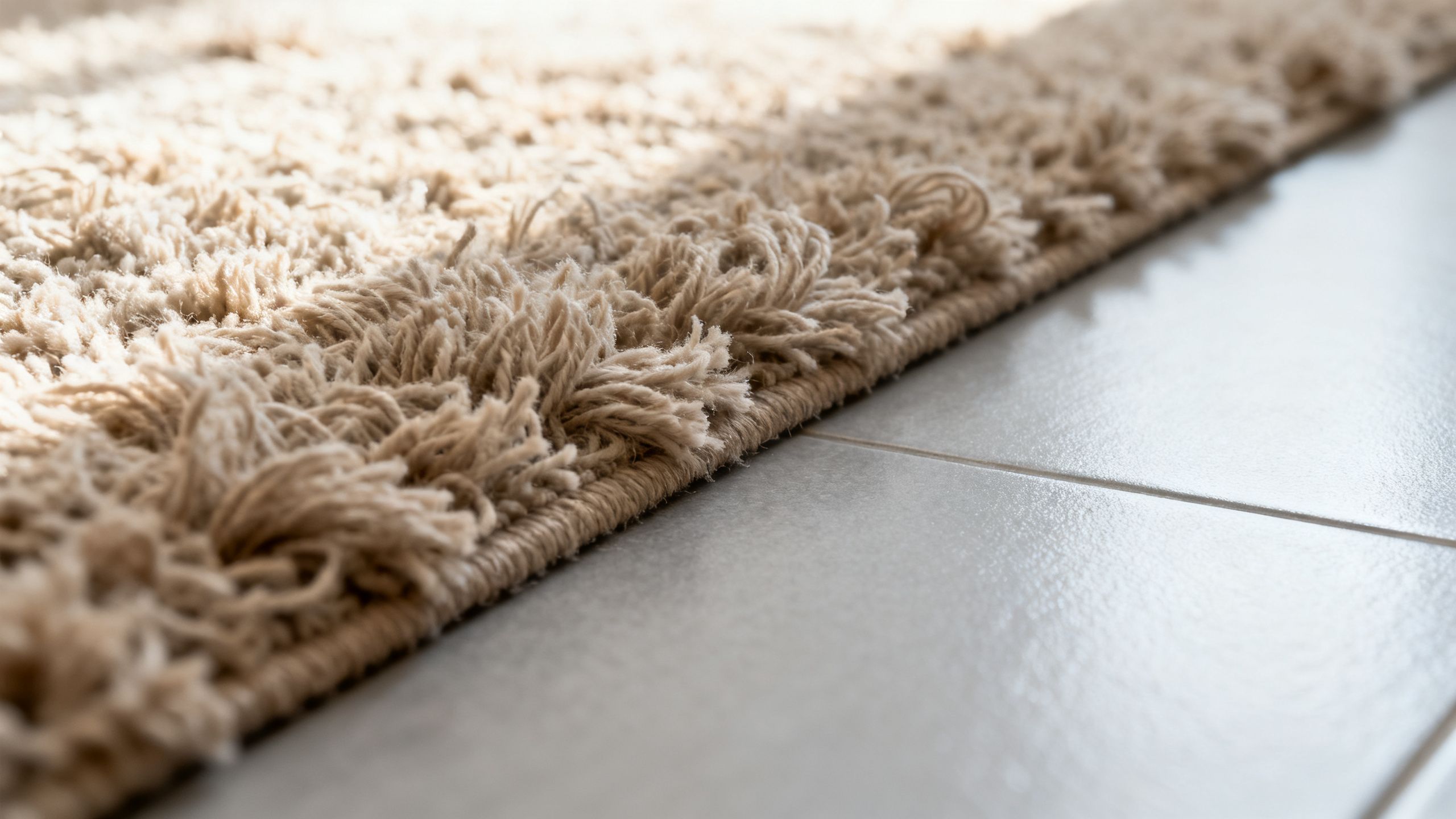
Comfort, cost and lifespan — what actually matters
Warmth, noise and comfort underfoot
Carpet is softer, quieter and more forgiving if someone falls. That makes it a strong choice for bedrooms, lounges and stairs. Vinyl feels firmer and can sound louder, though it’s often more comfortable underfoot than customers expect when it has cushioning and the floor beneath is sound. Neither covering is insulation by itself. On a cold suspended timber floor, check the subfloor and ventilation as well as the covering and underlay. With underfloor heating, confirm that the flooring and installation method are approved for the system and use the temperature limits set by the product manufacturer. The Energy Saving Trust’s underfloor-heating advice provides useful background on the system.Cost and how long each really lasts
For mid-range products, the fitted cost of carpet and vinyl can be broadly comparable. The final figure depends on the room, material, access, preparation and finishing. Carpet may be a straightforward day’s work on an uneven floor. Vinyl may need boards overlaid with ply, screed repairs or levelling, plus drying time, before fitting can begin. That prep can make a noticeable difference to the quote. As a general working range, carpet can last about 8–15 years and vinyl or LVT about 15–25 years. Those are not guarantees: carpet in a busy hallway may wear out sooner, while vinyl on a poorly prepared subfloor can disappoint early. Both can give a decade or more when they’re used in the right room and fitted properly. For a fuller breakdown, see carpet fitting costs in Bristol.Which should you choose, room by room
- Lounge: Choose carpet if you want softness, warmth and quieter acoustics. Choose vinyl or LVT if spills, pets or a continuous hard floor through the ground floor are more important.
- Bedroom: Choose carpet for comfort and quieter footsteps. Vinyl is a reasonable alternative if someone in the household needs a hard, easy-clean surface or prefers a consistent floor through the home.
- Hall and stairs: Choose carpet on stairs and landings for grip, comfort and noise reduction. For a busy ground-floor hallway — particularly in a Bristol terrace with street access, children or a dog — choose vinyl or LVT. Never use vinyl on stairs.
- Kitchen: Choose vinyl for everyday spills, food and muddy traffic. Carpet is not a practical kitchen floor.
- Bathroom: Choose vinyl. Carpet is a poor match for regular splashes and humidity. Make sure the fitting and edges are suitable for the room.
- Pets: Choose vinyl in muddy entrances and areas where accidents are likely; it’s easier to wipe clean. Carpet can still make sense in a pet-free or lower-traffic lounge or bedroom if comfort matters more.
- Busy family home: Choose vinyl or LVT for the hall and kitchen, and carpet for bedrooms, lounge and stairs. If you want one floor through the whole downstairs, LVT can bridge dry and wet areas, but budget for the subfloor preparation.
- Tight budget: Choose the floor that needs the least preparation and suits the room. Carpet can be cheaper to fit over an uneven old floor; vinyl may be the lower-cost fitted option when the subfloor is already smooth. Compare the whole fitted job, not just the material price.
If carpet is the answer for your bedrooms, lounge or staircase, that’s our main trade — Bristol carpet fitting, measured free and quoted fixed.