




After fitting around 300 laminate and sheet-vinyl floors across Bristol over the last five years, our verdict is simple: pick by the room, not by the product. Sheet vinyl is the most underrated floor we fit, while laminate is the one we’re called back to replace early most often—and water is usually why.
Laminate and vinyl, quickly
Laminate is a rigid board with a high-density fibreboard (HDF) core, a printed wood or stone design and a protective top layer. The boards click together over underlay and float above the subfloor. The surface can resist everyday splashes, but the HDF core is not waterproof.
“Vinyl” can mean two different things. Sheet vinyl comes in a roll and can be fitted in a largely continuous piece. Luxury vinyl tile (LVT) comes as individual planks or tiles, usually glued down or installed as a click-lock floor. The distinctions matter more than a product label: our guide to LVT and laminate explains the differences between them.
Spec sheets tell you what a product is designed to do. They don’t tell you what happens when a dishwasher drips at the edge of a laminate board, or what a vinyl floor shows through after it’s laid over an uneven subfloor.
How we judged this
This comparison comes from around 300 laminate and sheet-vinyl floors fitted by Seamless Floors in Bristol, Bath and surrounding areas over five years. Vinyl is ahead on count: we fit it regularly in kitchens, bathrooms, utility rooms and rental properties. Laminate is more common in lounges, bedrooms and hallways. I haven’t kept a reliable separate tally for each material, so I won’t pretend there’s an exact split.
I’ve seen laminate come back for swollen edges and raised joints after water reached a seam. With sheet vinyl, failures have been much less common; most of the floors we revisit are being changed for a new look. Vinyl does have its own issues: a sharp object or heavy point load can dent it, and poor cutting or bonding can leave a lifted edge. I’ve also seen imperfections in the subfloor show through once a thin vinyl has been down for a while.
Fitting them is different. Laminate floats on underlay and needs an expansion gap—typically around 10–12mm at walls and fixed obstacles, subject to the product instructions. Trap it under units or leave too little space and it can peak as it expands. Sheet vinyl is cut to fit the room, then loose-laid, secured or fully bonded as appropriate. It’s less tolerant of lumps and joints underneath, so suspended timber floors often need a suitable plywood overlay first. Both need a clean, dry and properly prepared base; check the relevant requirements in Approved Document C on resistance to moisture. Our guide to subfloor preparation shows what we check before fitting.
What most comparison guides say vs what we’ve found
A lot of comparisons stop at “it depends”. Our recommendation is more specific: use sheet vinyl where water is likely to reach the floor; choose laminate for a dry room where you want the more convincing wood look and a firm feel underfoot. If you want one surface across wet and dry rooms, look at LVT—but budget for the preparation it needs.
Factor | What guides say | What we’ve found in real homes |
|---|---|---|
Moisture | Vinyl is waterproof; laminate is water-resistant. | Sheet vinyl has no plank joints for water to seep through, but edges and cut-outs still need a sound fit. Water at a laminate joint can swell the HDF core. |
Durability | Both are hard-wearing. | Laminate often stands up well to scratches and pet claws. Vinyl can dent under sharp or concentrated weight. Damage depends on what the floor is asked to cope with. |
Cost | Vinyl is cheaper. | Basic sheet vinyl is often the lower-cost fitted option. Subfloor work, room shape and product quality can change the final bill. |
Comfort | Both are easy to clean. | Vinyl is generally warmer, softer and quieter underfoot. Laminate feels firmer and can sound hollow if the base or underlay is wrong. |
Lifespan | Look at the warranty. | In a dry, suitable room, either can give years of service. Laminate can be cut short by water; vinyl is often replaced because the owner wants a change. |
Best rooms | Either can go in most rooms. | Sheet vinyl suits kitchens, bathrooms and utilities. Laminate is a sensible choice for dry lounges, bedrooms and hallways. |
The two compared, from real jobs
Laminate in practice
The common callback is not a mysterious product failure. It’s a swollen joint or board after water has reached the core. A small spill wiped up promptly is different from a slow leak, repeated wet mopping or water sitting at a seam. “Water-resistant” does not mean waterproof.
Laminate is made from a printed surface bonded to an HDF core, with click-lock edges on many products. A decent AC4 or AC5 product can be a practical floor in a busy dry room. It is often more convincing as wood across a large lounge than a similarly priced vinyl, and it can cope well with everyday scratching. But once an HDF board has swollen, it doesn’t shrink back into shape. A floating floor may need a substantial part of the room lifted to replace boards away from the edges.
Underfoot, laminate feels solid but can sound clicky or hollow. Correct underlay and a flat base help; they won’t remove every bit of footfall noise. It needs accurate expansion gaps around walls, doorways and pipes, and should not be trapped beneath fixed heavy units. For product-specific fitting rules, follow the manufacturer’s instructions, such as Quick-Step’s laminate installation guidance.
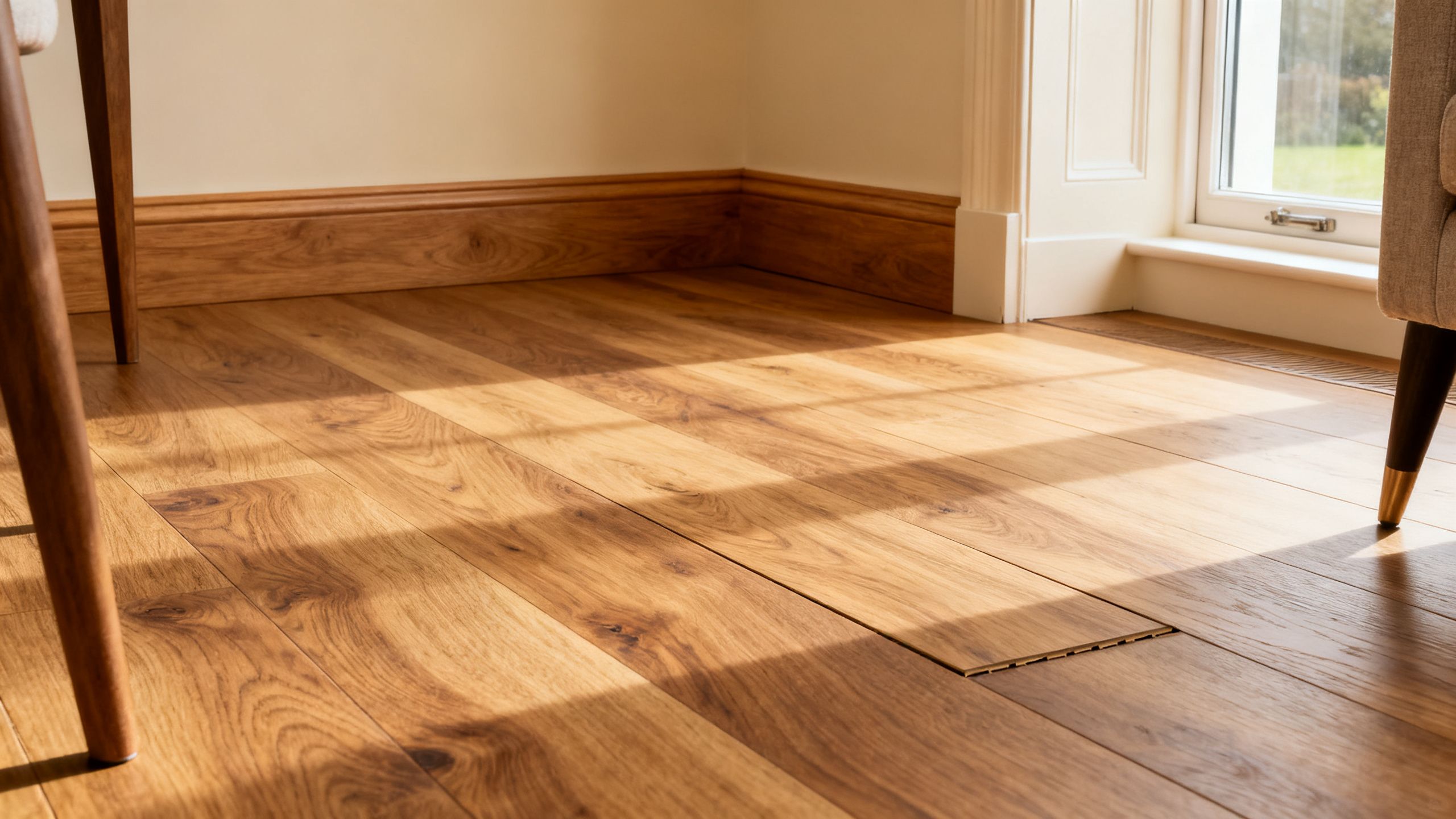
Where it wins: dry lounges, bedrooms, hallways and landings where wood-effect realism, scratch resistance and a firm feel matter.
Where it lets you down: kitchens, bathrooms and other rooms where spills or leaks can reach the joints. It also cannot be sanded and refinished like a solid timber floor.
Who it suits: someone wanting a convincing wood look in a dry room, prepared to keep water off the seams and accept that a damaged board may be awkward to replace.
For more detail on the differences in use and ownership, see our fitter’s comparison of LVT and laminate.
Vinyl and LVT in practice
Sheet vinyl is the vinyl floor most people underestimate. A good cushioned product can give a convincing stone or wood effect, feels warmer and softer than laminate, and is quieter underfoot. In a room-sized piece it has no plank joints for water to travel through. The edges, doorways and cuts around a toilet or units still need to be fitted properly; water can get underneath a poorly finished floor.
LVT is different: it is made up of separate planks or tiles. Glue-down LVT is bonded to a prepared base; click-lock LVT floats and has joints. Many LVT products are waterproof, but that doesn’t make every installation watertight at the perimeter or prevent problems below the floor. The surface can be waterproof while the subfloor still needs to be dry and sound.
Vinyl is thin and flexible, so it can show a screw head, board joint or lump underneath. On an older Bristol suspended timber floor, we’ll often need to overlay the boards with suitable flooring-grade plywood first. We also take care templating around baths, toilets and kitchen units: with sheet vinyl, a bad cut can waste the whole piece.
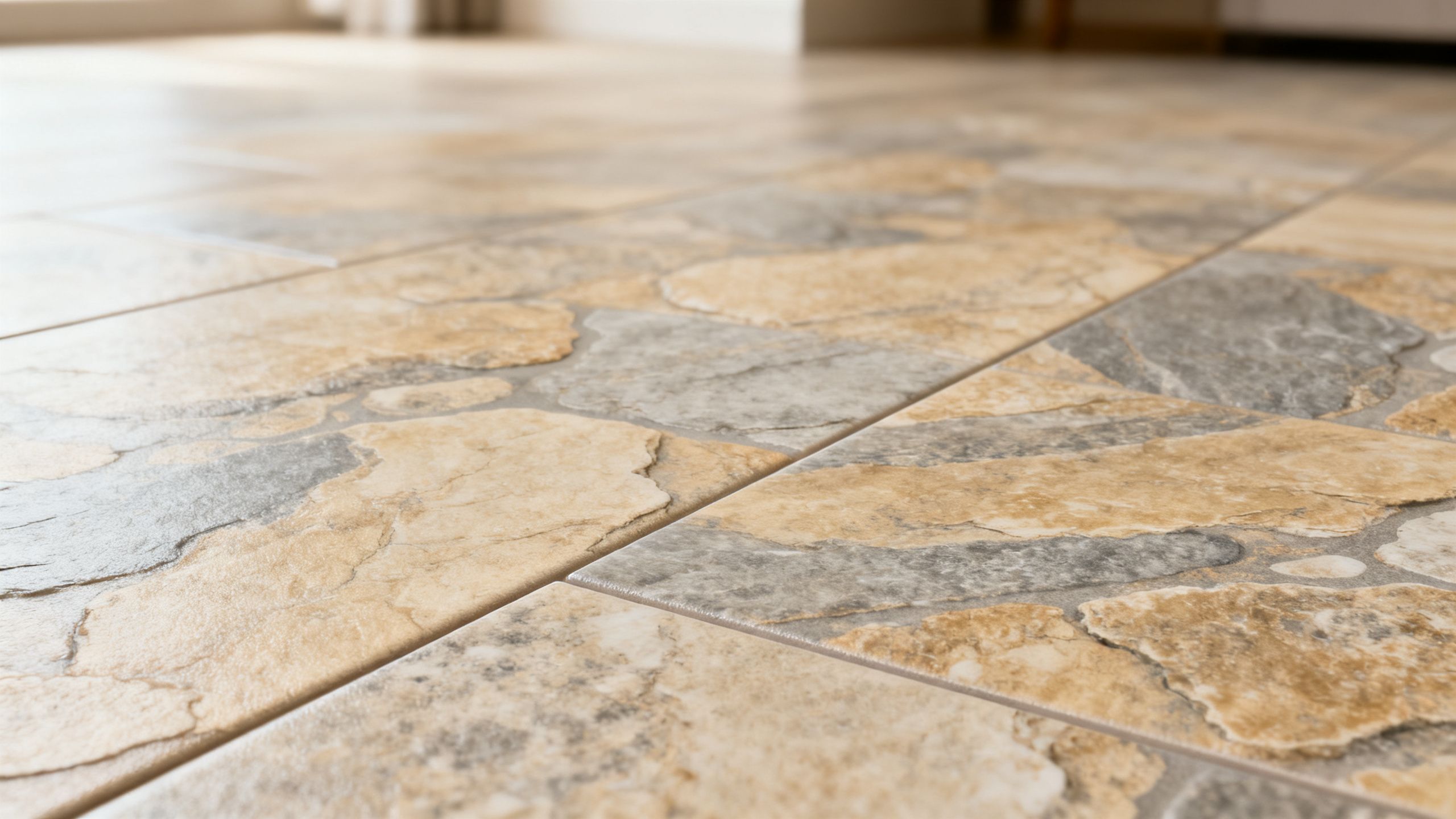
Where it wins: sheet vinyl is our pick for kitchens, bathrooms, utilities and cloakrooms where water is part of everyday life. It’s often the cheapest fitted option, quick to install in a straightforward room and comfortable underfoot. Our guide to vinyl flooring in Bristol covers common product choices.
Where it lets you down: it can dent under sharp heels or heavy point loads, and it won’t disguise a rough base. Some designs also look less convincing than good laminate across a large dry room.
Who it suits: households wanting an easy-clean, quieter floor for a wet or busy room, and landlords prioritising a practical, lower-cost covering. For a single sheet in a bathroom, careful fitting around the edges and fixtures is essential.
Where the result surprised us
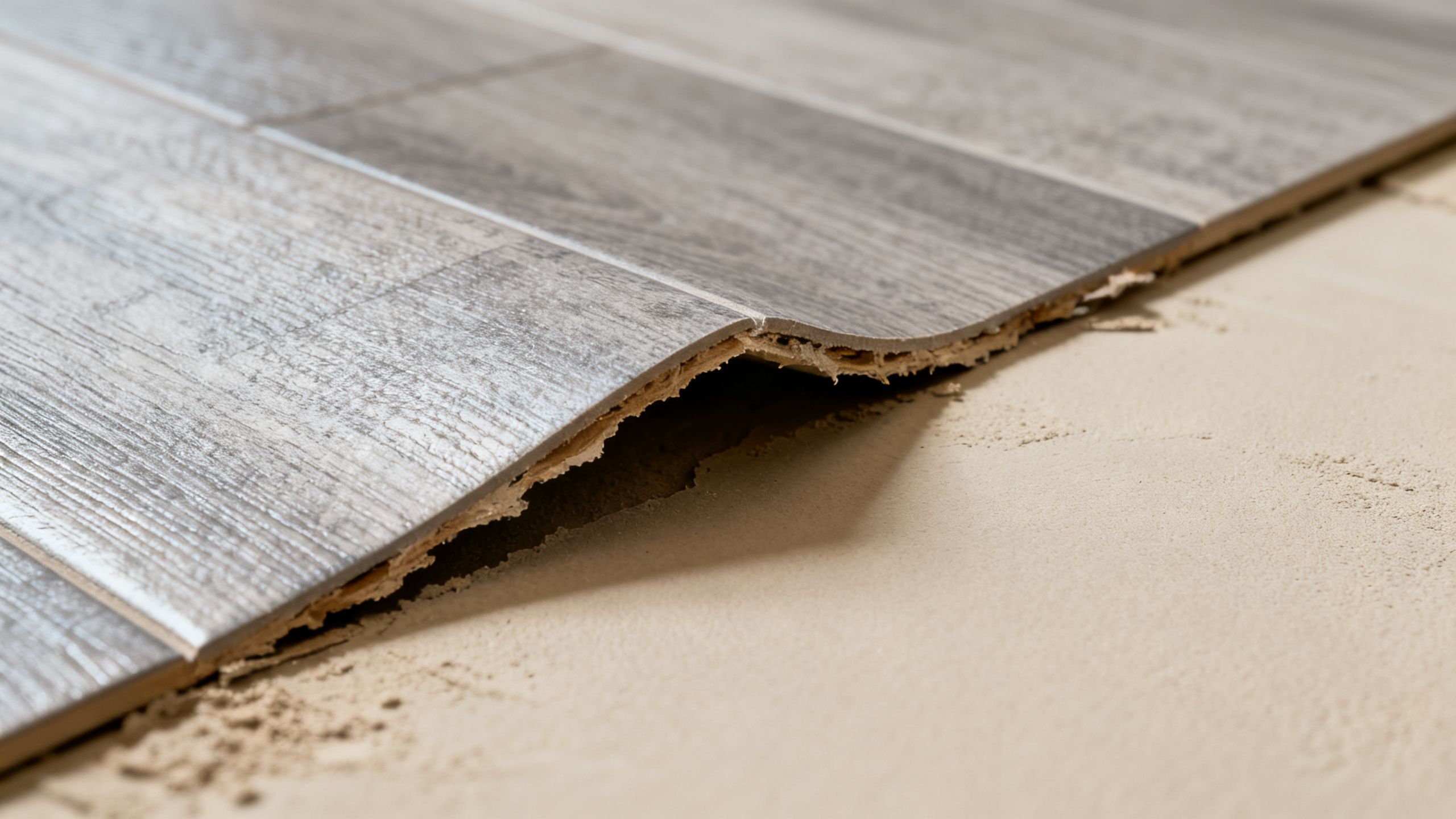
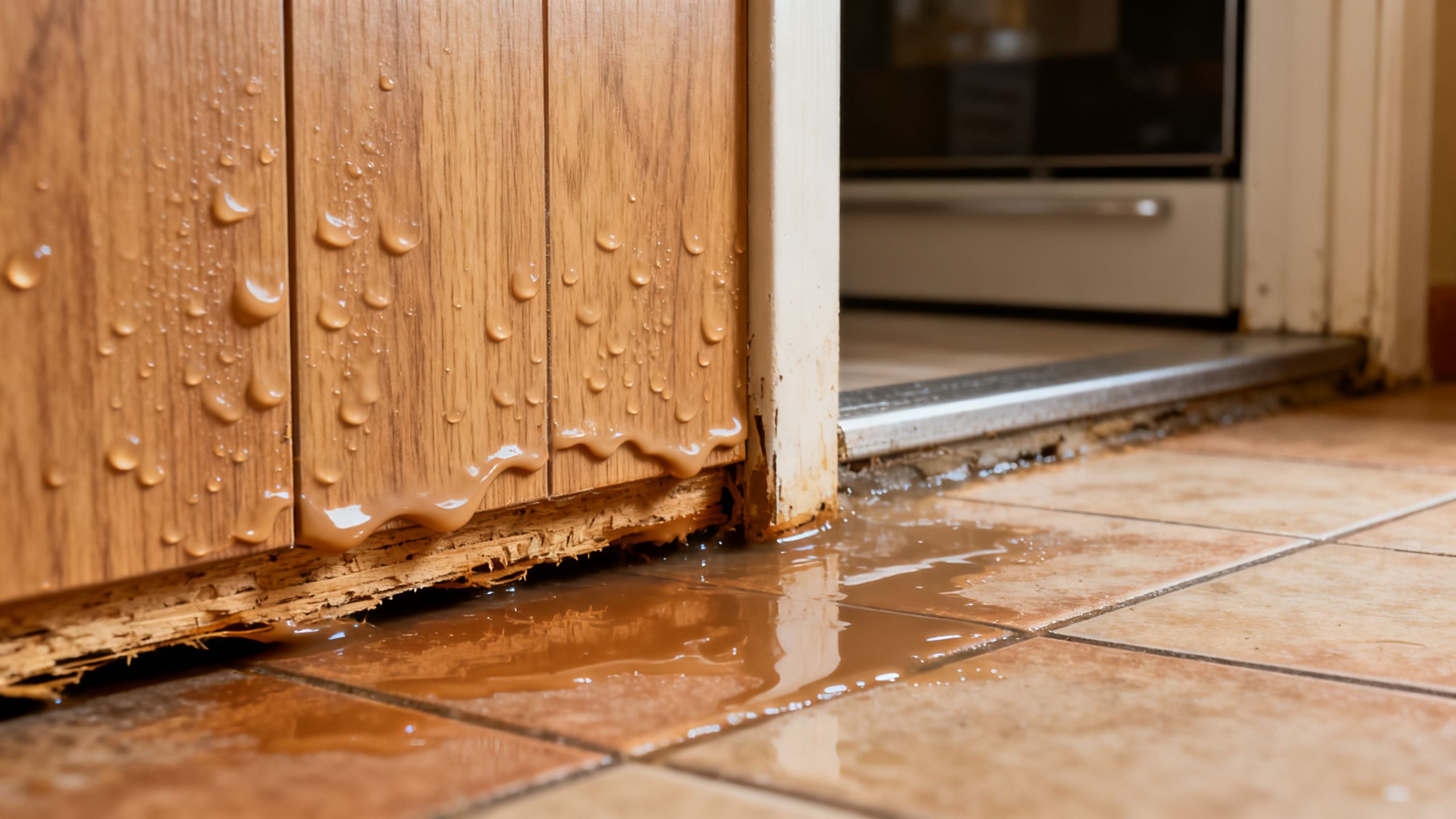
The biggest surprise after fitting both is how often the floors being removed early are laminate, and how rarely sheet vinyl comes back because it has failed. Laminate has a reputation as a practical, hard-wearing floor, and it can be exactly that in a dry room. But one slow dishwasher leak, an over-wet mop or a child’s spilled drink left at a joint can be enough to swell a board. Once it swells, the damage is permanent.
Sheet vinyl has the opposite image problem. People hear “vinyl” and picture something cheap-looking. Then they see a well-chosen cushioned floor in a kitchen and are surprised by the pattern, warmth and feel. It isn’t indestructible, but most of the vinyl floors we revisit are being replaced because the owner wants a different style, rather than because the floor has failed. We explain more about when LVT is worth considering if you want vinyl’s practical side with a plank or tile design.
Cost, comfort and lifespan — what actually matters
Cost per m2 and what you really pay
As a rough Bristol guide, straightforward sheet vinyl supply and fitting can land around £25–£45 per m², while laminate supply and fitting is often around £35–£65 per m². These are indicative ranges, not quotes: product grade, room size, furniture moving, trimming, door bars and the condition of the base all affect the price. Small rooms can cost more per square metre because of minimum fitting charges and waste.
The hidden cost is often the subfloor. Vinyl is thin, so a bumpy or jointed base may need more work before it will look right. Laminate is more rigid but still needs a flat, dry base and suitable underlay. If you’re comparing quotes, check what preparation and removal are included. Our guide to buying flooring online versus through a fitter explains why the material price is only part of the total.
Comfort, noise and lifespan
Vinyl generally feels warmer, softer and quieter than laminate. Cushioned sheet vinyl can be comfortable in a kitchen where you stand for long periods. Laminate feels firmer and can sound louder, particularly in a flat or terrace if the underlay, subfloor or installation is poor.
There isn’t one reliable lifespan for either: product quality, foot traffic, cleaning and installation all count. As a broad expectation, a well-fitted floor in the right room can last around 10–20 years, but water can shorten laminate’s life sharply. Vinyl is usually replaced rather than refinished. Laminate also cannot be sanded back like real wood; a damaged board may be replaceable, but access and the click-lock layout can make that disruptive.
Which should you choose, room by room
Kitchen: choose sheet vinyl if you want a continuous surface with no plank joints and easier day-to-day cleaning. If the kitchen opens into a dry lounge and you want one consistent floor, consider LVT rather than running laminate through a spill-prone area.
Bathroom or downstairs loo: choose sheet vinyl, fitted carefully around the bath, toilet and edges. Don’t assume a product’s waterproof surface makes an untidy perimeter safe from water.
Utility room: sheet vinyl is the practical pick around washing machines and sinks. A small leak is exactly the sort of thing that can damage laminate joints.
Lounge: choose laminate if realism, scratch resistance and a firm feel are priorities and the room is dry. Choose LVT if you want a more continuous finish into an adjoining kitchen and can budget for the base preparation.
Bedroom: laminate suits a wood-effect finish that’s easy to clean; sheet vinyl can suit a tighter budget or a room where softness and quiet matter. Carpet is another option if warmth is the priority.
Hallway: laminate is a good choice for a dry entrance with grit managed at the door. Choose vinyl where wet shoes and regular mopping are routine.
Pets: laminate often deals better with claws and dragged furniture, but water from bowls and accidents still needs prompt attention. Sheet vinyl is easier to wipe clean and quieter, though nails and heavy objects can dent it.
Tight budget: sheet vinyl is usually the lower-cost fitted choice in a straightforward room. If the floor needs significant levelling or an overlay, compare the full installed price rather than the roll price.
For a broader room-by-room breakdown, read how to choose the right flooring for every room. The short version remains: wet room, sheet vinyl; dry room where wood-effect looks matter, laminate; one floor across both, consider LVT and plan for the preparation.
Frequently asked questions
Is vinyl better than laminate?
For kitchens, bathrooms and utilities, sheet vinyl is usually the safer practical choice because it has no plank joints and copes better with everyday moisture. For a dry lounge or bedroom where a convincing wood effect and scratch resistance matter, laminate can be the better fit. That’s what our callbacks from around 300 laminate and sheet-vinyl jobs in Bristol have shown.
Which is waterproof: vinyl or laminate?
Many vinyl products are waterproof at the surface, but a poor edge, cut-out or installation can still let water underneath. Laminate is generally water-resistant to a degree, not waterproof: water reaching the HDF core can make it swell. Product claims and fitting instructions vary, so check them before buying.
Which is cheaper, vinyl or laminate?
Basic sheet vinyl is often cheaper to supply and fit than laminate. The final price depends on the product, room size and preparation. If the base needs substantial work, especially beneath thin vinyl, the fitted total can change considerably.
Which lasts longer?
Neither has a guaranteed life in every room. Both can last years when properly fitted in suitable conditions. In our experience, laminate is more likely to need early replacement after water gets through a joint; sheet vinyl is more often changed because the owner wants a new look.
Can you put laminate or vinyl in a kitchen or bathroom?
Sheet vinyl is our recommendation for bathrooms and most kitchens. Laminate can be used in some kitchens if the product permits it and spills are dealt with quickly, but it is a riskier choice around sinks, dishwashers and washing machines. We wouldn’t recommend standard laminate for a bathroom.
Which is warmer and quieter underfoot?
Sheet vinyl usually feels warmer, softer and quieter. Laminate feels firmer and can sound hollow or clicky if the underlay or base isn’t right. The exact feel depends on the product and the subfloor beneath it.
Is LVT worth it over laminate?
LVT is worth considering if you want a plank or tile look across adjoining wet and dry rooms. It usually costs more than basic sheet vinyl and often needs careful subfloor preparation, particularly when glued down. Laminate remains a sensible choice for dry rooms where you want realistic wood and better scratch resistance. See our guide to LVT flooring in Bristol for more on the trade-offs.
For a home in Bristol, Bath or the surrounding areas, we’re happy to look at the room and the subfloor and give you a straight recommendation. Whichever floor you choose, getting the base flat and dry matters more than a product label.