




Across around 350 kitchen floors in Bristol, our verdict is glue-down LVT for most larger or open-plan kitchens, and sheet vinyl for small rooms, rentals and tighter budgets. The floor almost never fails in the middle: the early failures we go back to are usually at an edge, especially under a dishwasher or at the doorway, where water can sit unseen.
What a kitchen floor really has to cope with
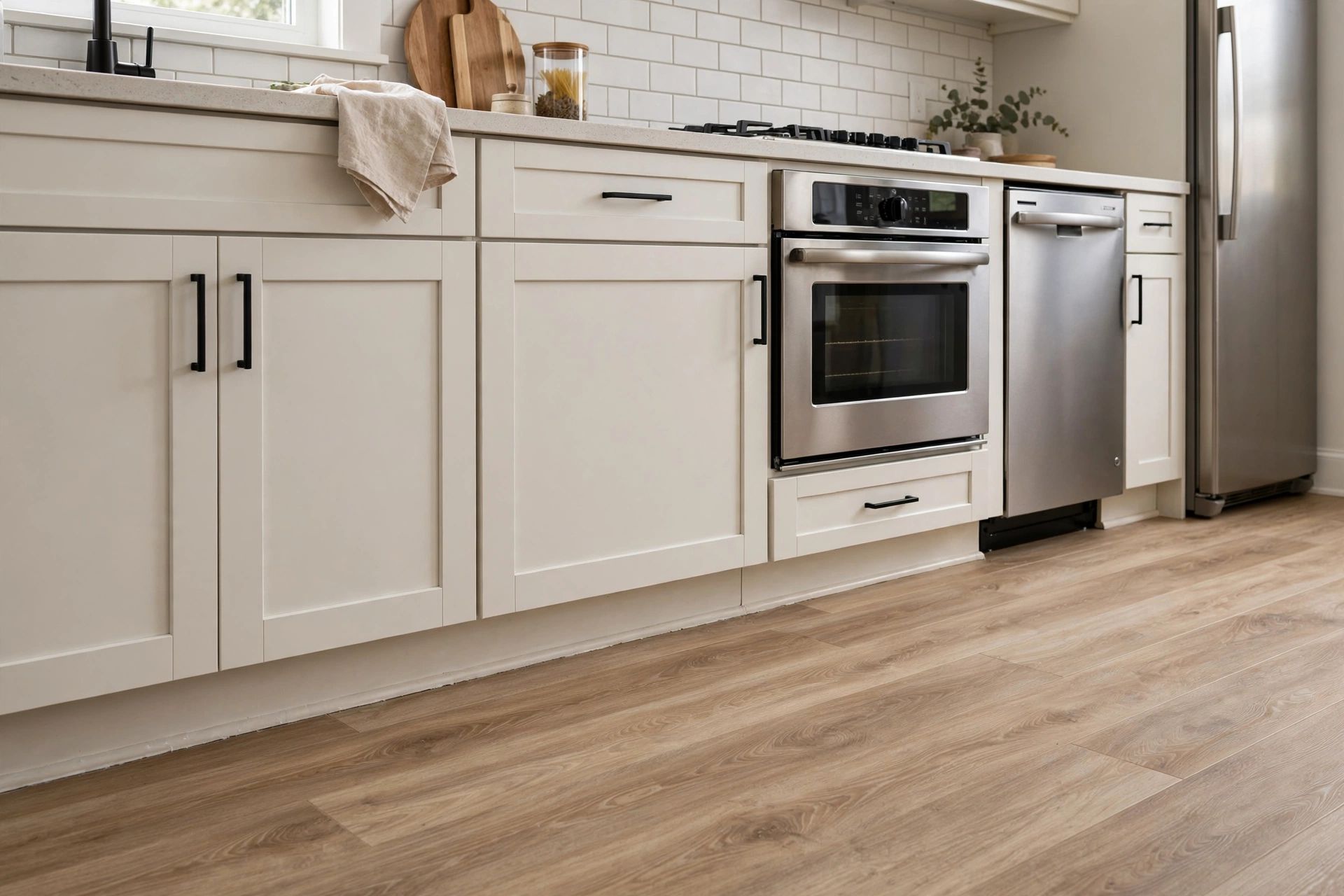
A kitchen floor gets spills, grease, dropped pans and regular mopping. It also sits around a sink, dishwasher, washing machine and sometimes a fridge with a water feed. Those appliance edges matter more than a showroom splash test.
Most guides compare materials with tick-boxes: waterproof, easy to clean, durable. On real jobs, water can get beneath a floor at a seam, doorway or poorly finished edge even when the surface itself resists spills. The kitchen flooring options we fit in Bristol need to suit the room and the way it’s installed.
How we judged this
This is based on around 350 kitchen floors fitted over the last five years, and the repairs and callbacks we’ve seen afterwards. Sheet vinyl made up most of our earlier kitchen work; LVT has taken the bigger share over the last two or three years, particularly in extensions and knocked-through ground floors.
We judged floors by how they held up to everyday use and where problems came back: water at a sink or appliance, lifted edges or joints, marks from traffic and cleaning, and wear in the walking routes. The common pattern was water getting in at a joint or edge, not damage across the middle of an otherwise sound floor.
Fitting makes a real difference. Kitchens need careful subfloor preparation and flatness checks; seams need particular attention near the sink; appliance spaces and plinths need planning; and floating floors need the right expansion gaps around units and islands. Pipework, doorways and the order of work with the kitchen fitter all need measuring and agreeing. Our guide to subfloor preparation before flooring is fitted explains why that work can affect both the finish and the cost.
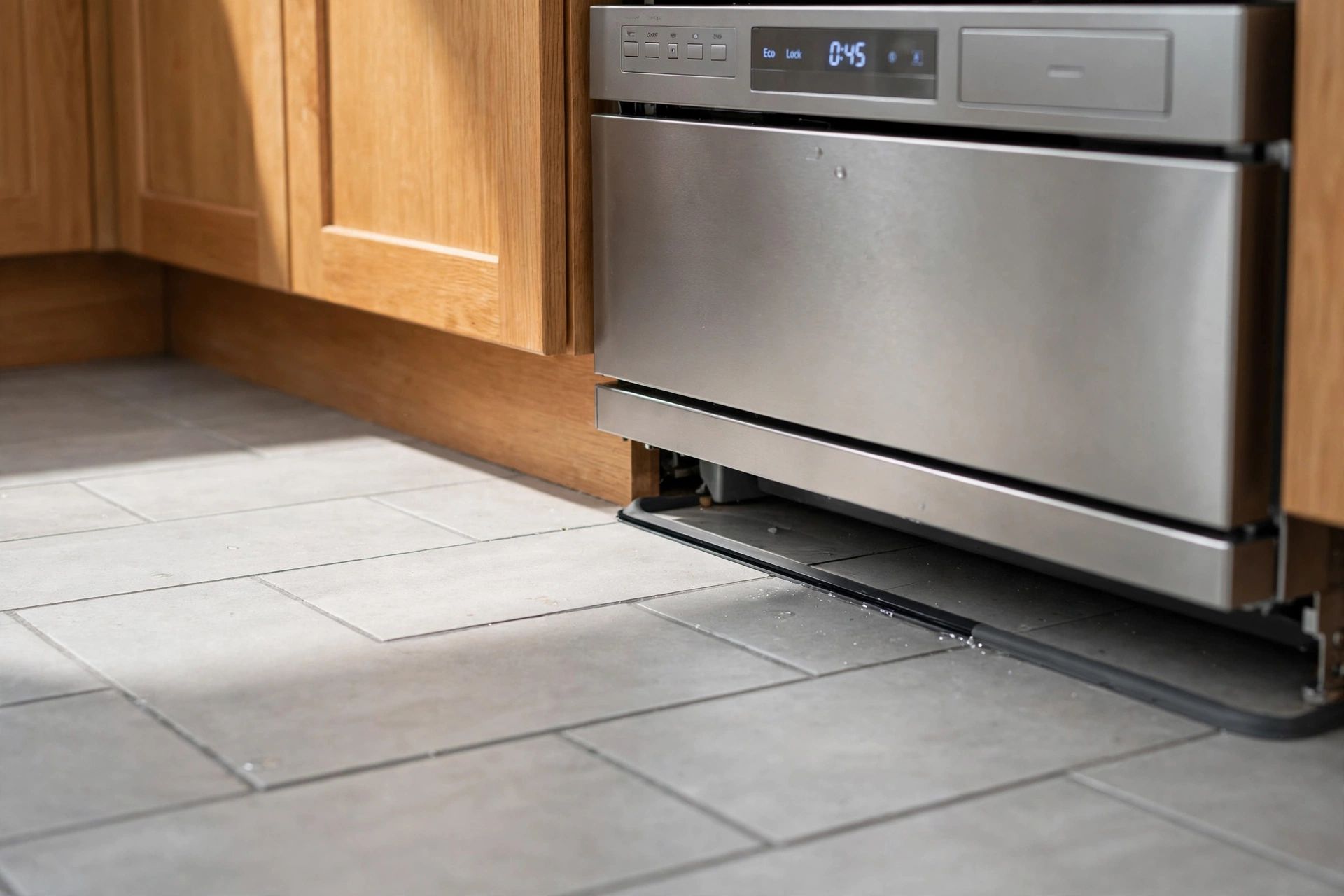
Before work starts, agree in writing whether the floor will run under the units or up to them. If it goes under fixed units, replacing it later can mean disturbing the kitchen. If it stops at the units, the appliance spaces still need the right floor height so a dishwasher or washing machine can slide in and sit level. Arrange disconnection and reconnection of appliances too.
In older homes, check what’s beneath the existing floor before lifting it. If a pre-1980 floor has black tiles or black adhesive, stop and get it assessed before anyone breaks it up. The HSE’s asbestos guidance explains the risks and what to do if you suspect asbestos-containing materials.
What kitchen guides say vs what we’ve found
Factor | What guides say | What we’ve found in real kitchens |
|---|---|---|
Best material | Pick the most waterproof or durable option | The best result depends on the room and detailing. LVT suits many larger kitchens; sheet vinyl can be the smarter choice in a small one. |
Laminate | Modern laminate is water-resistant | Board joints and edges remain vulnerable if water sits there. We’re cautious about fitting it in kitchens. |
Water at the sink or dishwasher | Choose a water-resistant surface | The risk is often a slow leak reaching an edge or joint under an appliance, where it may go unnoticed. |
Cleaning | Most hard floors are easy to mop | Smooth surfaces are straightforward, but grout, texture and badly finished seams can take more work. Follow the flooring maker’s care instructions. |
Underfoot feel | Hard flooring is practical | Tile is hard and cold; sheet vinyl has a softer, quieter feel. A cold floor may be down to a draughty suspended timber floor, not the finish. |
Cost | Compare the price per square metre | Include preparation, removal and appliance work. LVT can cost more to prepare and fit; sheet vinyl is often cheaper in a small room. |
The kitchen options, from real jobs
LVT and tile
Glue-down LVT → durable and practical when the subfloor is properly prepared; water on the surface is simple to wipe up, but edges and seams still need careful fitting and prompt attention to leaks; smooth designs are easy to clean; quieter and less hard underfoot than tile; works well in larger kitchens and open-plan ground floors. It costs more than basic sheet vinyl once preparation is included, but individual planks can be replaced if damaged. Use a product and adhesive approved for underfloor heating (UFH), and follow their temperature and installation limits.
Click LVT / SPC → can be quicker to install over a suitable, flat base, but the floating construction still needs the correct expansion space and careful detailing around fixed units. It isn’t automatically a better choice for a wet kitchen just because the surface resists water. Check the manufacturer’s instructions for appliances, room size, UFH and perimeter gaps before choosing it.
Porcelain or stone tile → very hard-wearing and a strong choice with UFH when the tile, adhesive and subfloor system are suitable; spills are easy to wipe from the tile, but grout needs cleaning and maintaining; hard and cold without heating, and dropped crockery is unlikely to survive. It costs more to install where the floor needs strengthening or extensive preparation. On suspended timber, a suitable stable base is essential or movement can crack the finish.
For a closer look at how LVT compares with laminate after real installations, see our fitter’s comparison of LVT and laminate.
Sheet vinyl and engineered wood
Sheet vinyl → one continuous piece can mean no seams across a small kitchen; the surface is easy to mop and comfortable and quiet underfoot; it is often the lowest-cost fitted option. It needs a smooth, prepared base because its thin surface can show imperfections. A cut or tear can be difficult to patch invisibly, and a large open-plan room may be better suited to another finish. It can work with UFH only where the product and installation instructions allow it.
Engineered wood → brings a natural timber look to an open-plan kitchen-diner, but it needs more care around the sink, dishwasher and other appliance zones. Wipe spills promptly, expect to maintain the finish, and check the product’s UFH suitability and temperature limits. It’s a look-led choice, not the easiest option for a kitchen that regularly gets wet.
In our work, sheet vinyl wins in small kitchens, rentals and tight budgets: it’s warm, quiet and joint-free across a modest room. Engineered wood has its place where the timber appearance matters and homeowners are willing to protect and maintain it. For more on vinyl formats and fitting, see our guide to vinyl floor tiles in Bristol.
Laminate: where it falls down
Laminate → can look convincing and is often chosen for its price, but a kitchen puts joints near sinks, dishwashers and washing machines; water that reaches the board edges can cause swelling or lifting; it’s easy enough to clean if spills are dealt with promptly, but it doesn’t have the same tolerance for standing water as a continuous sheet surface. It feels firmer and warmer than tile, and some products are approved for UFH, subject to the maker’s instructions.
We’re cautious because a floating floor has joints at every board, and a slow appliance leak can go unnoticed behind a kickboard. A water-resistant claim doesn’t make every joint or cut edge impervious. Laminate can suit a dry area with careful spill habits, but in a kitchen with a sink, dishwasher and washing machine, we usually recommend another material. Our LVT-versus-laminate comparison goes into the trade-offs in more detail.
Where kitchen floors actually fail
The surprise from these jobs is how rarely the middle of the floor is the problem. The repeat trouble spots are the dishwasher and the doorway. A dishwasher can weep slowly for months behind a kickboard; by the time there’s a smell or a soft patch, water may already have reached the floor edge or subfloor. At a doorway, mopping water can run to the lowest point and sit against a threshold.
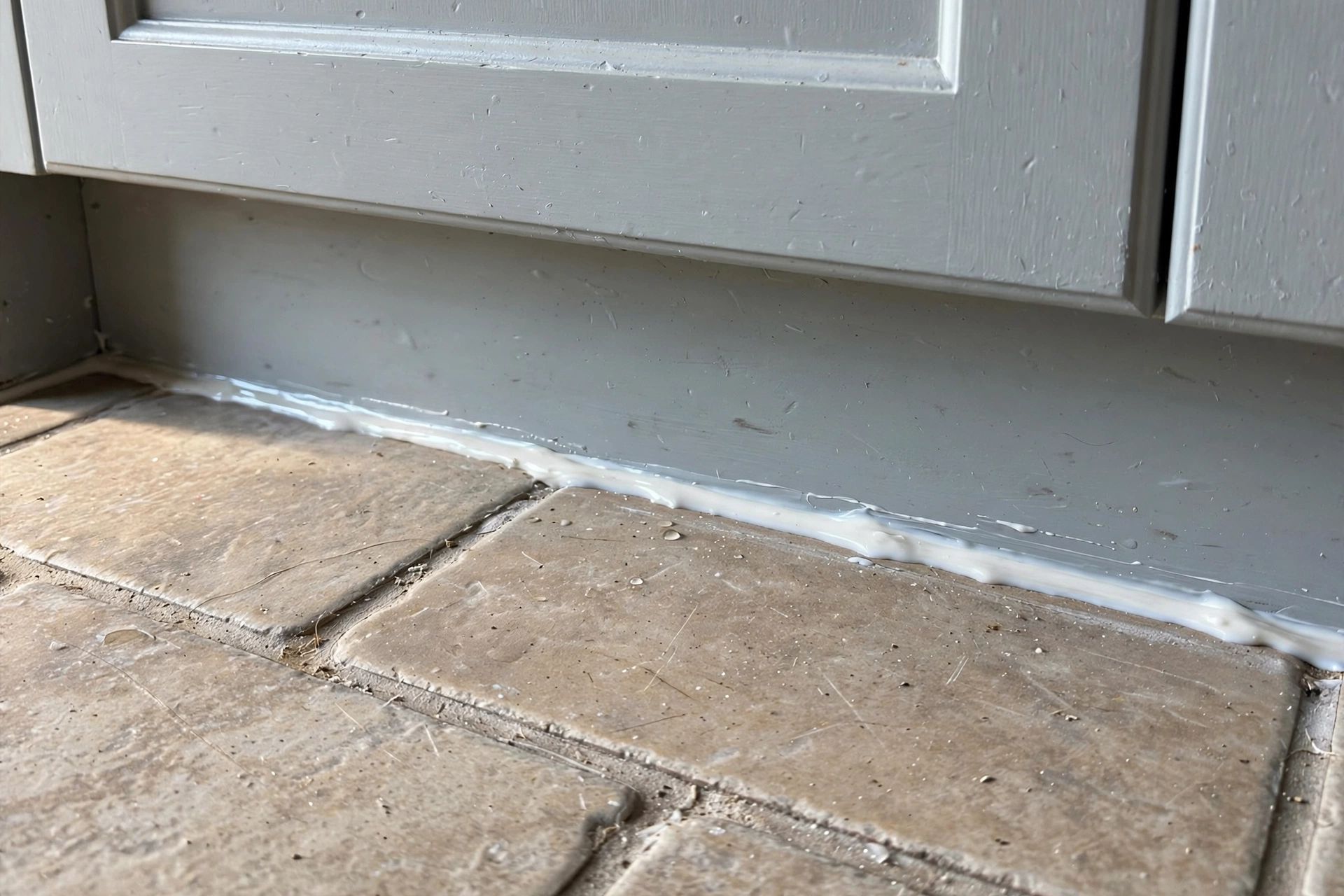
A neat-looking finish alone won’t prevent those problems. Appliance leaks need fixing quickly, and edges, seams and transitions need to be fitted and maintained as the product manufacturer requires. With LVT or sheet vinyl, water resistance at the surface does not mean water cannot get underneath through a poorly finished edge or damaged seam. We don’t have a separate waterproof-flooring guide among the available resources, so don’t treat a product label as a substitute for checking its installation requirements.
The subfloor can be another hidden issue. In our experience, damp or rot is sometimes found under older floors, often around appliances or thresholds. Investigate a suspicious smell, soft patch or loose flooring rather than covering it with a new finish. For background on choosing flooring by room and use, see our guide to choosing the right flooring for every room.
One other kitchen-specific surprise: if the floor feels cold, the cause may be the building rather than the finish. On a suspended timber ground floor, blocked airbricks can restrict ventilation below the floor. Check that before assuming a different surface will solve it.
Cleaning, comfort and underfloor heating
For everyday cleaning, sweep or vacuum grit first, then use a damp mop and a cleaner approved for the floor. Sheet vinyl and smooth LVT are straightforward to mop. Tile is also simple to wipe, but grout lines need more attention. Timber needs prompt spill clean-up and care suited to its finish. Avoid flooding any floor, especially around seams, thresholds and appliances.
Underfoot, sheet vinyl is softer and quieter than tile. LVT is generally less hard than tile too, though the subfloor and underlay or adhesive system affect how it feels. Tile is durable but hard on feet, dropped crockery and anything that lands on it. UFH can make tile a comfortable choice, but the full system—including adhesive, levelling compound and floor finish—must be suitable.
LVT, vinyl, laminate and engineered wood may all have products approved for UFH, but not every product is. Check the flooring and adhesive instructions for maximum floor temperature, installation method and any heating commissioning requirements. The Energy Saving Trust’s underfloor heating advice is a useful starting point; the product maker’s instructions govern the flooring itself.
Which should you choose for your kitchen
Busy family kitchen: choose glue-down LVT for a larger room, with proper preparation and careful detailing at appliances. For a small kitchen or a tighter budget, sheet vinyl is a strong practical alternative.
Open-plan kitchen and living space: glue-down LVT is usually the most versatile option, particularly if you want one continuous finish through to the hall or dining area. Engineered wood suits a look-led space if you accept the extra care.
Small kitchen or rental: sheet vinyl is often the sensible pick: a continuous surface, warm underfoot and usually lower cost. It’s not a poor substitute just because it costs less.
Period home: have the subfloor checked first. LVT and vinyl need a smooth, stable base; tile on suspended timber needs substantial preparation. Don’t cover damp, rot or a moving floor.
Kitchen with UFH: choose a product and fitting system rated for the heating. LVT with a compatible adhesive or tile can work well; check the maker’s limits before ordering.
Laminate in a kitchen: our recommendation is to avoid it where water from a sink or appliance could reach the joints. If the room is unusually dry and you still prefer it, follow the product’s guidance closely and deal with spills immediately.
Our usual call is glue-down LVT for a larger or open-plan kitchen, and sheet vinyl for a small room, rental or tighter budget. That recommendation flips if you want the look and feel of tile, have UFH and a suitable base, or prefer engineered wood and are prepared to maintain it. The room-by-room flooring guide can help compare choices elsewhere in the home too.
Before deciding, settle the floor-versus-units sequence with the kitchen fitter and check what lies beneath the old floor. Those decisions can matter as much as the finish you choose.
Frequently asked questions
What’s the best kitchen flooring?
For most larger kitchens, we’d choose glue-down LVT over a properly prepared subfloor. For small kitchens and tight budgets, sheet vinyl is often the better-value option. Across around 350 Bristol kitchen floors, the recurring failure point has been an edge or joint, especially beneath a dishwasher or at a doorway.
Is LVT good for a kitchen?
Yes, if the product is suitable and it’s fitted to a flat, prepared base. It’s durable and easy to clean, but seams and edges still need correct installation, and appliance leaks should be fixed quickly. Glue-down LVT is our usual choice for larger or open-plan kitchens.
Can you put laminate in a kitchen?
You can, but we’re cautious about recommending it. Board joints can be vulnerable if water from a sink or appliance sits on them, and slow leaks may go unseen. We’d usually choose LVT or sheet vinyl instead.
Tile or LVT for a kitchen?
Tile is very hard-wearing and works well with compatible UFH, but it’s hard underfoot and needs a stable base. LVT is generally more forgiving underfoot and can be easier to continue into adjoining rooms. The right choice turns on the finish you want, the subfloor, UFH and how wet the kitchen gets.
What’s the easiest kitchen flooring to clean?
Smooth sheet vinyl and LVT are both easy to mop when correctly fitted. Tile is easy to wipe too, but grout needs more attention. Whichever you choose, clean spills promptly and don’t flood the floor around seams or edges.
Is vinyl good for a kitchen?
Yes. Sheet vinyl is a practical choice for small kitchens, rentals and tighter budgets because it can be fitted as one continuous piece. It needs a smooth base and careful cutting, and a deep cut can be hard to repair invisibly. See our vinyl flooring options and fitting information.
What flooring is best for a kitchen with underfloor heating?
Tile and some LVT, vinyl, laminate and engineered wood products can be suitable, but check the exact flooring and fitting system for UFH approval and temperature limits. For LVT, use a compatible adhesive where required. The heating system, subfloor and flooring all need to work together.
For a kitchen floor in Bristol, Bath or the surrounding areas, we can look at the room, subfloor and appliance layout before recommending a material. Agree the installation sequence before the kitchen is fitted, and budget for preparation as well as the visible floor.