




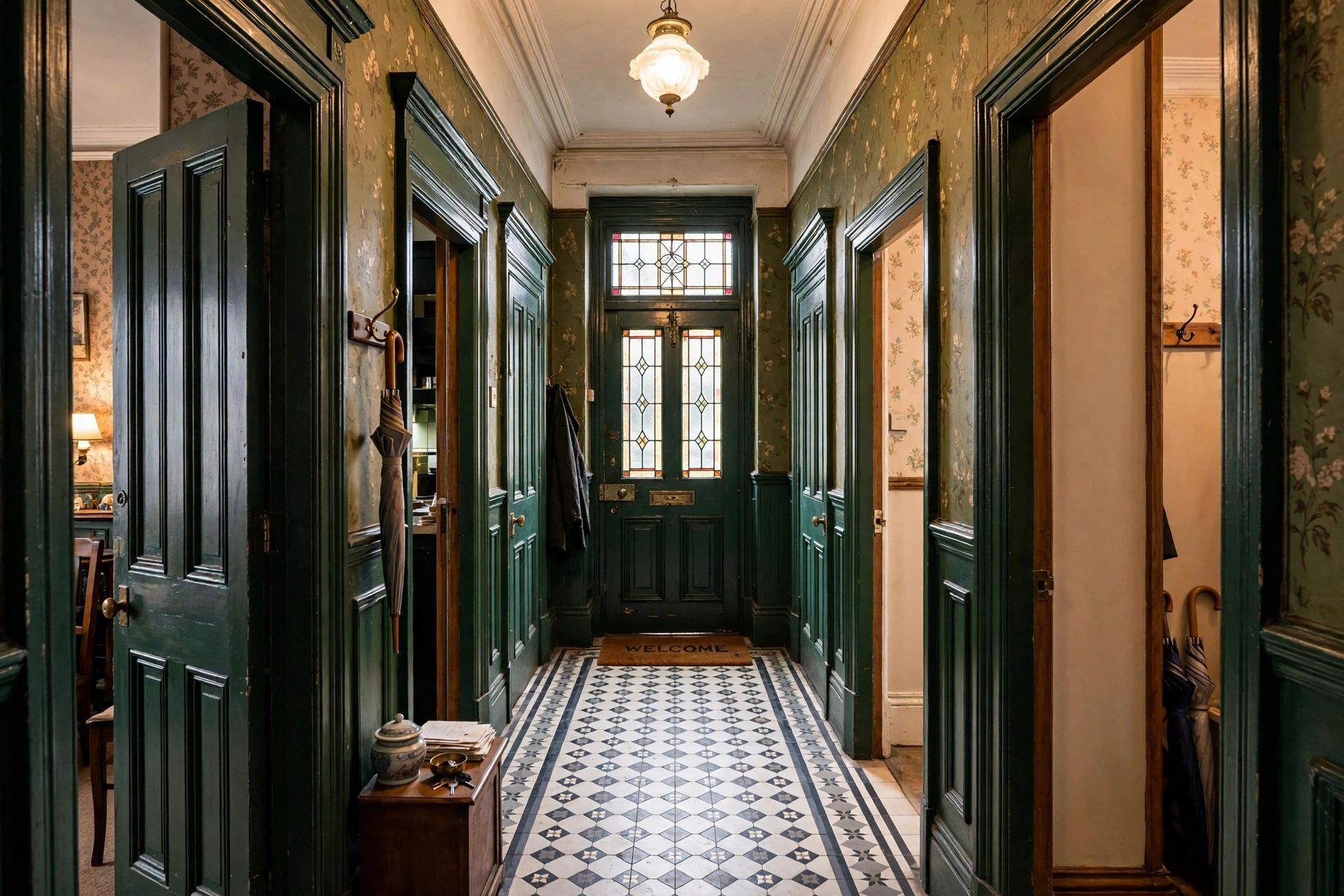
Across around 1,500 floors fitted in Bristol and Bath over the last five years, our verdict is to treat the hallway as its own decision: glue-down LVT is the best fit for most street-facing Bristol homes. The surprise is that hallway carpet often wears out before the lounge carpet because the pile gets crushed, not simply dirty—and in a period Bristol home, original Victorian or Minton tiles under the carpet may be worth uncovering rather than covering again.
Why a hallway is the hardest floor in the house
A hallway gets the first impression, the wet boots and the grit. In many Bristol terraces the front door opens straight onto the pavement, so there is little space to wipe feet before walking on. The first metre of floor takes the worst of it: rain, street grit, winter salt, buggies, bikes and muddy paws.
It also joins the rest of the ground floor. A hall might meet the lounge, kitchen, stairs and front door within a few metres. That means the floor needs to wear well and make sense at several thresholds, not just look good in a sample.
Most flooring advice treats a hallway like any other room and tends to steer people towards LVT or laminate. But carpet can still be right in a protected, quiet hall, and an original tiled floor may be the best option of all. Our guide to choosing flooring for a hallway in Bristol looks at the practical choices in more detail.
How we judged this
We’ve fitted around 1,500 floors across Bristol and Bath in the last five years, in homes ranging from Victorian terraces and 1930s semis to new builds. That figure is for floors overall, not 1,500 separate hallways. Hallways are the floor we replace earliest and most often: more than half of the hall carpets we lift are the newest floor in the house, yet show more wear than the older lounge carpet.
We judge a hallway by what comes back to us: the dark traffic track in a carpet, swollen or damaged joints, loose edges, and floors that still perform after years of daily use. The carpet track is often crushed pile. The fibres have bent flat and lost their twist, so they reflect light differently; cleaning cannot restore their shape.
Fitting makes a bigger difference in a hallway than the small floor area suggests. Narrow runs and bowed walls affect sightlines; doors need to clear the finished floor; carpet must be cut around stair posts and stringers; and hard flooring has to meet several adjoining rooms at the right height. Original period tiles need careful inspection before anyone covers or tries to restore them. In older terraces, we also check the subfloor, especially around the front-door threshold. Our subfloor preparation guide explains why that work matters before a new floor goes down.
What hallway guides say vs what we’ve found
Many quick flooring guides favour LVT and laminate because they are easy to compare on a product page. That misses the difference between a hallway open to the street and one protected by a porch, as well as the value of an existing period floor or a dense carpet in a quiet home.
Factor | What guides say | What we’ve found in real hallways |
|---|---|---|
Best material | Choose a hard-wearing hard floor, often LVT or laminate | Glue-down LVT suits most exposed Bristol halls; the right choice changes with the house and how the entrance is used |
Carpet | Avoid it because the hall gets dirty | It can work in a protected, quiet hall, but soft plain carpet shows crushed pile and traffic sooner |
Tile and period floors | Treat tile as another new-floor option | Check for original Victorian or Minton tiles before covering them; sound tiles may be worth restoring |
Water at the door | Pick a waterproof material | A barrier mat long enough for several steps prevents more wear than upgrading the floor alone |
Thresholds | Often barely mentioned | Door bars, floor heights and door clearance need planning at every junction |
Durability | Compare product claims | The entrance conditions, subfloor preparation and fitting details decide how well a floor copes |
The hallway options, from real jobs
LVT, tile and original period floors
LVT — wears well in a busy hall → handles wet boots and grit → can continue into a kitchen with no threshold → wins for most street-facing homes → needs a properly prepared subfloor and costs more to install than sheet vinyl → suits a Bristol terrace, family home or dog-owning household. Glue-down planks can be replaced individually if one is damaged. They need a sound, smooth base; fitting over an uneven or moving floor without the right preparation is asking for problems. See our installer’s comparison of LVT and laminate for the trade-offs beyond the product descriptions.
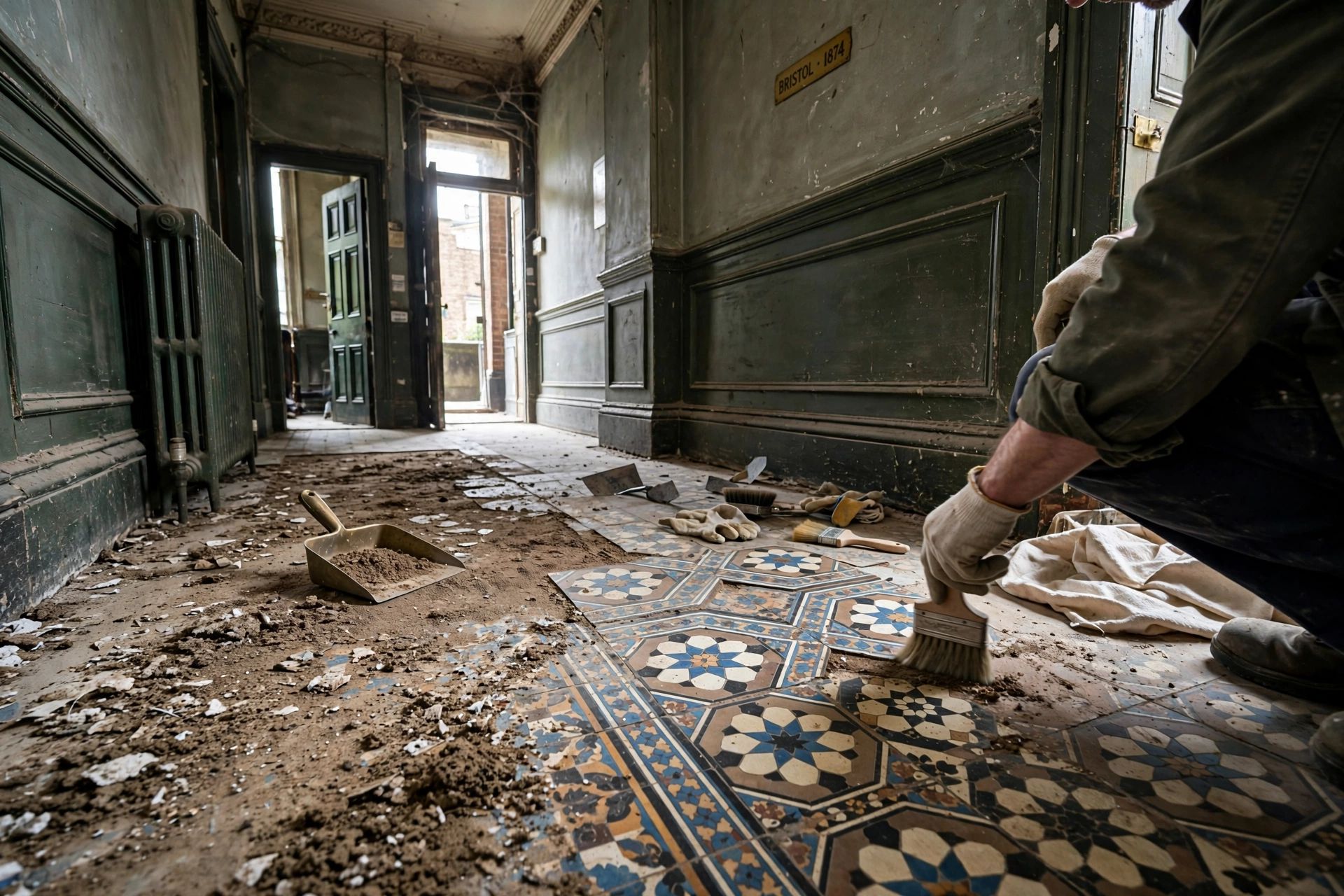
New tile — very hard-wearing → copes with water and grit → can meet other rooms neatly if heights are planned → wins where a tiled finish suits the house → can feel hard and cold underfoot and installation adds weight and cost → suits a hall with a suitable, well-prepared base. Don’t assume a new tile floor is always the answer in a period home. Lifted carpet may be hiding Victorian or Minton tiles that are part of the house’s character. Check their condition and get suitable advice before deciding whether to expose, repair or cover them. Historic England’s building conservation advice is a useful starting point for understanding why historic fabric needs care.
Engineered wood and laminate
Engineered wood — can wear attractively if cared for → needs protection from wet shoes and standing water → can transition to other rooms with planned trims or a continuous layout → wins when a natural wood finish and continuity matter → costs more and needs a suitable, stable subfloor → suits a well-protected entrance and a homeowner prepared to look after it. It is not my first choice for a front door that opens directly onto a wet pavement.
Laminate — resists ordinary foot traffic, but damage at joints can be hard to put right → water is the weak point at a frequently wet entrance → trims can be needed between rooms → wins on upfront price and a wood-look finish → can be a poor match for repeated wet boots and grit → suits a drier, more sheltered hall on a tighter budget. The combination of traffic and water at the front door is why we’re cautious about recommending it for a typical exposed terrace hallway. Our comparison of LVT and laminate goes into those differences.
Carpet and runners in a hallway
Carpet — a dense, tightly twisted pile holds up better than a soft, plush one → grit and water can mark or soil it → can continue from the hall onto the stairs, but the fit around posts and stringers needs care → wins for warmth, sound absorption and a softer first step → traffic crushes the pile, especially near a street-facing door → suits a porch-protected hall without heavy wet-foot traffic. In a Bristol terrace, sound matters: a hard floor can echo through the house, while carpet absorbs some of that noise.
Choose a flecked mid-tone rather than a plain, soft carpet that matches the lounge. Flecks disguise everyday dust better, but they do not stop abrasion or pile crush. A runner gives a softer route through the hall, though its edges need securing and the exposed flooring still takes wear. If you’re weighing carpet materials, our wool versus synthetic carpet review covers what we’ve seen on completed jobs.
Sheet vinyl — handles ordinary hallway use well → waterproof and easy to mop → its single sheet avoids joints across the main run, though doorways still need a neat finish → wins on budget and speed → looks less convincing than LVT over a long hall and can be difficult to patch invisibly → suits rentals and practical budget renovations. It is a straightforward option when keeping costs down matters more than the look of individual planks.
Where the result surprised us
The biggest surprise is how quickly a hall carpet can look tired beside the same carpet in the lounge. In our experience, more than half of the hallway carpets we lift are the newest floor in the house and the most worn. The dark track down the middle is often crushed pile, not dirt that a stronger cleaner will remove.
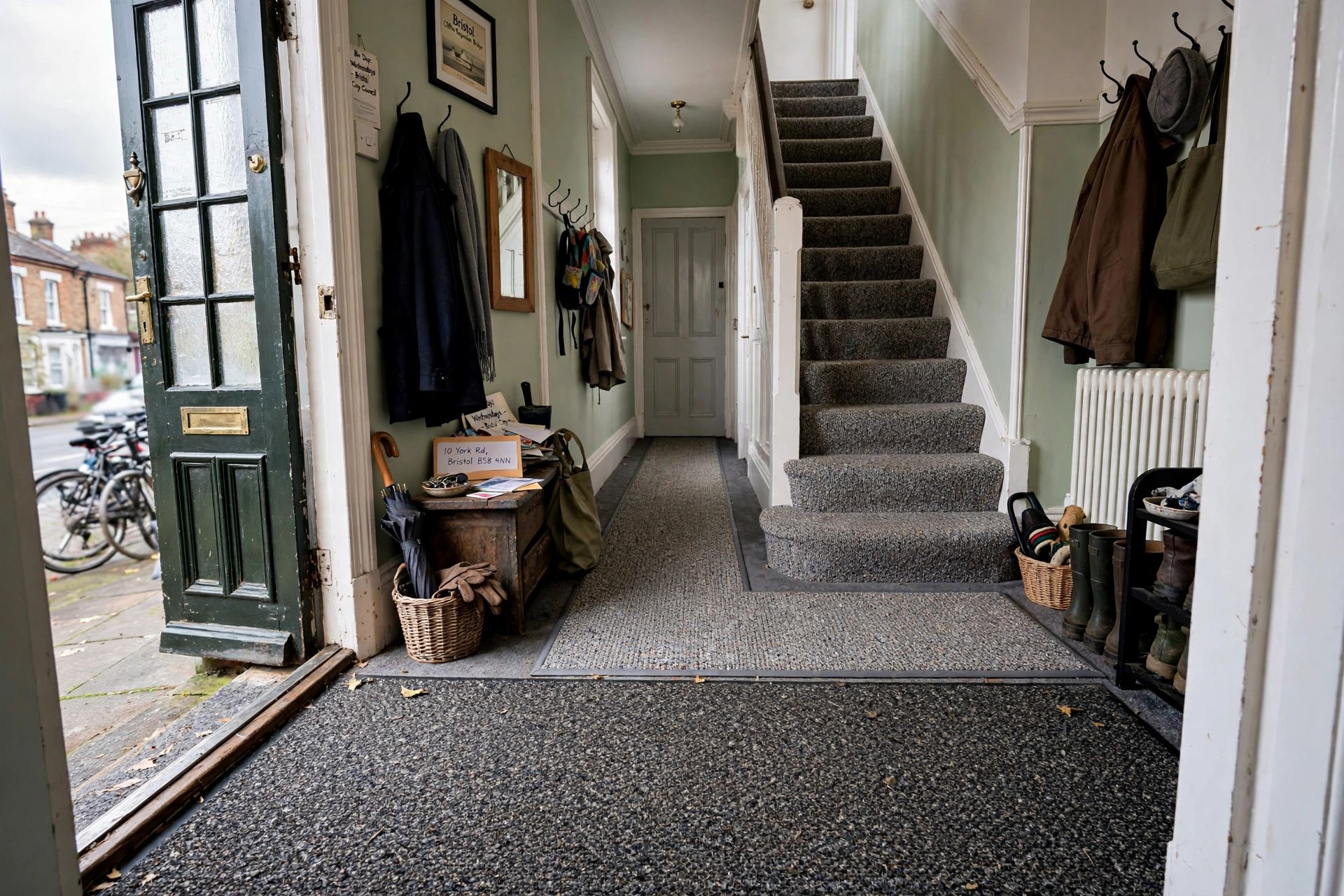
That is why the best fix is not always a more expensive carpet or a tougher floor. A full-width barrier mat inside the front door, long enough for three steps, catches grit and moisture before they reach the main floor. It can prevent more wear than a flooring upgrade.
The other surprise comes when old carpet is lifted in a period home. Original Victorian or Minton tiles can change the whole feel of a hallway and its first impression. They are not automatically in good enough condition to expose, but they deserve an inspection before being covered. Our article on common flooring mistakes in Bristol homes covers why rushing into a replacement can be costly.
Front-door dirt, thresholds and period homes
Grit is abrasive. Water, salt and grit dragged in on shoes work against the floor every day. Put a barrier mat just inside the door, as wide as the hall allows and long enough to take several steps. Shake or vacuum it regularly; a mat full of grit cannot catch more.
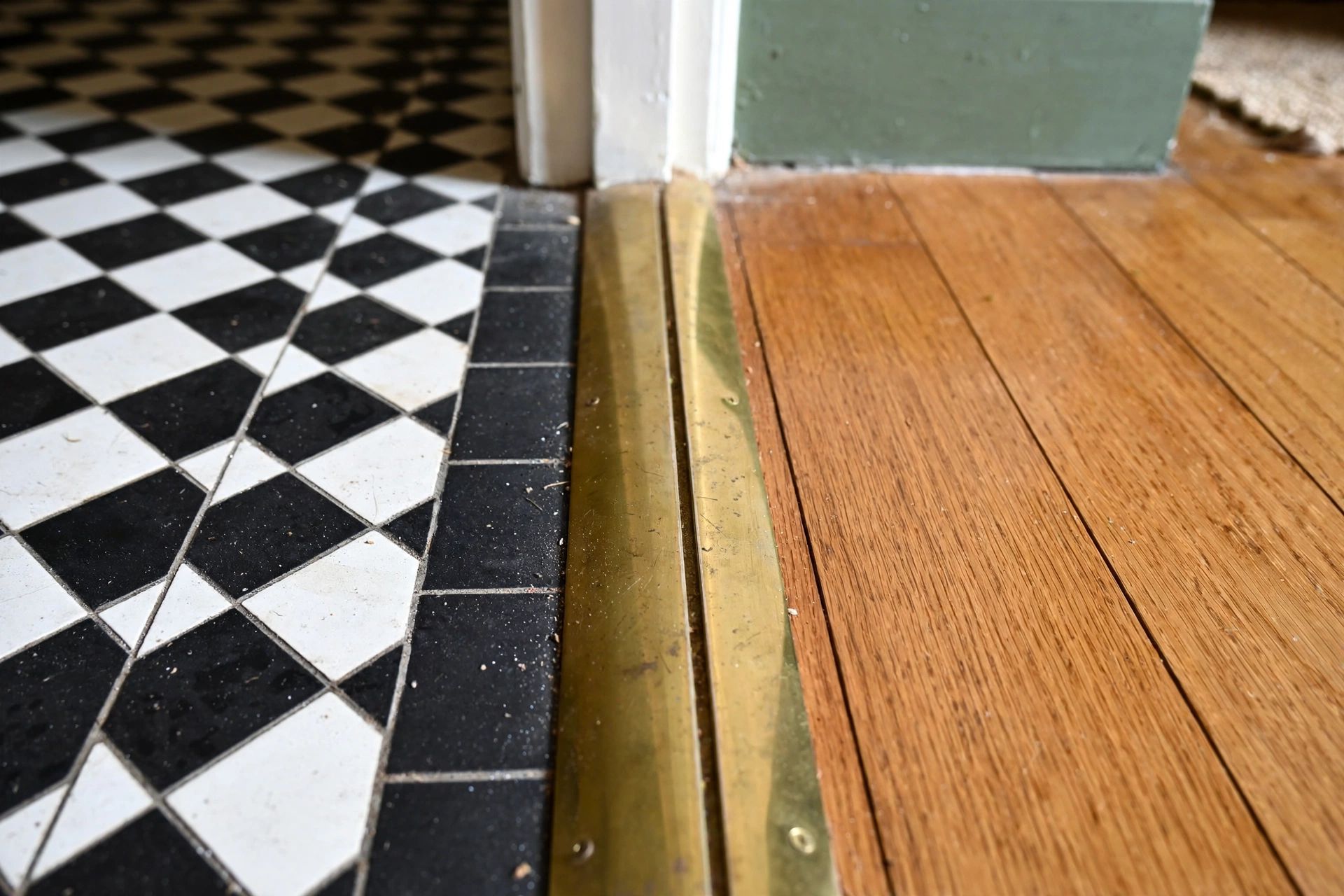
Hard floors need a plan for every doorway. A typical hall can have four or five openings as well as the front door. The installer has to check threshold heights, door clearance and how the hall will meet each adjoining room. Running one floor into the kitchen can avoid a threshold there, but it is a design choice—not a reason to ignore the rest of the doors.
Victorian Bristol terraces often have suspended timber floors, uneven boards and awkward transitions. A hard floor may need plywood and smoothing compound to create a suitable base. That preparation adds cost, but skipping it can undermine the finish. Check the front-door threshold for signs of damp or rot while the old floor is up: across the older floors we lift, about one in six has damp or rot somewhere underneath, and the entrance is a common place to find it. More on hidden damp and rot beneath Bristol floors.
Which should you choose for your hallway
Victorian terrace with a front door onto the pavement: glue-down LVT is our usual pick, with a full-width barrier mat. Inspect for original tiles and check the threshold and subfloor before choosing.
1930s semi with a porch or sheltered entrance: LVT is still a practical option; engineered wood or dense carpet may also suit if the entrance stays dry and you want continuity or a quieter feel.
New build: LVT is a strong choice for a busy entrance, but decide how it will meet the stairs and adjoining rooms before ordering. Our guide to flooring a new build in Bristol covers timing and material choices.
Pets, young children or bikes coming through the hall: choose a surface that is easy to clean and can take repeated grit and water. LVT is usually the sensible choice; sheet vinyl is the budget alternative.
Narrow hallway: consider the sightline and pattern as well as the material. A continuous floor can make transitions simpler, but door clearance and tidy thresholds still need checking.
Tight budget or rental: sheet vinyl gives a waterproof, quick-to-fit practical floor. Laminate may cost less up front, but we would be wary of it at an exposed front door.
Quiet household with a porch: a dense, flecked carpet can work well if warmth and sound absorption matter more than maximum resistance to wet-foot traffic.
The pick flips with the conditions: a period hall with sound original tiles calls for an inspection before any new flooring; a sheltered hall can make carpet or wood more practical; a street-facing entrance strengthens the case for LVT or sheet vinyl. Whichever you choose, get the front-door area and subfloor checked while the old floor is up.
Frequently asked questions
What’s the best flooring for a hallway?
For most Bristol homes with a front door opening onto the street, glue-down LVT is the best all-round choice. It handles wet shoes and grit, and it can run into an adjoining room. Fit a proper barrier mat as well.
What’s the most hard-wearing hallway flooring?
Tile and well-fitted LVT are both durable choices. In practice, entrance exposure, subfloor preparation and fitting matter as much as the material. A dry, sheltered hall has different demands from one that takes wet boots every day.
Is carpet OK in a hallway?
Yes, if the entrance is protected and you want a warmer, quieter floor. Choose a dense, tightly twisted, flecked mid-tone rather than soft plain carpet. Expect the busiest section to show wear sooner than carpet in the lounge.
Is LVT or tile better for a hallway?
LVT is usually the more practical choice for most Bristol homes: it handles water and grit and is easier to carry through to another room. Tile can be an excellent hard-wearing finish where the base is suitable. In a period home, check for original tiles before installing either.
What should I do about original Victorian tiles?
If carpet or another floor is hiding original Victorian or Minton tiles, inspect them before deciding to cover them. Their condition and the work needed to expose or repair them will guide the choice. Historic England’s conservation advice offers context for caring for historic features; get specialist advice for the tiles themselves.
What flooring suits a hallway in a period home?
Start by checking the existing floor. Original tiles may be worth restoring, while suspended timber and uneven boards may need preparation before a new floor is fitted. In a street-facing terrace, LVT is often a practical choice after the subfloor and threshold have been checked.
Should hallway flooring match the adjoining rooms?
It can, especially if a continuous floor helps simplify transitions into the kitchen. Matching is not essential, though. Plan the threshold heights and door clearance first, then choose whether continuity, sound absorption, budget or the needs of each room matter most. In our jobs, the hall wears differently from the lounge even when the carpet is the same—so it should be specified for its own conditions.
If you’re planning a hallway floor in Bristol, Bath or the surrounding area, Seamless Floors can help check the subfloor, thresholds and options before you decide what to fit.