


How to Measure a Room for Carpet or Flooring
So, you’re thinking about getting new carpet or flooring? That’s great! It can really change the feel of a room. Before you pick out the perfect style, though, you’ve got to get the measurements right. It sounds simple, but trust me, getting it wrong can cause a whole lot of hassle later on. We’re going to walk through how to measure a room for carpet, so you can avoid extra costs and make sure everything fits just right.
Key Takeaways
Having the right tools, like a good tape measure and maybe a laser device for bigger spaces, makes measuring much easier and more accurate.
For regular square or rectangular rooms, just measure the length and width, then multiply them to get the total square footage.
If your room has odd shapes, like alcoves or doorways, break it down into smaller rectangular sections and add up their measurements.
Always add a bit extra, usually 5-10%, to your total square footage to account for cuts, seams, and any mistakes – this is called the waste factor.
Online calculators can help figure out square footage and sometimes even suggest how to use carpet rolls efficiently, but double-checking their numbers is a good idea.
Essential Tools For Accurate Room Measurements
Alright, let’s talk about getting the measurements right before you even think about ordering carpet. It might seem like a simple tape measure job, but having the right gear makes a huge difference. Trust me, I’ve learned the hard way that guessing leads to headaches and extra trips to the store.
The Indispensable Tape Measure
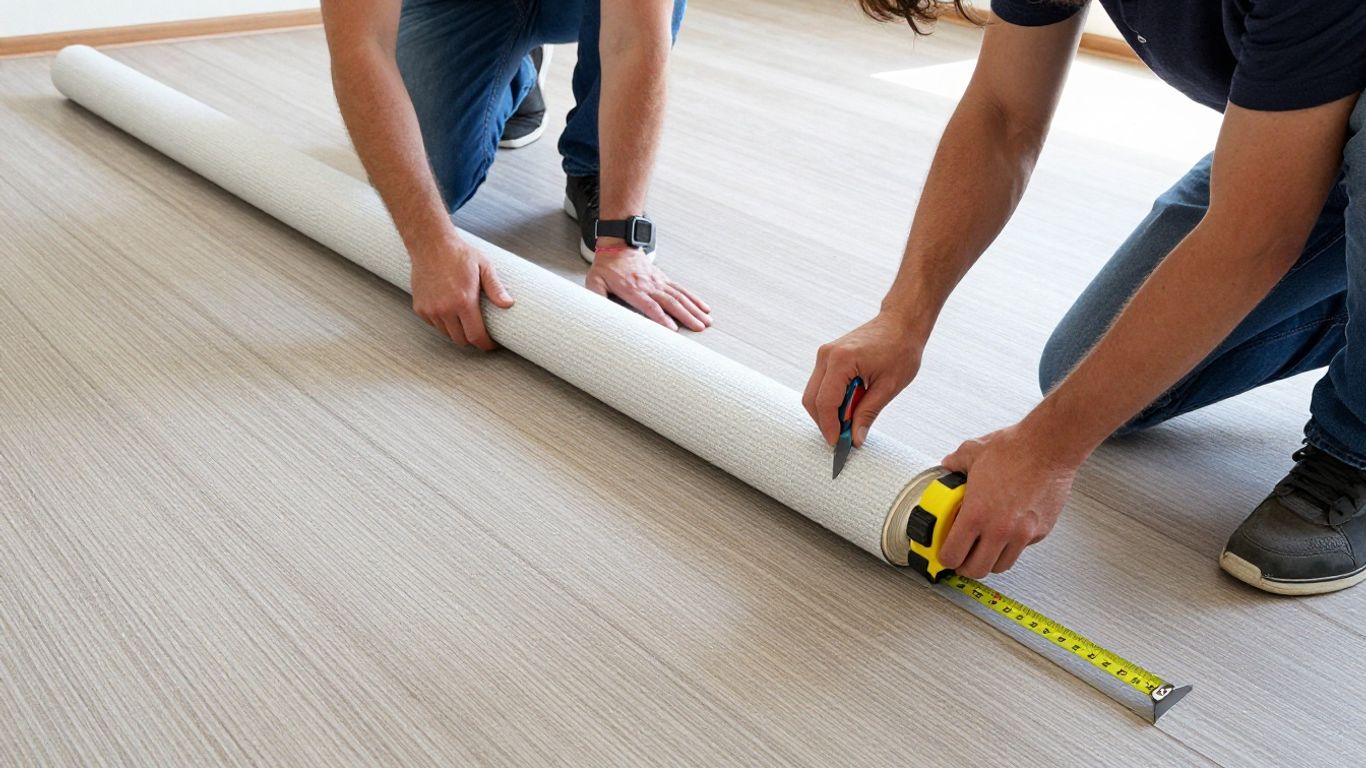
This is your number one tool, no question. You need a good, sturdy retractable tape measure. I’m talking about one that doesn’t bend easily and has clear markings. For most rooms, a 25-foot tape measure is usually plenty, but if you’ve got a massive space, you might want something longer. Accuracy here is key, so make sure you’re pulling the tape taut and reading the numbers carefully. Don’t just eyeball it; get down to the inch if you can. It’s the foundation for all your other calculations.
Marking Guidelines With A Chalk Line
For straighter lines, especially in bigger rooms or if you’re dealing with angled walls, a chalk line is a lifesaver. You stretch the string taut, snap it, and boom – you’ve got a perfectly straight line to follow or measure against. It’s super helpful for keeping things aligned, especially when you’re planning out where seams might go or just marking out sections of a complex room. It’s one of those tools that makes a job look more professional, even if you’re doing it yourself. For a good overview of tools that help with precise placement, check out this checklist of essential tools.
Visualizing Layouts With Graph Paper
Sometimes, just looking at a room isn’t enough. That’s where graph paper comes in handy. Sketching out your room’s shape, even if it’s just a rough drawing, can help you see how the carpet will fit. You can mark doorways, closets, and any weird angles. It’s a great way to plan out your cuts and figure out the best way to lay the carpet to minimize waste. It’s like a mini blueprint for your flooring project.
Leveraging Laser Measuring Devices
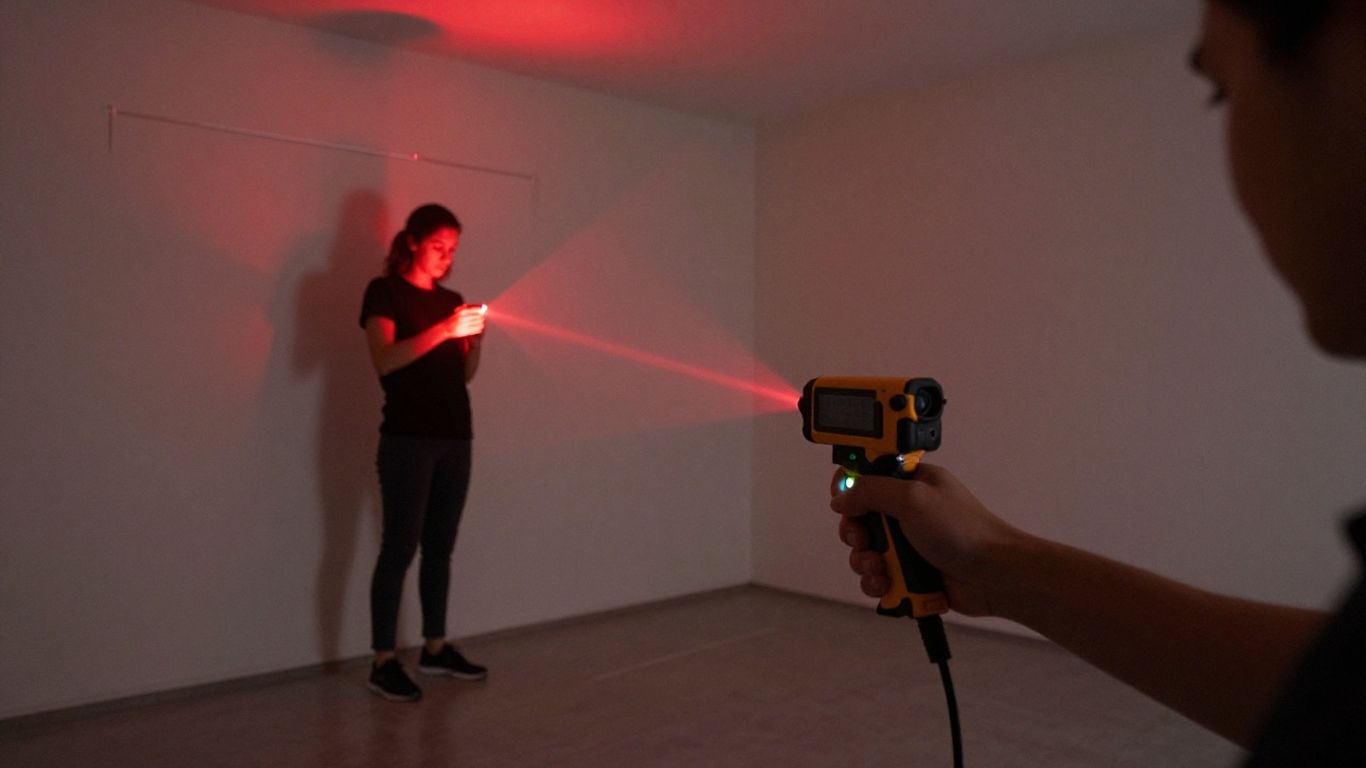
Now, if you’ve got a really big room, or maybe a space with high ceilings, wrestling with a long tape measure can be a pain. That’s where laser measuring devices shine. You just point it at the wall, press a button, and it gives you an instant reading. They’re super quick and can be really accurate, especially for long distances. While they can be a bit pricier, if you do a lot of measuring or have a challenging space, it might be worth looking into one. They can really speed things up and reduce the hassle.
Calculating Square Footage For Standard Rooms
Alright, let’s talk about figuring out the basic square footage for your room. This is the first big step, and honestly, it’s not too complicated if you’ve got a standard rectangular or square space. Getting this number right is super important because it’s the foundation for everything else, from buying the right amount of carpet to knowing what you’ll pay.
Measuring Length And Width
For a simple room, you’re basically just measuring two sides: the length and the width. Grab your trusty tape measure – the longer, the better, especially for bigger rooms. Make sure you measure along the walls, from one end to the other. It’s best to measure in feet, and try to be as precise as you can, down to the inch if possible. For example, if one wall is 12 feet long and the adjacent wall is 10 feet long, jot those numbers down.
Calculating Total Square Footage
Once you have your length and width measurements, the math is pretty straightforward. You just multiply those two numbers together. So, using our example from before, if the room is 12 feet long and 10 feet wide, you’d do 12 feet multiplied by 10 feet. That gives you 120 square feet. This is your room’s basic area. You can use a simple square footage calculator if you want to double-check your math or if you’re doing multiple rooms.
Understanding Standard Carpet Roll Widths
Now, here’s something that trips people up: carpet usually comes in big rolls, and they aren’t infinitely wide. The most common widths you’ll see are 12 feet, 13.5 feet, or 15 feet. Why does this matter? Because installers try to lay the carpet in a way that uses these standard widths to minimize seams and waste. Knowing these widths helps you think about how the carpet will actually be laid out in your room, which can affect how much you need. It’s not just about the total square footage; it’s about how that square footage fits onto the roll.
Thinking about carpet roll widths before you buy can save you a surprising amount of money and hassle. Installers often plan their cuts based on these standard dimensions to make the job smoother and reduce leftover material.
Measuring Complex Room Shapes
Not all rooms are simple squares or rectangles, right? Sometimes you’ve got nooks, crannies, or weird angles that throw a wrench in the works. Don’t sweat it, though. Figuring out the square footage for these trickier spaces just means breaking them down into smaller, manageable pieces. The key is to divide and conquer.
Breaking Down Irregular Spaces
When you run into a room that isn’t a straightforward rectangle, the best approach is to sketch it out. Grab some graph paper or even just a notepad. Draw the shape of your room as best you can. Then, divide that drawing into smaller, standard shapes like rectangles or squares. Measure each of these smaller sections individually. Once you have the measurements for all the parts, add them up to get the total square footage for the whole room. It sounds like more work, but it’s way easier than trying to measure the whole odd shape at once.
Measuring Alcoves And Doorways
Alcoves and doorways can add a bit of complexity. For an alcove, treat it like a mini-room attached to the main one. Measure its length and width and calculate its square footage separately. If it’s a space you’ll be carpeting, add this measurement to your main room’s total. For doorways, you usually don’t need to subtract them unless they’re unusually large or you’re trying to be super precise. Most carpet installers will account for standard doorway transitions. However, if you have a wide, open doorway that’s part of the main floor area, measure it as part of the room’s length or width. This is where knowing your carpet roll widths can help you plan how the carpet will lay.
Calculating Hallways And Stairs
Hallways are often long and narrow, so measure their length and width just like any other rectangular space. If your hallway has turns or changes in width, break those sections down too. Stairs are a bit different. You’ll need to measure the width of each step and then the height (the riser) and the depth (the tread). It’s often easiest to measure each step individually and then multiply by the number of steps. Some people find it helpful to create a template for stairs, especially if they have rounded edges or landings. Remember to add a bit extra for cuts and seams, particularly on stairs where pieces need to fit precisely.
When dealing with complex shapes, accuracy is your best friend. Double-checking your measurements before you commit to ordering materials can save you a lot of hassle and money down the line. It’s better to measure twice and cut once, as they say.
Here’s a quick way to think about breaking down a room:
Sketch the room: Draw the overall shape.
Divide into sections: Break it into rectangles or squares.
Measure each section: Get the length and width of each part.
Calculate area of each: Multiply length by width for each section.
Sum the areas: Add all the section areas together for the total square footage. This method is a solid way to get your room’s square footage right, no matter how wonky the shape.
Accounting For Waste And Cuts
So, you’ve measured your room, got your square footage down. Great! But hold on, before you order that carpet, we need to talk about the stuff that doesn’t quite fit perfectly. This is where accounting for waste and cuts comes in, and it’s a pretty big deal if you don’t want to end up short.
The Importance Of A Waste Factor
Think about it: carpet comes in big rolls, usually around 12 to 15 feet wide. Your room probably isn’t a perfect rectangle that matches those dimensions exactly. You’ll need to cut pieces to fit around corners, doorways, and sometimes even awkward angles. Plus, if you’re laying down a patterned carpet, you’ll want to make sure the pattern lines up from one piece to the next, which often means trimming off a bit more. This extra material you buy to cover those inevitable cuts and adjustments is called the waste factor. Skipping this step is a common DIY mistake that can lead to a frustrating trip back to the store, or worse, a visible seam where you ran out of carpet.
Calculating Total Carpet Needed
Most flooring pros recommend adding about 5% to 10% to your total square footage for waste. For really complex rooms or if you’re working with a tricky pattern, you might even go a little higher. Here’s a simple way to figure it out:
Calculate your room’s total square footage (Length x Width).
Determine your waste percentage. 10% is a safe bet for most situations.
Multiply your total square footage by your waste percentage. For example, if your room is 150 sq. ft and you’re using a 10% waste factor, that’s 150 x 0.10 = 15 sq. ft of waste.
Add the waste amount to your room’s square footage. So, 150 sq. ft + 15 sq. ft = 165 sq. ft. This is the minimum amount of carpet you should order.
Remember, it’s always better to have a little extra carpet left over than to not have enough. Those leftover pieces can be handy for future repairs too.
Adjusting For Pattern Matching
If you’ve picked out a carpet with a distinct pattern, you’ll need to be a bit more generous with your waste calculation. Patterns need to align across seams, and this often requires cutting into the pattern repeat. This means you might need to add an extra few percentage points to your waste factor, sometimes pushing it closer to 15% or even 20% for very large patterns or complex layouts. It’s a good idea to look at the carpet’s pattern repeat information, which is usually available from the manufacturer, and factor that into your measurements. You can use online carpet calculators that often have options to account for pattern matching, which takes some of the guesswork out of it. Using these tools can save you a headache down the line.
Utilizing Digital Measurement Tools
Okay, so you’ve got your trusty tape measure, maybe even a chalk line for those tricky spots. But what if I told you there are some pretty neat digital tools out there that can make measuring your room for carpet or flooring a whole lot easier? Seriously, these things can save you time and help you avoid those annoying little mistakes that end up costing you money.
Benefits Of Online Carpet Calculators
Online carpet calculators are like having a little assistant who does the math for you. You just punch in your room’s length and width, and poof, it spits out the total square footage. But here’s the cool part: many of them also factor in things like standard carpet roll widths and a little extra for waste. This means you’re more likely to order just the right amount of carpet, not too much and definitely not too little. It’s a real sanity saver when you’re trying to figure out how much material to buy.
Carpet Calculator vs. Square Footage Calculator
It’s easy to get these two mixed up, but they’re not quite the same. A basic square footage calculator just tells you the area of your room. Simple enough, right? But a carpet calculator is a bit smarter. It’s designed with flooring installation in mind. It often considers:
Standard carpet roll widths (like 12 or 15 feet)
A typical waste percentage (usually around 10%)
How carpet is typically laid out to minimize seams
So, while a square footage calculator is good for a general idea, a dedicated carpet calculator gives you a more realistic estimate for your flooring project. You can even find apps that use your phone’s camera to scan the room, like the Measure Square Room Scanner app.
How Digital Tools Aid Installation Planning
Beyond just telling you how much carpet to buy, these digital tools can actually help you plan the installation itself. Some software can create a basic layout of your room, showing you where seams might fall or how to best cut the carpet to use the material efficiently. This is super helpful for minimizing waste and making sure the finished floor looks professional. For more complex layouts, devices like the MEAZOR 3D can even generate 3D plans, which really helps visualize the whole project before you even order a single roll. It’s like having a blueprint for your new floor!
Addressing Unique Room Features
Subtracting Permanent Obstructions
Sometimes rooms aren’t just simple rectangles. You might have built-in cabinets, a fireplace hearth, or even a kitchen island that takes up floor space. These permanent fixtures need to be accounted for. You don’t want to buy carpet for an area that will never be covered. To handle this, measure the length and width of each obstruction. Then, calculate the square footage of each obstruction and subtract that total from your room’s overall square footage. It’s a bit like doing a puzzle, really. You’re figuring out the exact usable floor space.
Here’s a quick way to keep track:
Measure the obstruction: Get the length and width in feet.
Calculate obstruction area: Multiply length by width.
Subtract from total: Take this number away from your room’s total square footage.
Measuring Around Built-In Elements
Built-in elements like bay windows, columns, or even awkward closet nooks can throw off a simple length-and-width measurement. For bay windows, measure each section of the bay separately and add those areas together. If you have columns, measure their diameter and calculate the circular area they occupy, then subtract that. For any other odd shapes, it’s often best to break them down into smaller, manageable rectangles or triangles, measure each one, and sum them up. This detailed approach helps ensure you get the most accurate flooring estimate possible, avoiding surprises later on. Remember, precision here saves you headaches down the line. It’s all about getting the exact amount of flooring you’ll actually need for the visible floor space. For more on handling tricky layouts, check out this guide on measuring irregular spaces.
Wrapping Up Your Measurements
So, you’ve gone through the steps and figured out the measurements for your room. It might seem like a lot of detail, but getting this right means you’ll buy the right amount of flooring, saving you money and avoiding those frustrating trips back to the store. Whether you used a tape measure, a laser tool, or even an app, you’ve set yourself up for a smoother flooring project. Now you’re ready to pick out that new carpet or flooring and get your space looking just the way you want it.
Frequently Asked Questions
What are the basic tools I need to measure a room for carpet?
You’ll primarily need a sturdy tape measure to get accurate length and width readings. A pencil and paper are useful for jotting down numbers, and a chalk line can help you mark straight lines on larger or oddly shaped floors. Some people also find graph paper helpful for sketching out the room.
How do I calculate the square footage of a simple rectangular room?
It’s easy! Just measure the length of the room in feet and the width of the room in feet. Then, multiply those two numbers together. For example, if a room is 12 feet long and 10 feet wide, its square footage is 120 (12 x 10 = 120).
What if my room isn’t a perfect rectangle?
No problem! For rooms with nooks, crannies, or angled walls, just break the space down into smaller, simpler shapes like rectangles or squares. Measure each of those smaller sections separately and then add all the measurements together to get the total square footage for the whole room.
Why do I need to add extra carpet for ‘waste’?
You need to add a little extra carpet, usually about 5% to 10% more, to account for cuts needed to fit the room perfectly, especially around corners and doorways. It also covers any mistakes or tricky pattern matching, making sure you don’t run out of carpet mid-job.
Are online carpet calculators helpful?
Yes, online carpet calculators can be super helpful! They can quickly figure out the square footage for you and often suggest how much extra material to buy, considering standard carpet roll sizes and waste. They’re a great way to get a quick estimate and reduce the chance of math errors.
Should I subtract areas for things like kitchen islands?
Absolutely. If there are permanent fixtures in the room that won’t be covered by carpet, like a built-in cabinet, a large kitchen island, or even a fireplace hearth, you should measure those areas and subtract their square footage from your total room measurement before calculating waste.