




After fitting around 600 carpets, here’s what Seamless Floors in Bristol has found: the stain argument is largely backwards. Modern synthetic carpet is exceptionally hard to stain, but wool usually keeps its shape and appearance for much longer. For a lounge, stairs or main bedroom where you plan to stay, we usually prefer wool or an 80/20 wool-rich carpet; for pets, children, rentals and heavy spills, a good solution-dyed synthetic is often the more sensible choice.
How we know: fitting both across around 600 carpets over the last five years
We’ve fitted around 600 carpets over the last five years, roughly 70% synthetic and 30% wool, across Bristol, Bath and surrounding areas. Wool is especially common in Clifton, Redland, Cotham and Henleaze. It is less common in newer estates and rental properties, where price and stain resistance usually matter more.
This is not based only on fibre labels. We judge carpets by how they stretch onto gripper, behave around awkward corners, join at seams, sit over stairs, wear through busy routes and look when customers contact us again years later.
Wool has natural give, so it is usually the more forgiving material to fit. It stretches beautifully into an awkward Victorian room or an uneven scribe. Synthetic carpet is often quicker to handle, but polypropylene in particular has more memory: push it into a bay or tight corner and it can try to spring back.
We also look at the subfloor and underlay. A good carpet fitted over a poor base can disappoint, whatever the fibre. For a proper measure and supply-and-fit quote, see our Bristol carpet fitting service.
What fibre guides say vs what we’ve actually seen
Retailer guides often reduce the choice to “premium wool” versus “practical synthetic”. Our experience is more useful than that simple split:
What guides say | What we find |
|---|---|
Wool is warm, durable and premium. | Yes, but its biggest advantage is often appearance retention. A good wool carpet can still look like a carpet years after a synthetic pile has flattened. |
Synthetic is cheap and stain-proof. | Polypropylene is extremely resistant to many household stains, but it can flatten, shine and show traffic lines surprisingly early. |
Synthetic is easier to fit. | Usually, yes. Wool is more forgiving around awkward rooms, while polypropylene needs more care with stretching and corners. |
Wool is delicate and difficult to clean. | It needs sensible cleaning and quick action on spills, but it is not automatically fragile. Its natural resilience and soil-hiding texture are easy to underestimate. |
The same principle applies when choosing carpet generally: fibre is important, but construction, density, underlay, fitting quality and the room itself matter too. Our guide to choosing carpet for a Bristol home covers those decisions in more detail.
The real difference when you fit and live with them
Wool is the more forgiving fit; synthetic is often the faster one. Wool stretches onto the gripper with a useful natural give and settles well into rooms that are not perfectly square. That makes a noticeable difference in older Bristol terraces.
Synthetic carpet has less give and more memory. It can still be fitted neatly, but it demands more patience at corners and more care with the power stretcher. Polypropylene is particularly resistant to being persuaded into an awkward bay.
Wool also needs sharper blades. It blunts them quickly, and a freshly fitted wool carpet may shed short fibres for a few weeks. That is normal and usually stops. Synthetic carpet does not shed in the same way, which some households prefer.
Wool can move slightly with humidity, so in a cold Bristol house it is sensible to let the carpet acclimatise before fitting. The difference is not usually dramatic, but it is one of those practical details fibre guides often skip.
The other major difference is what happens after years of foot traffic. Polypropylene can remain impressively clean while losing its pile definition. You may see shiny tracks or flattened areas in three or four years, particularly in a lounge. Wool generally costs more at the start, but it tends to keep its shape and visual depth for longer.
Wool in practice
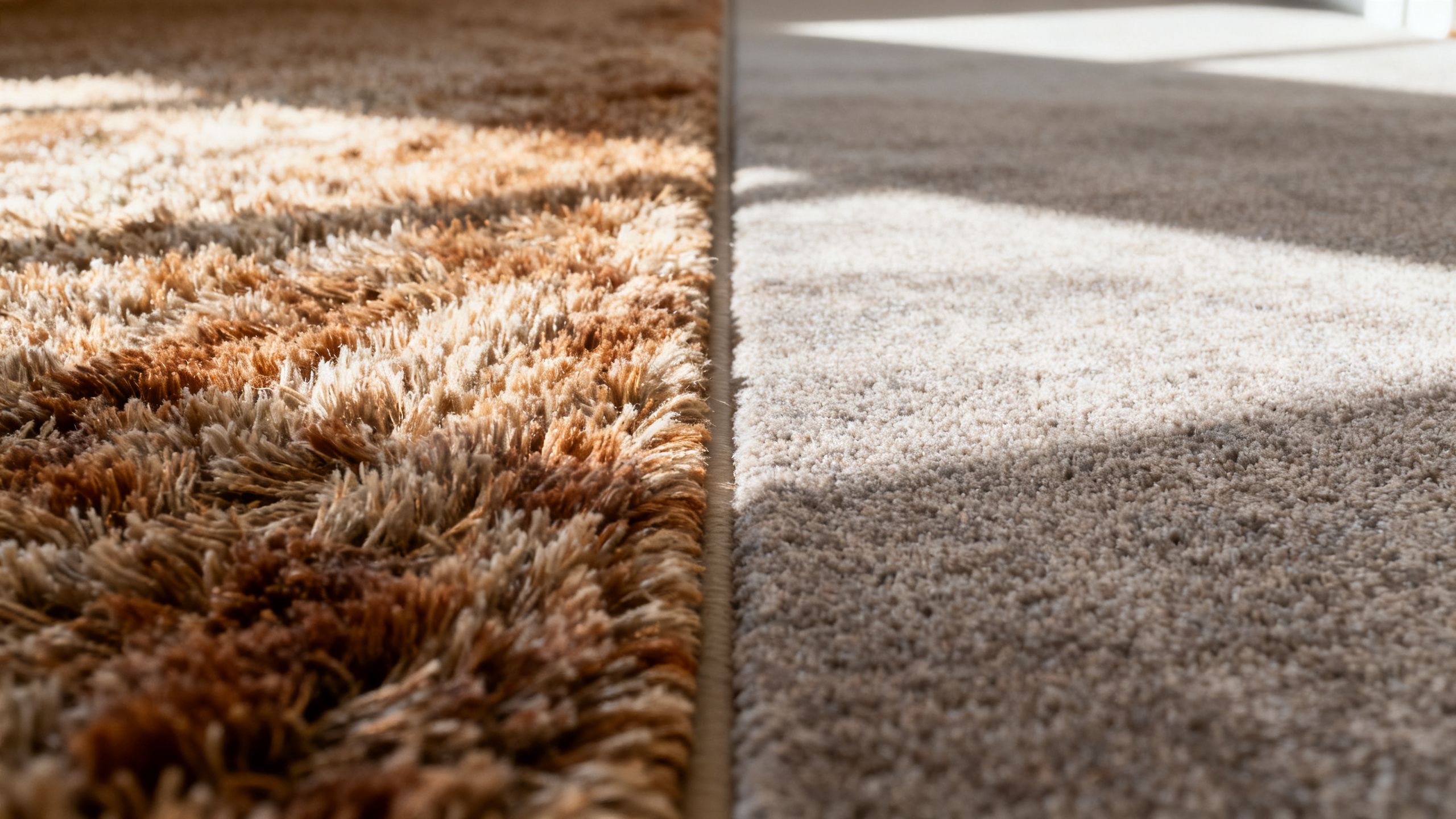
Wool feels warm, quiet and substantial underfoot. That matters in a Victorian property with suspended timber floors, where the carpet can help make a room feel less cold and echoing. It also tends to hide everyday dust and soil better than a very pale, smooth synthetic pile.
Its resilience is the main reason we see it holding its appearance well. Wool fibres recover after compression, so a decent carpet is less likely to develop obvious permanent traffic lines. It also handles stairs well, where the nose of each tread receives repeated pressure.
The drawbacks are real. Wool is usually more expensive, it needs appropriate cleaning, and moth risk should not be ignored. Regular vacuuming helps, while moth-proofing treatments can be sensible in vulnerable homes. Wool is also not the best choice if you expect frequent unattended spills from young children or pets.
Cormar, Abingdon and Penthouse all offer wool and wool-rich options we fit where the room and budget justify them. For background on wool as a natural fibre, British Wool’s carpet information is a useful independent starting point.
Synthetic in practice
“Synthetic” covers several very different fibres, so treating them as one material is misleading.
Nylon or polyamide: usually the best synthetic for bounce-back. It handles compression well and is a strong option for stairs and busy routes, although it can cost more than polypropylene.
Polypropylene: excellent resistance to many stains and spills, often good value and popular with families. The trade-off is that it can flatten and develop a waxy or shiny appearance under heavy traffic.
Polyester: soft and available in attractive colours, but some piles flatten sooner than their showroom appearance suggests.
Triexta: designed to offer softness and resilience, though the construction and quality of the individual carpet still matter more than the fibre name alone.
Polypropylene can be a very sensible choice for pets, children, rentals and rooms where staining is the main risk. It is also less vulnerable to moths and does not shed after installation. But do not confuse stain resistance with long-term pile recovery: a carpet can survive a spill and still look tired from traffic.
If you are choosing for a busy household, our guide to the best carpet for high-traffic areas explains why nylon, dense construction and suitable underlay can matter as much as the headline fibre.
Wool vs synthetic: the factors that actually matter
These scores reflect our fitting and callback experience rather than a laboratory test. Synthetic means a quality product unless a specific fibre is mentioned.
Factor | Wool | Synthetic |
|---|---|---|
Feel and softness | 5/5 – warm, natural and substantial | 4/5 – can be very soft, especially polyester and triexta |
Resilience and bounce-back | 5/5 | 3/5 polypropylene; 4/5 nylon and triexta; 3/5 polyester |
Real-world durability | 5/5 in the right room | 4/5 nylon; 3/5 polypropylene and polyester in heavy traffic |
Stain resistance | 3/5 – needs prompt, sensible cleaning | 5/5 polypropylene; 4/5 nylon and other treated fibres |
Stairs performance | 5/5 – holds shape over the nosing | 4/5 nylon; 3/5 polypropylene in demanding use |
Warmth and insulation | 5/5 | 3/5 to 4/5 depending on pile and underlay |
Pets and children | 3/5 | 5/5 for a suitable solution-dyed product |
Ease of cleaning | 3/5 – use the right method | 4/5, especially for polypropylene |
Price and value | 3/5 upfront, often strong long-term value | 4/5 upfront; value depends on how soon it flattens |
Expected lifespan | 5/5 in suitable rooms | 3/5 polypropylene; 4/5 nylon and quality blends |
How they wear on stairs (where it really shows)
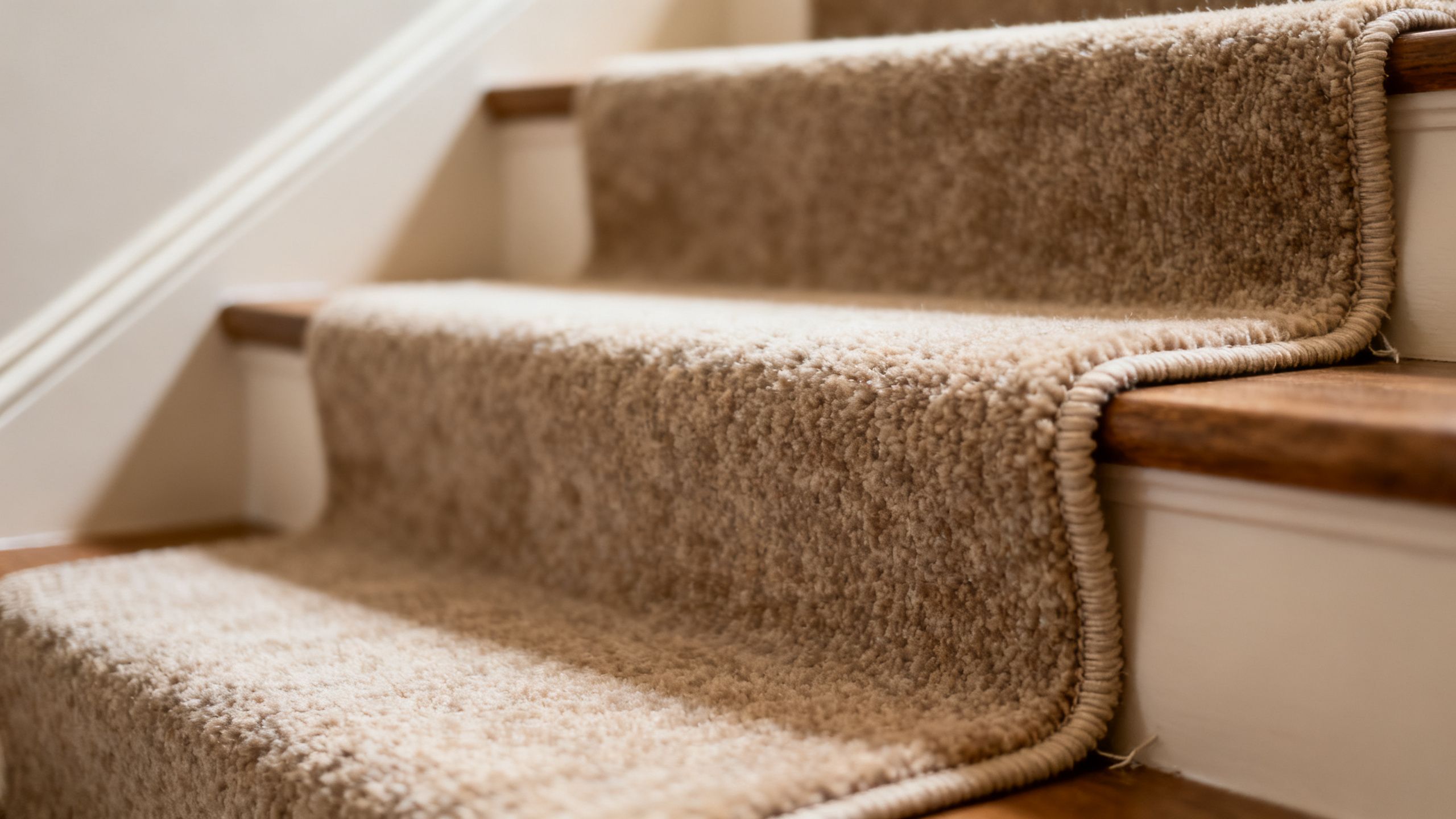
Stairs take concentrated punishment. Every foot lands on a relatively small area, and the carpet bends over the tread nosing before returning up the riser. This is where a fibre that recovers its shape matters most.
Wool generally stays crisp over the nosing for longer. A dense wool or 80/20 blend is our usual preference for a main staircase, especially in a home that is staying occupied for years. Nylon is the synthetic exception we are most comfortable recommending for hard-working stairs because it springs back better than polypropylene.
Basic polypropylene can still be perfectly acceptable on lightly used stairs or in a rental, but it is more likely to flatten at the edge. A busy family staircase may then show a shiny line sooner than expected. Choosing the right construction and fitting it tightly matters as much as choosing the fibre.
For more practical guidance, see our guide to choosing carpet for stairs, including why traffic levels and fibre recovery matter.
Where each one genuinely wins
Wool wins when appearance over time matters most. It is particularly strong in lounges, bedrooms, stairs and landings. It brings warmth and sound reduction to period homes, has useful natural fire performance and is the natural, biodegradable option if that is important to you.
Synthetic wins where the carpet is likely to be tested by spills, muddy paws and frequent turnover. A good solution-dyed product suits children, pets, rentals, landlord properties, bathrooms and conservatories where moisture is a concern. It also avoids moth risk and post-fitting shedding.
Neither is automatically the right answer. Wool can be a frustrating choice in a home where spills are frequent and cleaning cannot happen quickly. Cheap polypropylene can be a false economy in a lounge or on a staircase because the pile may flatten well before the carpet is visibly stained.
For many households, an 80/20 wool-nylon blend is the practical sweet spot. It gives much of wool’s warmth, feel and appearance retention, while the nylon adds strength and resilience. It is not the cheapest option, but it often avoids the sharpest compromises.
Both fibres can work well in a bedroom, and both can be used over underfloor heating when the carpet and underlay are suitable. The room’s use should decide the specification, not a general belief that one fibre is always superior.
Price and value: is wool worth it?
UK carpet prices vary widely by brand, pile, density, width, underlay, room shape and fitting requirements. As a broad guide, polypropylene is usually the lowest-cost route, polyester and entry-level nylon sit across the middle, and quality wool or 80/20 blends cost more. Stairs, awkward rooms, furniture moving, old flooring removal and preparation can add to the fitting cost.
The important comparison is not only the price per m² on fitting day. A cheaper polypropylene carpet may be good value in a rental or child’s bedroom, but less so if a busy lounge develops traffic lines after a few years. Wool costs more initially but can look presentable for much longer, particularly when installed over good underlay and maintained properly.
Our guide to carpet fitting costs in Bristol explains the other parts of a real quotation, including preparation and fitting rather than just the carpet price.
Stain treatments can improve the practical performance of wool, but they do not turn it into polypropylene. Likewise, “solution-dyed” synthetic is not a guarantee against flattening: it mainly improves colour and stain performance. Density, pile construction and underlay still matter.
Which should you choose, room by room?
Master bedroom: Wool, nylon or an 80/20 blend can all work. Choose wool if warmth, quietness and long-term appearance matter more than spill resistance.
Lounge: Wool or 80/20 is our usual choice if you are staying put. Choose a dense nylon synthetic where budget or stain exposure is the priority.
Stairs and landing: Wool-rich carpet is usually the safest long-term choice. Nylon is the synthetic option we would consider first for heavy use.
Family or high-traffic areas: A quality nylon or solution-dyed synthetic makes practical sense, especially with dogs, muddy shoes and frequent spills. Avoid judging polypropylene only by how clean it looks when new.
Rental or landlord property: A decent polypropylene can offer sensible upfront value and straightforward stain resistance. The best choice depends on expected tenancy length and traffic.
Pets and children: Choose a solution-dyed synthetic, usually polypropylene or a suitable nylon, if spills and cleaning are likely. Wool remains possible in a well-managed home, but it needs quicker, more careful treatment.
Allergy concerns: Regular vacuuming and appropriate cleaning matter more than simply choosing wool or synthetic. Avoid assuming one fibre alone will solve an indoor-air problem.
Tight budget: A decent synthetic with proper underlay is better than a cheap, poorly specified wool carpet. Saving on the fibre while ignoring fitting and underlay rarely produces good value.
Our verdict
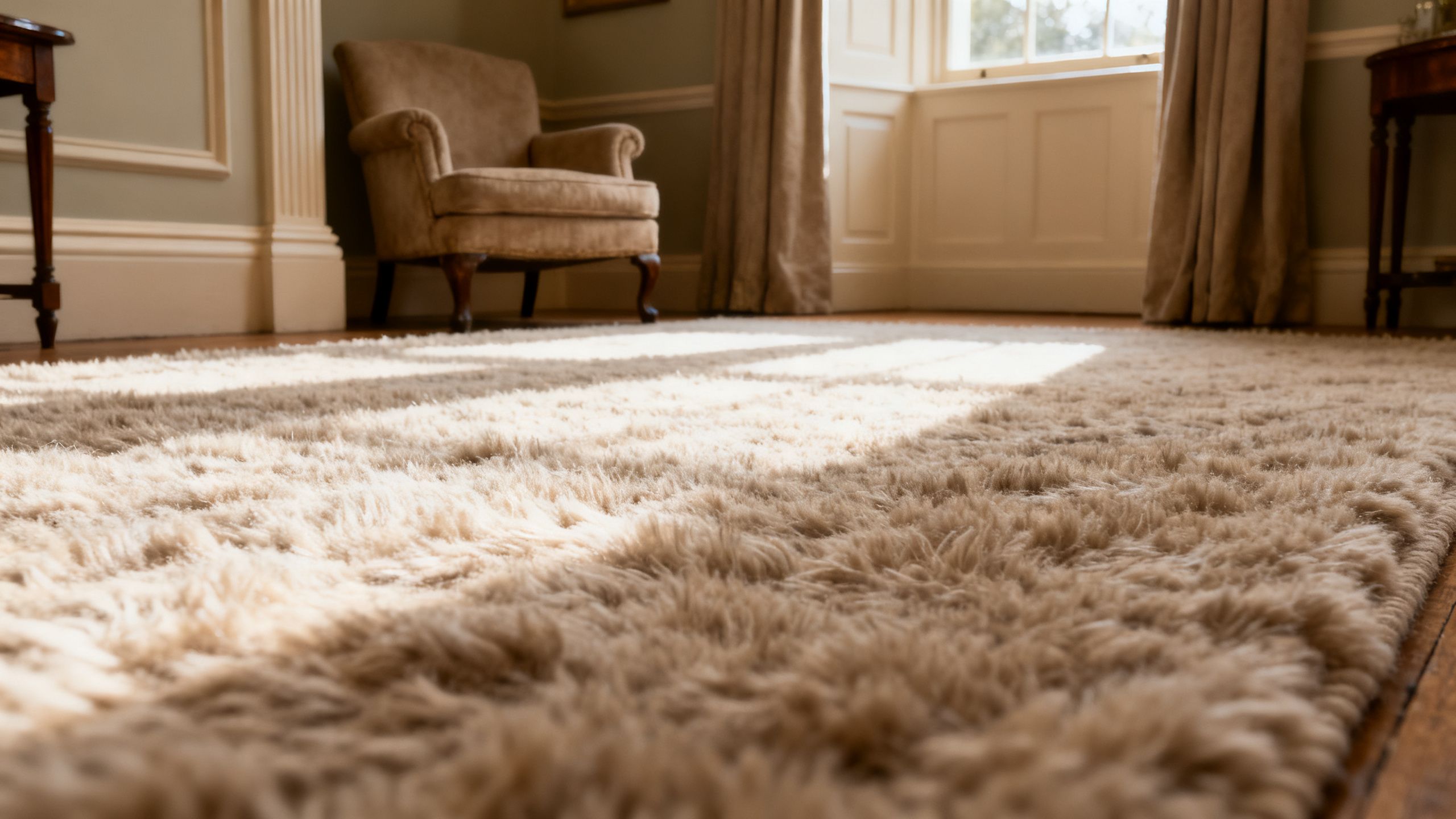
Where you see the carpet every day and plan to stay — the lounge, stairs, landing or main bedroom — we would usually choose wool or an 80/20 wool-rich carpet. You are paying for how it is likely to look in year eight, not just how it feels on the first day.
Where life happens to the floor — children, dogs, busy hallways, rentals and regular spills — we would choose a good solution-dyed synthetic and accept that it may need replacing sooner. Nylon is worth considering where bounce-back and stair performance matter more than the lowest price.
A pricier fibre is not automatically the right one. The subfloor, underlay, carpet construction and fitting quality can matter just as much. Seamless Floors supplies and fits both, so our recommendation is based on the room, use and budget rather than pushing one fibre. You can contact Seamless Floors for advice and a free measure or call 07901751755.
Wool vs synthetic carpet FAQ
Is wool carpet better than synthetic carpet?
Not universally. Wool usually wins for warmth, feel, appearance retention and stairs. Synthetic carpet usually wins for spills, pets, children, rentals and a lower upfront price.
Which lasts longer, wool or synthetic?
A good wool carpet often keeps its appearance longer in a lounge or bedroom. Nylon can also be very durable. Basic polypropylene may remain stain-free but flatten and show traffic lines sooner.
Which carpet is best for stairs?
Wool or an 80/20 blend is our usual choice for long-term appearance. If you prefer synthetic, nylon generally performs better on stairs than polypropylene because it springs back more effectively.
Is synthetic carpet best for pets and children?
Usually, yes. A suitable solution-dyed synthetic gives you strong stain resistance and easier cleaning. Choose a dense, resilient product rather than the cheapest polypropylene if the area is heavily used.
Does wool carpet stain easily?
Wool needs prompt and appropriate treatment, but “delicate” is too simplistic. It can hide everyday soil well and maintain its appearance for years. It is less forgiving of neglected spills than polypropylene.
What is an 80/20 carpet?
It is usually a blend of 80% wool and 20% nylon. The wool provides warmth, feel and appearance retention, while nylon adds resilience. In real homes, it is often a strong compromise between premium wool and synthetic practicality.
Is synthetic carpet cheaper than wool?
Usually, yes, particularly polypropylene. But the best value depends on how the carpet wears. A cheaper carpet that flattens quickly may cost more over its useful life than a better wool or nylon option.
Which would you recommend for a busy family home?
For a hallway and stairs, choose a dense wool-rich carpet or resilient nylon if long-term appearance matters. For rooms exposed to frequent spills, a good solution-dyed synthetic is more practical. The answer can reasonably be different from room to room.
Get the right carpet fitted in Bristol, Bath and surrounding areas
Seamless Floors supplies and fits wool and synthetic carpet across Bristol, Bath and surrounding areas, with honest advice based on your room, household, use and budget. Call 07901751755 for a conversation, or use our contact page to arrange a free measure and quotation.