




After sealing around 450 wet-area floors across Bristol over the last five years, our verdict is simple: sheet vinyl is usually the safest bet for a small bathroom, while glue-down LVT suits larger kitchens and open-plan floors. The material matters less than the edges: “waterproof” on the box describes the plank, not the whole floor.
What makes a floor truly waterproof
A floor only works as a waterproof system if water cannot get through the surface, seams, edges or the floor beneath it. The product is one part of the job. The rest is the subfloor, the adhesive or fixing method, and how the fitter deals with the perimeter, pipes, doorway and sanitaryware.
A waterproof plank can still let water through its joints. A sheet floor can still leak at a badly finished doorway or around a pipe. And even an intact floor can cause problems if it traps moisture coming up from a damp subfloor.
Before fitting, find and fix leaks, check the subfloor with a moisture meter, and make sure it is sound and flat. Concrete may need a damp-proof membrane (DPM); old timber may need plywood (ply) to create a stable, smooth base. Never cover a damp floor just because the new covering is described as waterproof. Our guide to subfloor preparation in Bristol explains what needs checking before the floor goes down.
How we judged this
This is based on around 450 waterproof floors fitted over five years across Bristol, Bath and surrounding areas: kitchens, bathrooms, utilities, cloakrooms and open-plan ground floors. Sheet vinyl is still the largest share of our work; LVT has grown fastest. Water-resistant laminate is a small and shrinking part of it.
On callbacks, the floor covering itself was rarely the route water took. We found water at perimeters, doorways, pipe penetrations, failed seams and poor coving beside baths or shower trays. The material was often still intact; water had travelled around it and collected underneath.
Fitting a wet-area floor takes more than cutting the covering to size. We check the subfloor for moisture, address damp before covering it, and prepare it flat. Sheet vinyl can be bonded and, where the room requires it, turned up the wall as a coved skirting. LVT is glued down plank by plank, so the joints and perimeter need careful treatment. In a wet room, the floor also needs correctly formed falls to the drain and a compatible waterproofing system. A covering does not replace tanking.
That preparation is why the finish is only as dependable as the base beneath it. See our guide to what happens before flooring is fitted.
What buying guides say vs what we’ve found
Buying guides often rank flooring by the material’s resistance to water. On real jobs, we judge it by whether the complete installation stays sealed—and whether water has somewhere to go if the room gets wet.
Factor | What guides say | What we’ve found on real wet floors |
|---|---|---|
Most waterproof | Choose a product labelled waterproof | The product can resist water while its edges or joints let it underneath |
Edges | Often treated as a finishing detail | Perimeters, doorways and pipe holes are common entry points |
Slip resistance | Pick a textured or “non-slip” finish | Check suitability for the actual use; no floor is slip-proof when wet, so water and cleaning matter too |
Porcelain tile | A hard, waterproof surface is enough | Tile resists water, but grout, movement joints and the waterproof layer beneath still matter |
Sheet vinyl | A budget option for a quick makeover | One piece means fewer joints; correct coving and edge detailing make the difference |
Subfloor | A base for the new covering | Damp, movement or unevenness underneath can undermine the job, whatever the top layer is |
For another material-by-material comparison, read our fitter’s LVT versus laminate flooring review.
The waterproof options, from real jobs
Sheet vinyl and safety vinyl
Water resistance in use: Sheet vinyl is supplied in broad rolls and can often be fitted in one piece in a small room. With fewer joints, there are fewer places for water to pass through. Safety vinyl is a specialist vinyl with a surface designed to improve grip in appropriate wet or commercial settings; check the product’s intended use rather than relying on a generic “non-slip” claim.
Where water can still get in: At a seam, doorway, pipe, loose edge or poorly finished perimeter. In a bathroom or wet room, suitable sheet vinyl can be bonded and coved up the wall, with the top edge finished appropriately. This is not the same as simply pushing vinyl against a skirting board. Drain details and any required tanking must also be designed for the specific wet-room system.
Slip and safety: Choose a product suited to whether people will be barefoot or wearing shoes, and to the amount of water and cleaning products it will encounter. No floor is slip-proof. The HSE’s guidance on slips and trips is a useful reminder that water, contamination and maintenance all affect the risk.
Cost and where it wins: Usually the lowest-cost fitted option and quick to install when the subfloor is ready. It works particularly well in bathrooms, cloakrooms, utilities and smaller kitchens; it can also suit rental properties. It is warm and quiet underfoot.
Where it lets you down and best rooms: Thin vinyl shows lumps and ridges if preparation is poor, and its appearance can look less convincing than LVT across a large open-plan space. Choose it for a small bathroom or utility where a simple, joint-minimising layout matters.
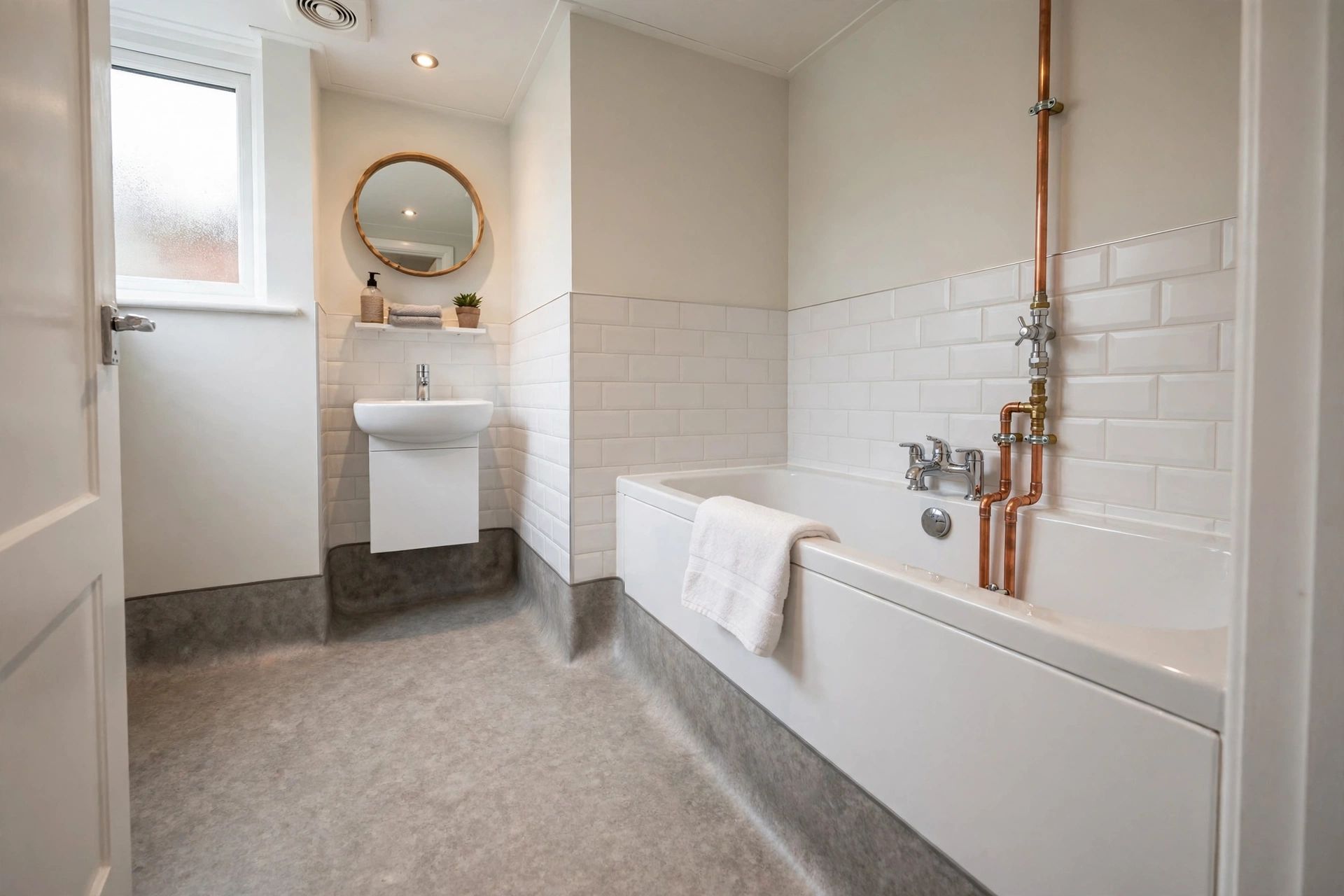
LVT and rigid-core SPC
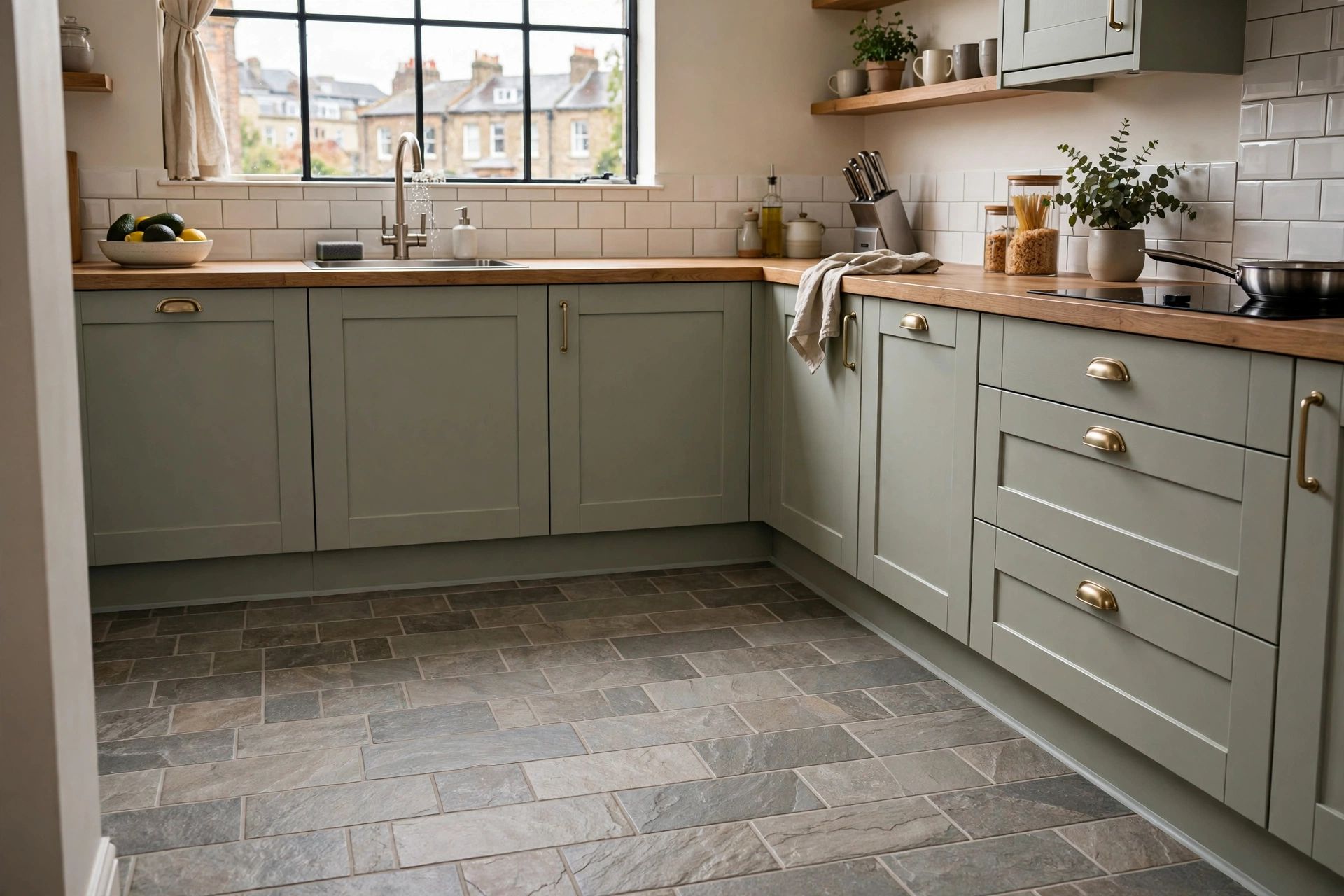
Water resistance in use: LVT and rigid-core SPC planks are water-resistant materials, and glue-down LVT can be a good choice in a kitchen or a large ground floor. The material alone does not seal the room: plank joints remain, and the perimeter and doorway need proper detailing.
Where water can still get in: Through joins, at the edge, or around pipes and appliances if the installation is not sealed appropriately. Glue-down LVT relies on sound subfloor preparation and the right adhesive. We avoid click LVT in bathrooms and kitchens: a floating click floor has joints and expansion gaps that are not a sealed wet-area system.
Slip and safety: Surface texture varies by product. Check the manufacturer’s use guidance and consider how the floor performs when wet; a wood-look finish does not automatically provide suitable grip.
Cost and where it wins: The subfloor preparation can make it a more expensive fitted option, but LVT wins in large kitchens, hallways and open-plan areas where you want a consistent look with no threshold strip at every doorway. Individual planks can be replaced if damaged, and suitable products can work with underfloor heating when installed to specification. For a fuller comparison, see our LVT and laminate fitting review.
Where it lets you down and best rooms: Poor preparation shows up in the finish, and joints mean it is not the same as a single-piece floor. Choose glue-down LVT for a larger kitchen or connected ground floor; use a wet-room system designed for the drain rather than assuming standard LVT makes a wet room waterproof.
Porcelain tile (and waterproof laminate)
Water resistance in use: Porcelain itself resists water well. But a tiled floor still has grout lines, movement joints and junctions to manage, and the waterproofing below the tiles matters in a wet room. Waterproof laminate is a different proposition: some products resist surface spills, but the floating floor’s joints and perimeter gaps can still admit water.
Where water can still get in: For tile, through cracks, grout, junctions or a failed tanking layer. For laminate, through joins and cut edges, especially around a dishwasher, bath or washing machine. A slow leak can sit below the floating floor before anyone spots it.
Slip and safety: A polished tile can be slippery when wet. Ask about the tile’s suitability for the room and the relevant barefoot or shod conditions; a rougher-looking surface alone is not proof of safer performance.
Cost and where each wins: Porcelain can be a durable choice where the subfloor and waterproofing are properly designed, and the finish suits the room. Waterproof laminate can make sense in dry rooms where a little extra protection against an promptly cleaned spill is useful. Our LVT versus laminate comparison covers the trade-offs.
Where they let you down and best rooms: Tiling needs careful installation, sound preparation and ongoing attention to grout and joints. We are cautious about laminate in bathrooms and kitchens: water-resistant is not the same as waterproof, and a slow leak can swell the board before it is visible. Choose tile for a properly designed tiled bathroom; keep laminate to dry rooms such as lounges and bedrooms.
Where water actually gets in
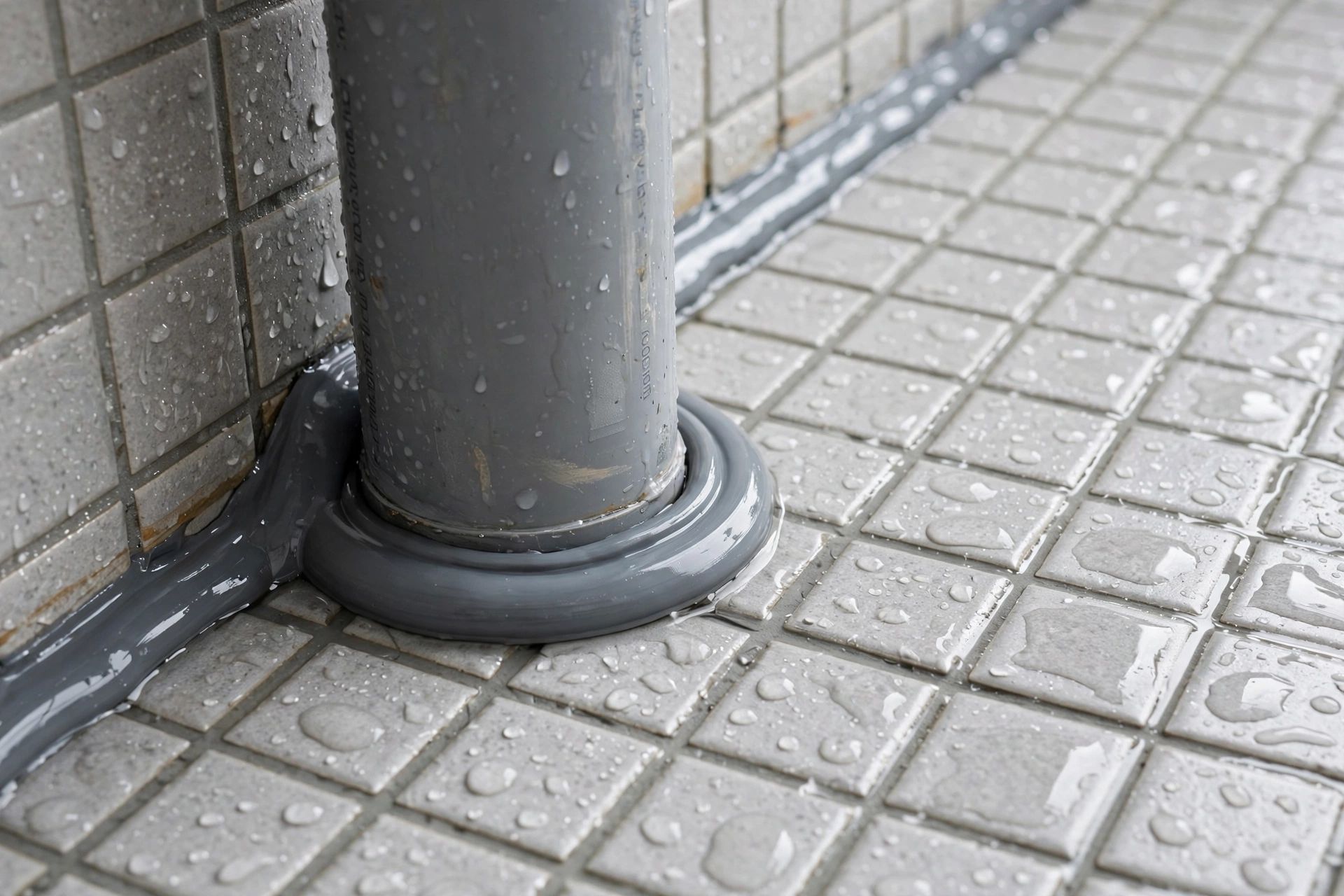
The finding that changes how we recommend flooring is this: in the failed floors we have been called back to inspect, water usually went around the material, not through it. It got in at a seam, a doorway, a pipe penetration or the perimeter by a bath or shower tray. Poor coving and failed seams were repeat offenders.
A small bathroom is where sheet vinyl can quietly outperform a more expensive product. One unbroken piece has no plank joints for water to find. That advantage disappears if the edge is left open, the seam is badly made or water can travel under the floor from a leak.
There is another risk in older Bristol homes: moisture coming from below. Suspended timber floors need suitable ventilation and a dry, sound base. Covering damp boards with a waterproof surface can trap moisture and damage the timber. If you suspect damp or rot, investigate before fitting; our guide to damp and rot beneath Bristol floors explains warning signs.
Slip resistance and wet-room build-up
Waterproof and slip-resistant are different properties. Ask for product information relevant to the room and how it will be used, including whether people will be barefoot or wearing shoes. Ratings and test methods are not interchangeable, and a product description saying “non-slip” is not enough on its own. The HSE’s slips guidance covers practical factors such as contamination and floor condition. For accessibility considerations in building design, consult Approved Document M.
A wet room needs falls—a carefully formed slope towards the drain—so water does not sit in low spots or run towards the doorway. The floor covering, drain, waterproofing layer and wall junctions must work together. Use a flooring system suitable for that build-up, with the correct coving or capping detail. Standard floating floors are not a substitute for a properly tanked wet-room floor.
Safety vinyl may be a sensible choice where extra grip is needed, including some accessible or higher-use spaces, but the product and installation have to suit the room. The right option depends on specific factors: the level of slip risk, whether the room is a true wet room, the drain design and the condition of the subfloor. Our bathroom and wet-room flooring guide covers the room-specific choices.
Which should you choose, room by room
Kitchen: Glue-down LVT is a strong choice for a larger kitchen or open-plan ground floor. Choose sheet vinyl for a smaller room or tighter budget. If there is a dishwasher or washing machine, fix leaks quickly; no floor makes a hidden leak harmless.
Family bathroom: Bonded sheet vinyl, with a carefully finished perimeter and coved skirting where appropriate, is our usual pick for a compact bathroom. If you prefer tile, budget for suitable waterproofing and well-finished joints.
En-suite: Sheet vinyl is practical in a small ensuite. LVT can work where the floor is not designed to be a wet room and the installation and perimeter are suitable. The choice flips if the room has a walk-in shower that regularly wets the floor.
Full wet room: Use a purpose-designed wet-room build-up with correct tanking, falls and drainage; suitable sheet vinyl is a common option. Do not use a floating click floor or laminate as the waterproofing strategy.
Accessible or elderly household: Prioritise suitable slip performance, transitions that do not create trip edges, and a floor that can be cleaned and maintained properly. A safety flooring product may be appropriate; check the exact use conditions rather than choosing by name alone.
Tight budget or rental: Sheet vinyl is often the most economical fitted option for a small bathroom, cloakroom or utility. Allow for proper preparation and edge detailing; cutting those corners is a false saving.
For a closer look at options for Bristol bathrooms and wet rooms, match the covering to the room’s use and construction rather than choosing by label alone.
Frequently asked questions
What is the best waterproof flooring for a bathroom?
For a small bathroom, bonded sheet vinyl with properly finished edges is often our first choice because it can avoid plank joints. Tile can also work when the subfloor, grout and waterproofing are right. The room’s layout and whether it is a wet room change the detail.
Is LVT fully waterproof?
The LVT material itself resists water, but the installed floor is only as sealed as its joins and edges. Glue-down LVT is generally more suitable than click LVT in kitchens and bathrooms, but it is not a replacement for a tanked wet-room system.
Can you put laminate in a bathroom?
We do not recommend it. Water-resistant laminate may tolerate a small spill wiped up promptly, but water can pass through joints or edges and swell the boards. A slow leak under an appliance is a particular risk.
Is sheet vinyl good for a wet room?
It can be, if the product and installation are suitable for the wet-room system. The floor needs correct falls, drainage, waterproofing and well-finished junctions. A sheet of vinyl on its own does not make a wet room watertight.
What is the most slip-resistant flooring?
There is no single best product for every room. Specialist safety vinyl may be designed for higher-grip use, but check the product’s test information for the intended barefoot or shod conditions and how it will be maintained. No floor is slip-proof.
Do you need to seal the edges?
Edges and penetrations need to be detailed appropriately for the floor and room. That can mean careful perimeter sealing, coved sheet vinyl, suitable pipe collars or a compatible wet-room system. The right finish is not the same for every product.
What is best for a kitchen floor?
Glue-down LVT is a good choice for a large kitchen or open-plan floor; sheet vinyl is practical and often cheaper for a smaller kitchen. Either needs a sound, dry subfloor and proper edge detailing. For more on the choices, read our guide to waterproof flooring for Bristol kitchens and bathrooms.
Across Bristol, Bath and surrounding areas, Seamless Floors can check the subfloor and talk through the right covering and edge details for your room. The useful question is not only which product is waterproof, but how the whole floor will be fitted and sealed.