




For a busy Bristol hallway or stairs, colour is the wrong thing to worry about first: carpet construction is what decides whether it still looks decent in five years. Here’s what we actually tell customers, even though it goes against what you’ll read everywhere: choose a dense, tightly twisted, flecked carpet before you settle on a shade.
Mid-brown and dark grey are often chosen to hide dirt, but they can show pale fluff, pet hair, dust and winter salt just as clearly as a pale carpet shows dark mud. And no colour prevents a traffic lane forming when the pile has been crushed flat.The colour question everyone gets backwards
The useful question isn’t simply “light or dark?” It’s whether the surface is plain or flecked, whether the pile is dense enough for the traffic, and what kind of dirt actually comes through your front door. In a Bristol hallway, grit and salt from pavements can abrade the pile; in a home with pets, pale hair may stand out on a dark carpet. Those are different problems, and neither is solved by picking grey. A proper barrier mat inside the door will do more to protect the first metre of carpet than any shade can. If you’re comparing options for busy parts of the house, our guide to choosing carpet for high-traffic areas covers the practical trade-offs.What everyone tells you vs what we actually see
Grey is a trend pick, not a performance feature. It can be the right colour for a room, but it doesn’t automatically hide dirt or wear better than other mid-tones. After seeing what busy floors look like once they’ve been lived on, we’d put construction and surface texture ahead of the shade.| What you’ll read | Why it’s said | What we see on real floors |
|---|---|---|
| Grey is the safe choice for a hallway. | It’s a familiar mid-tone and suits many interiors. | Plain grey shows pale lint, hair and dust. A flecked mid-brown, taupe or green may disguise everyday marks better. |
| Patterns beat solids. | Variation breaks up the appearance of marks. | That’s often true: a fleck or heathered yarn interrupts the surface, so small marks and shading are less obvious. |
| Dark carpet hides dirt. | Dark shades can disguise some pale or wet marks. | They also show light grit, fluff and pet hair. Dark charcoal can work well for wet spills, but it isn’t a universal dirt-hider. |
| Light carpet looks clean and bright. | Pale shades reflect light and can open up a room. | Very pale carpet can be hard work beside a street-facing door or with young children and pets. Solution-dyed fibre can make a pale choice more practical. |
| Colour is the main thing that determines how long it looks good. | Colour is the most visible choice on a sample board. | A traffic lane is usually crushed pile, not a stain. Density and twist affect how well it bounces back. |
Our reasoning
Why solid grey shows everything
Plain grey is not a forgiving shortcut, because it gives you one uninterrupted surface on which to see contrasting marks, shading and flattened pile. Pale pet hair or lint stands out against dark grey; darker dirt can show on a lighter grey. What that means for you: if you like grey, look for a flecked or heathered version rather than assuming a solid grey will stay tidy. A busy hallway also takes grit and wet footwear near the door. That is abrasion as well as dirt, because grit gets walked into the pile and wears it down. A mat and a suitable dense construction matter more than a darker shade. For more on hallway choices, see our guide to the best flooring for a Bristol hallway.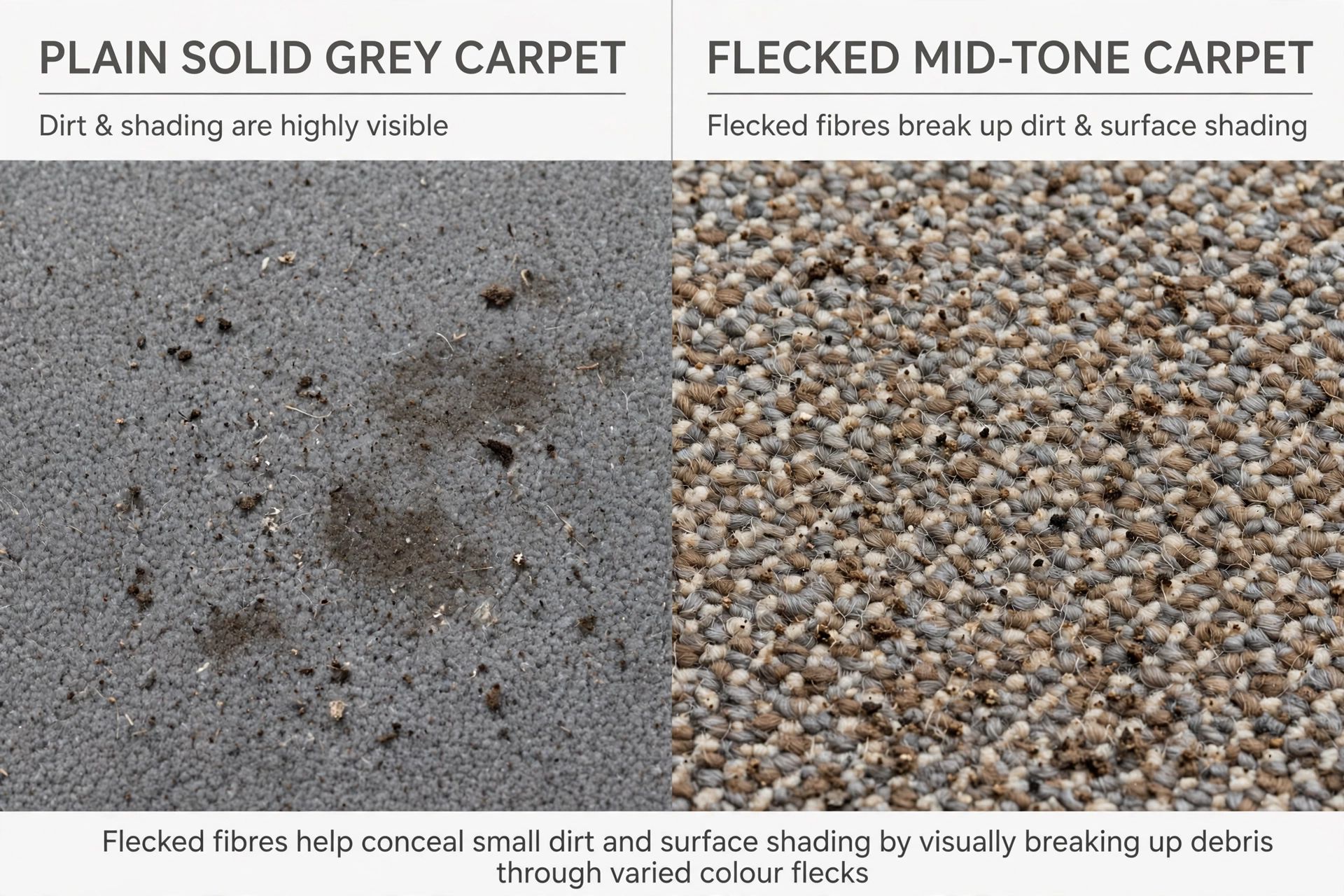
Why the fleck matters more than the hue
A flecked, heathered or subtly patterned carpet can disguise everyday variation better than a plain one, because its mix of tones breaks up the surface. That can make a small mark, a strand of hair or a change in pile direction less immediately noticeable. For a buyer, this means comparing the texture and yarn variation on a full sample is more useful than deciding from a colour chip alone. It won’t make a carpet stain-proof or wear-proof. It simply gives the eye less of a blank surface on which to pick out every small difference. For stairs and landings, where the same route gets repeated constantly, compare a hard-wearing twist or suitable berber loop as well as the colour; our carpet laying guide for homeowners explains what to consider before fitting.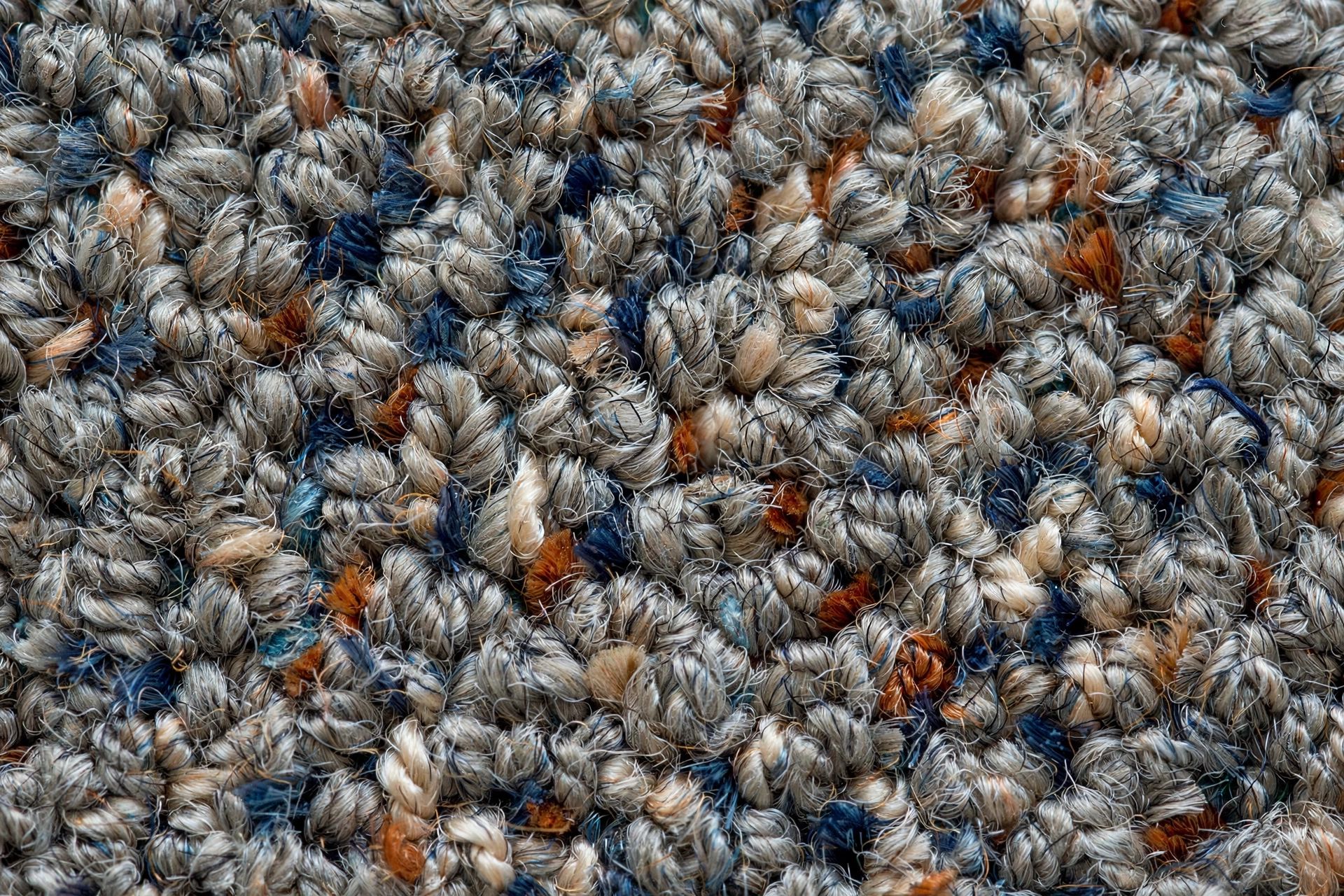
Why trend colours date and fade
A fashionable colour can look dated sooner than a quiet, natural mid-tone, because interiors and tastes change while the carpet stays put. But the bigger practical issue is often not that the colour has “faded” in style: it’s that a plain, soft carpet develops a visible traffic lane as the pile is crushed. A traffic lane is not necessarily dirt. Fibres bend flat and lose their twist, so they reflect light differently from the pile around them; cleaning won’t lift a line that is caused by the carpet’s shape changing. A tightly twisted, densely tufted pile is more likely to spring back, because its fibres have more support. Before buying, push your fingers into the pile: if the backing shows easily, think carefully about using it in a busy hallway.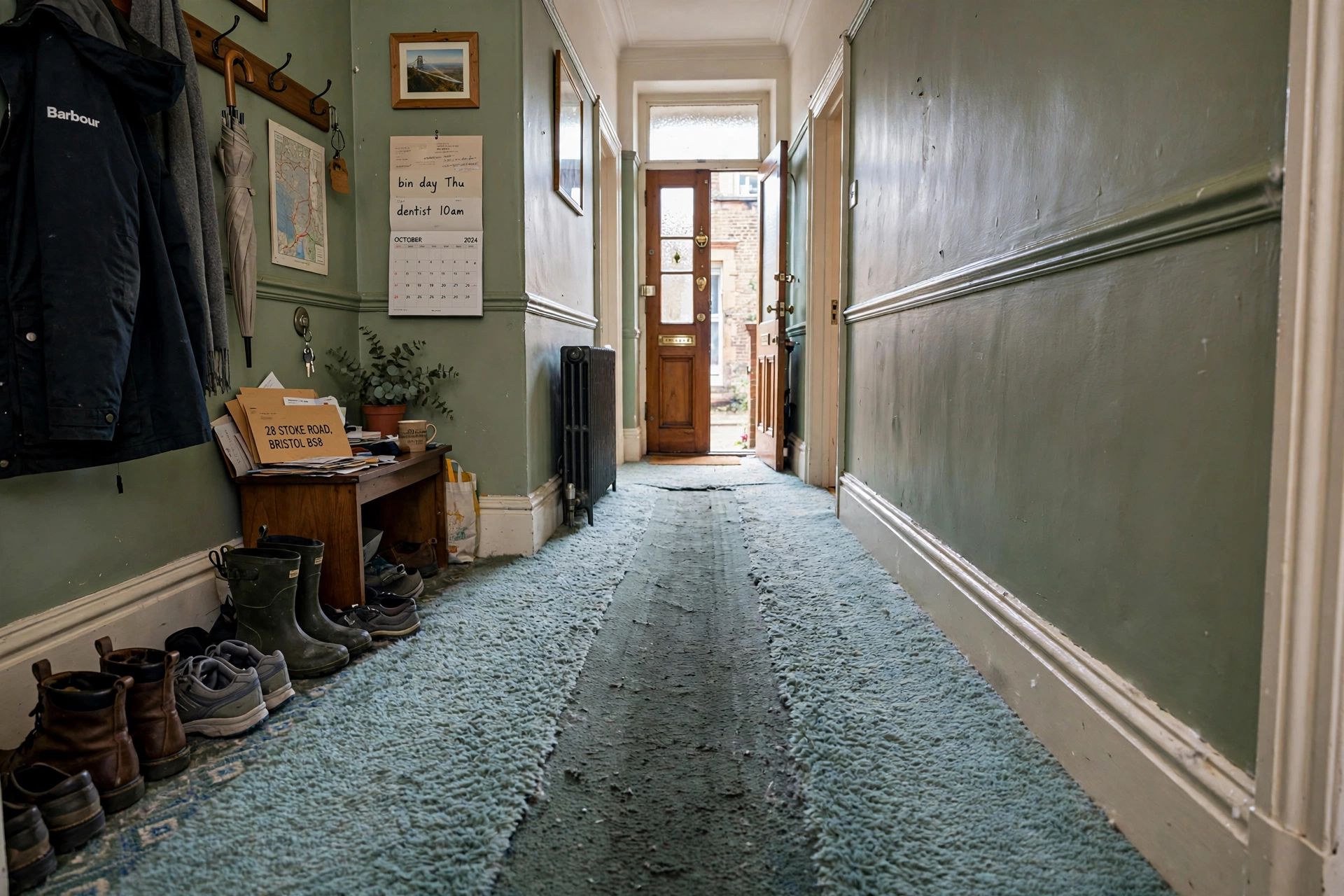
When grey or dark genuinely is the right pick
Grey isn’t automatically a poor choice. A flecked grey can be a sensible option when it suits your walls, furniture and adjoining rooms, because you’ll see it every day and it needs to work with the rest of your home. The key is not to expect the colour alone to do the hard-wearing. A dark charcoal can also be a good call in a dining area where wet spills are the main concern, because a darker surface may disguise some dark or wet marks between clean-ups. It will still show pale lint, dust and pet hair, so consider who uses the room and what they shed before choosing it. The usual advice is right about two things: very pale cream or white is a risky choice in a muddy, street-facing hallway, and mid-tones are generally a better starting point than extremes. It’s also right to think about spills in a home with young children. Where a carpet runs from the hallway into a lounge, a consistent colour can look better than choosing a separate “ideal” shade for every room. If you want a pale carpet, the fibre specification matters. Solution-dyed fibres are designed to hold colour well and can be more practical for stain treatment and cleaning, depending on the product’s care instructions. Check the manufacturer’s guidance, and ask about suitability for your household rather than assuming every fibre performs the same. The Carpet and Rug Institute’s carpet care guidance is a useful reference for routine maintenance.What we’d actually recommend
Choose in this order:- Construction first. For a hallway, stairs or landing, look for a dense, tightly twisted pile. Push your fingers into it; if the backing shows easily, it may flatten more readily under regular traffic.
- Fibre second. Polyamide is often chosen for heavy traffic; wool-rich 80/20 blends can offer good appearance retention; solution-dyed polypropylene can suit households prioritising stain resistance and cleanability. Check the exact product specification, because performance varies by construction and care.
- Pattern third. In a busy area, consider flecked, heathered or subtly patterned carpet rather than a completely plain surface.
- Colour last. Choose a mid-tone that suits the dirt you actually get and that you’ll still like looking at. Mid-brown is not automatically practical, and dark grey is not automatically forgiving.
- Underlay and entrance protection. A firm, suitable underlay helps support the carpet; very thick, soft underlay can encourage crushing in busy areas. Add a barrier mat inside the front door, full width if possible, and long enough to take several steps.
Match the colour to your dirt — a quick self-test
- Muddy entrance or a dog coming in from the garden? Avoid very pale, plain carpet by the door. A mid-tone fleck can disguise everyday marks, but a proper entrance mat and regular vacuuming matter more than choosing brown.
- Pale pet hair? Be cautious with very dark carpet, because light hair can stand out sharply. A mixed mid-tone may be a better compromise.
- Dark pet hair? Very pale carpet can show it. Look at a sample in the room and check it against the colour of your pet’s coat.
- Grit or winter salt from the pavement? Choose a durable, dense construction and use a barrier mat, because grit wears pile down rather than simply colouring it. A fleck can make the surface look less uniform between cleans.
- Wet spills around a dining table? A darker tone may disguise some spills, but check the fibre’s stain resistance and cleaning instructions. Don’t assume dark carpet hides dry crumbs or pale lint.
- A sunny, south-facing room? Ask whether the carpet is solution-dyed and check the manufacturer’s light-fastness guidance, because sunlight can affect colour over time.
- Wine, coffee or young children in the living room? Prioritise a fibre and product with stain protection suited to the household, then choose a colour you like. A shade can hide a mark but cannot prevent a stain.