



The Hidden Truth Beneath Your Floors: Damp and Rot in Bristol Homes

The Hidden Truth Beneath Your Floors: Damp and Rot in Bristol Homes

Across around 200 old floors we lift in a typical run of work, about 1 in 6 has some damp or rot underneath. It nearly always hides at back door thresholds, under leaking appliances, around bay window joist ends, or beside bathrooms and external walls. That is what we see at Seamless Floors in Bristol—not a worst-case estimate from a textbook.

What most guides say vs what we actually find

Most guides give the right basic sequence: lift the old floor, cut out damaged timber, treat the area, re-board and fit the new covering. The useful bit is knowing how often that work is actually needed and where to look first.
What guides say What we find
Damp and rot can occur beneath old flooring. Across around 200 old floors we lift, it appears in about 1 in 6.
Check around doors, plumbing and external walls. Back door thresholds are the most regular location, followed by old washing-machine or dishwasher leaks and bay window joist ends.
Replace damaged timber before fitting flooring. Most cases are small, hidden patches. About 1 in 25 needs proper joist work, and about 1 in 50 needs a builder before we return.
The wider principle is covered in our guide to proper subfloor preparation in Bristol. A new carpet or vinyl floor cannot correct a damp or moving base.

How often is there really damp or rot under an old floor?

About 1 in 6 is our honest figure from around 200 old floors we lift. That sounds alarming, but most findings are not a major structural problem. Often it is a patch around the size of a tea tray by a back door, which can be made sound in roughly an hour once the cause is understood. Customers are often surprised because there may be no smell, soft spot or visible mark. The problem only becomes clear when the carpet, vinyl, laminate or boards come up. Over more than 25 years, we have lifted several thousand floors, and the same hidden trouble spots keep appearing. About 1 in 25 jobs needs proper joist work. About 1 in 50 should be passed to a builder before flooring work continues. That is why we assess the subfloor rather than promising to cover everything with a new finish. Our advice on why preparation matters for a lasting microcement floor applies equally to carpet, vinyl, laminate and LVT.

Where damp and rot actually hide

The common locations are not random. They are places where rain, plumbing leaks, condensation or poor ventilation can keep timber damp for long enough to decay.
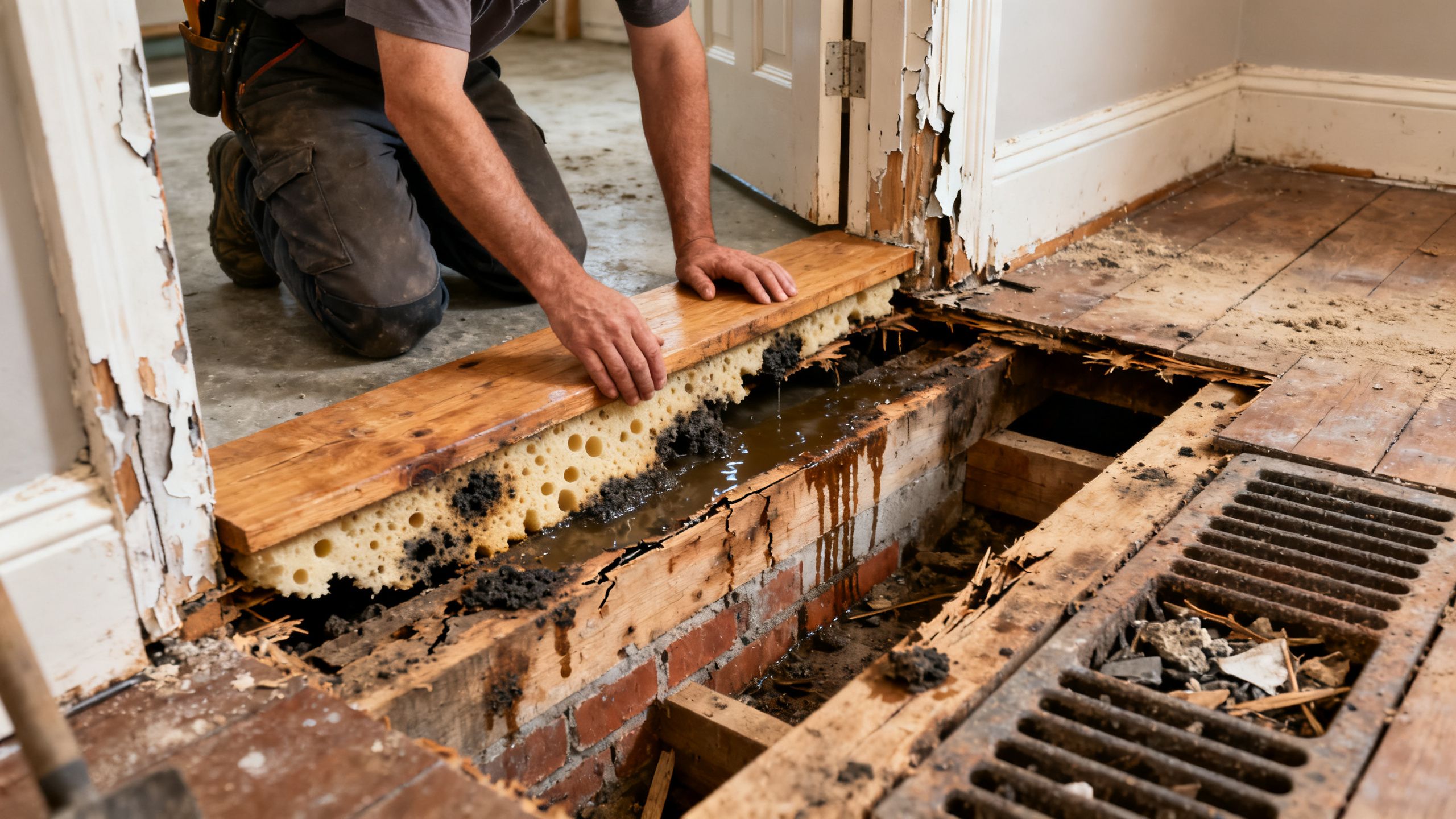
Floor fitter inspecting damp and rotten timber beneath a Bristol home's old flooring, with a back door threshold, joists and airbricks visible

Back doors, kitchens and old appliance leaks

Back door thresholds come first. Wet boots, rain blown under the door and failed or tired seals repeatedly affect the strip of floor on both sides. If the external ground, patio or decking is too high, water has an easier route towards the timber. Old washing machines and dishwashers are another regular source. A slow leak may run beneath units and flooring without making a noticeable puddle. Look for darkened boards, crumbly chipboard, rusted fixings, a musty smell or timber that dents easily with a screwdriver. If the flooring is in a kitchen, vinyl floor tiles in Bristol can be a practical replacement, but only after the base is dry, stable and properly prepared.

Bay windows, bathrooms and external walls

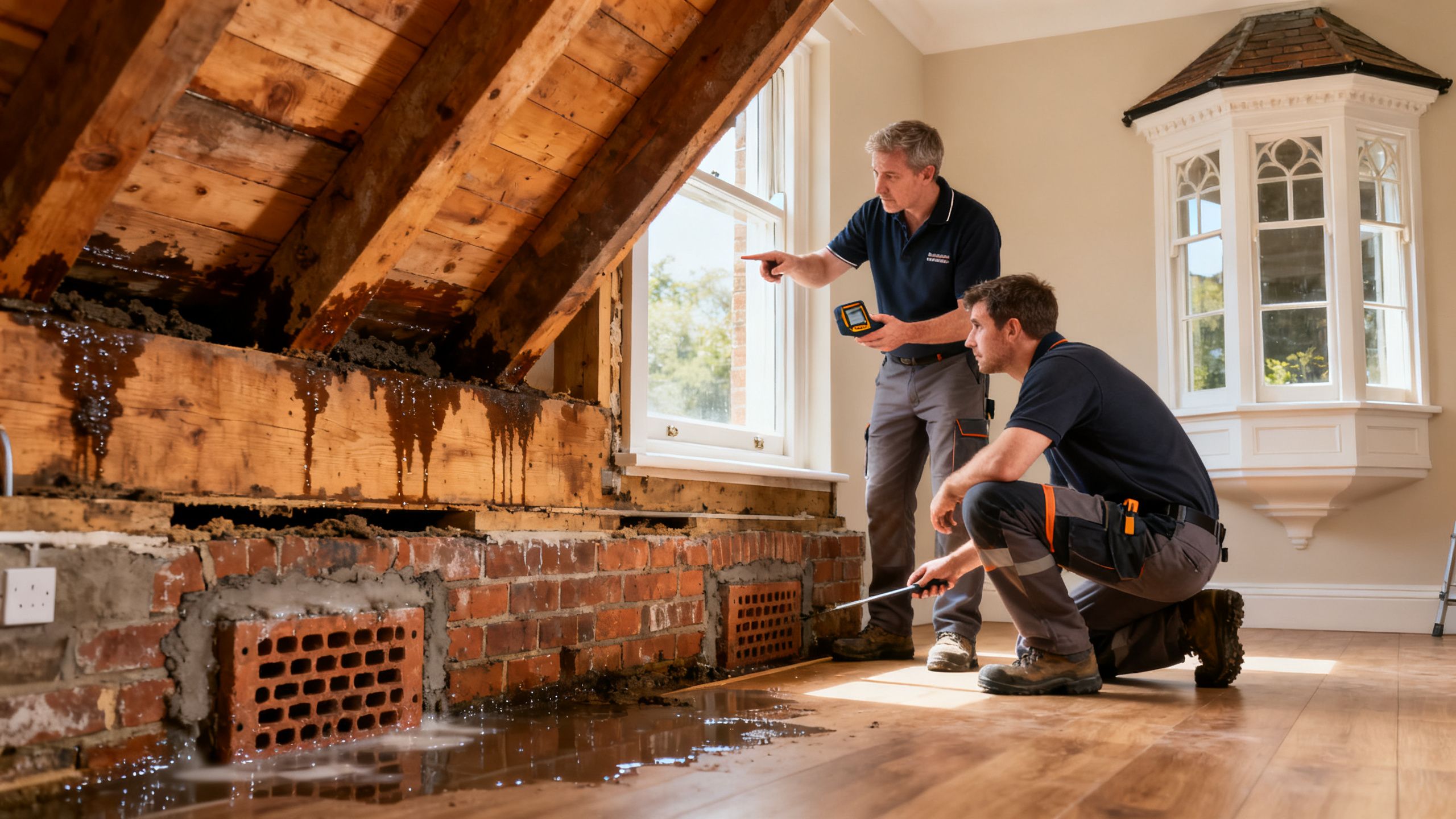
The front two joist ends beneath a bay window are especially vulnerable. They may sit close to cold masonry, an outside wall or a poorly ventilated void. Small gaps in pointing or flashing can also let water reach the ends of the timber. Bathrooms and downstairs toilets bring obvious plumbing risks, but condensation and splash water matter too. Floors beside external walls can suffer where the ground outside has been built up, bridging the DPC and allowing moisture to reach areas that should stay dry. Blocked airbricks are a major cause in suspended timber floors. A patio, driveway, extension slab or render may cover them, stopping air movement beneath the floor. The Property Care Association recommends identifying the moisture source rather than treating symptoms alone; that is the sensible approach here too. Blocked-up hearths are another place worth checking. Old fireplaces can leave awkward voids, poor airflow and timber ends close to damp masonry.

Which homes are worst affected

Victorian terraces with suspended timber ground floors are the group where we find the most trouble. In Bristol, that includes areas such as Bedminster, Southville, Ashton Gate, Bishopston, Cotham, Redland, Knowle and Brislington.
Property type Rot likelihood Usual cause
Victorian and Edwardian terraces with suspended timber floors Highest of the common property types we see Blocked airbricks, bridged DPCs, damp joist ends, high external ground and poor underfloor ventilation
1930s and post-war semis Moderate Local leaks, altered patios or extensions, covered vents and isolated ventilation problems
Newer estates with solid concrete floors Rot is rare in the floor structure More likely to be a surface moisture, screed or plumbing issue than rotten suspended timber
Homes with extensions, decking or raised paving Risk can rise regardless of age External work covering airbricks or bringing ground level close to timber
The age of the house is not the best clue on its own. What has happened outside often matters more. A patio or driveway laid over airbricks, or an extension slab butted against suspended timber, can create the conditions for decay within a few years. For room-by-room material choices, see our guide to choosing the right flooring for every room.

Signs your subfloor is failing

Watch for:
  • Bouncy or sinking boards in one area
  • A floor that feels uneven after furniture is moved
  • A musty smell, particularly near an external wall
  • Lifting vinyl, rippled laminate or carpet that will not lie flat
  • Gaps appearing at the skirting
  • Cold patches or draughts around a suspended floor
  • Dark, soft or crumbly boards when an edge is exposed
  • Persistent damp marks after a plumbing leak
The absence of these signs does not prove the subfloor is sound. In our experience, many customers had no warning before we lifted the old floor. Wet rot usually needs persistently damp timber and may leave it dark, soft and easy to break. Dry rot can spread through timber and masonry in suitable conditions and needs prompt specialist assessment. Woodworm is an insect infestation rather than rot; small holes and fresh dust can indicate activity, although old holes may be inactive. A fitter can deal with a small, localised patch once the moisture source is clear. Widespread decay, suspected dry rot, badly damaged joists or rising damp should be assessed by an appropriate specialist. Do not simply seal the surface and cover it.

What sorting a subfloor actually involves

On the day, the process is usually practical rather than dramatic:
  1. Lift the existing floor carefully and expose the boards, joists or solid base.
  2. Assess the damage and look for the source—door thresholds, plumbing, external ground levels, DPCs and airbricks.
  3. Stop or reduce the moisture source where possible, such as repairing a leak or clearing a blocked vent.
  4. Cut out rotten material back to sound timber.
  5. Install treated timber or suitable replacement boards, supporting and fixing them properly.
  6. Restore ventilation beneath suspended floors, including clearing or adding airbricks where appropriate.
  7. Use DPM or address DPC details where the construction requires it. These are not substitutes for finding the actual leak or damp path.
  8. Re-board and level the area so the new flooring has a firm, even base.
  9. Moisture-test the subfloor before fitting carpet, vinyl, laminate or LVT.
  10. Fit the new floor only when the base is suitable.
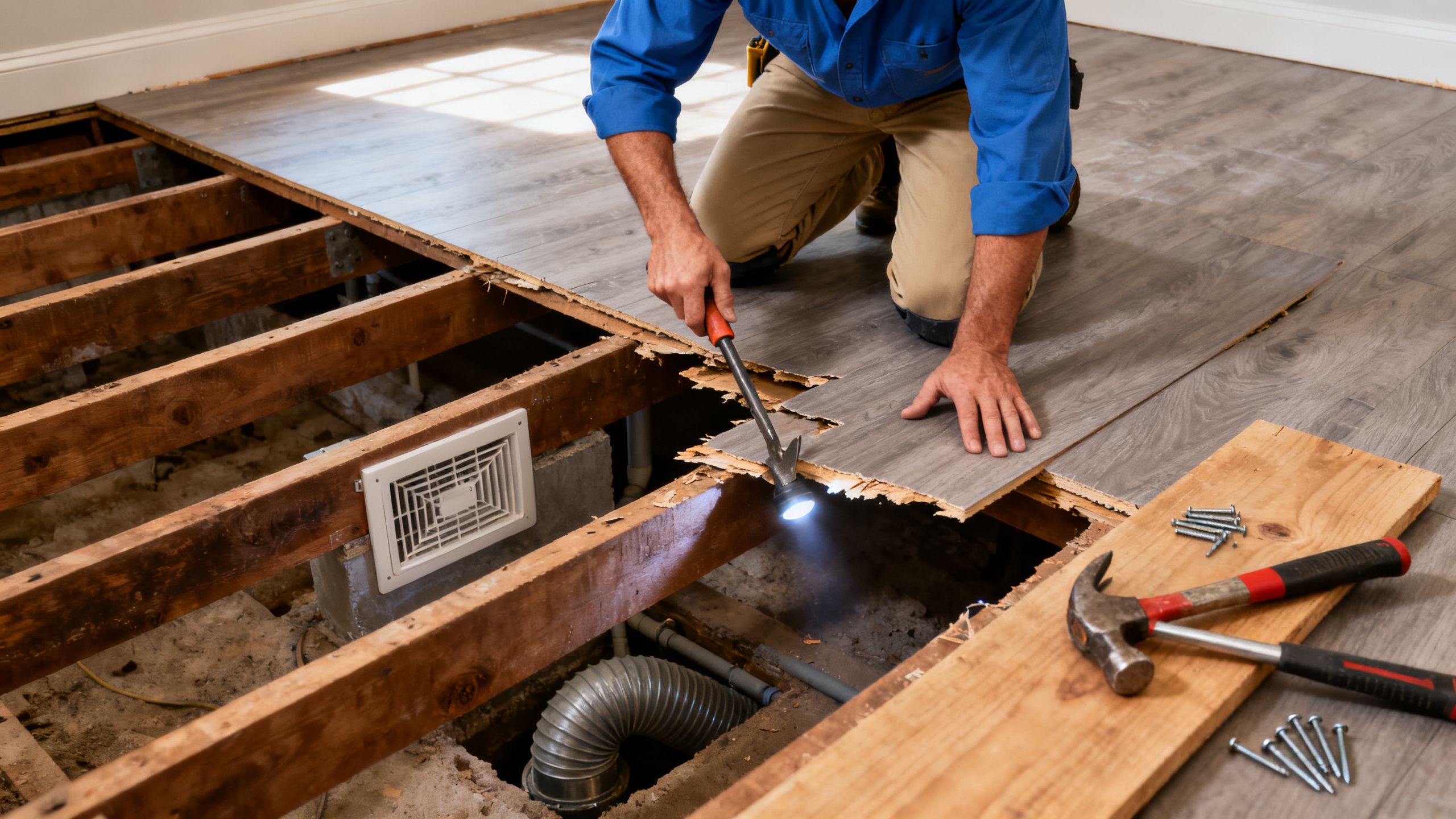
Flooring installer replacing damaged subfloor boards and checking ventilation beneath a suspended timber floor

A normal fixed flooring quote includes lifting and removing the old floor, checking the subfloor, levelling and screwing down loose boards. Actual rot repair is normally extra because it cannot be priced accurately until the area is open. A clear additional quote should state whether it includes treated timber, replacement boards, disposal, ventilation work, moisture control and making good. Major structural repairs, extensive damp-proofing, rebuilding and builder’s work are usually excluded and should be referred to the right trade. The UK government’s Approved Document C guidance on resistance to contaminants and moisture is useful background for moisture-related building work.

What it adds to the job (honest cost)

We give the figure before carrying on. Based on the work we see in Bristol:
  • Spot repair: £150 to £350 for a few boards or joist ends.
  • Re-boarding one room: £400 to £900, including treated timber and sorting ventilation where needed.
  • Full ground floor or extensive joist replacement: £1,200 and upwards. This is usually a builder’s job before we fit the final floor.
  • Clearing or fitting airbricks: £20 to £60 per vent, making it one of the cheapest preventive steps.
These figures are not a promise that every property will match them. The specific difference is whether the damage is local, whether the moisture source has been fixed and whether structural joists need replacing. Our carpet fitting service in Bristol includes the normal preparation in the agreed quote. Rot repair is discussed separately. Paying to make the base sound once is cheaper than fitting a lovely floor over a wet one and returning two years later.

Fitter job or damp specialist?

A flooring fitter can usually handle a small, clearly understood patch: a few rotten boards, a damaged joist end, a local appliance leak that has been repaired, or a blocked airbrick that can be safely cleared. Call a damp specialist, structural builder or other appropriate professional first if:
  • Joists are extensively soft, twisted or unsupported
  • The suspected problem is rising damp across a wall or room
  • There is widespread or recurring moisture
  • Dry rot may be present
  • An extension, retaining wall or external ground level is affecting the building
  • Structural movement or major settlement is involved
Seamless Floors will assess what is visible and say when the work is beyond a flooring repair. We would rather refer a serious issue than hide it beneath new laminate flooring. For a straightforward flooring assessment in Bristol, call 07901751755.

Building specialist and flooring fitter assessing damp joists, airbricks and moisture around a Bristol bay window

Prevention is mostly sensible maintenance: keep airbricks clear, do not raise patios or soil against the wall, repair leaking appliances promptly, check door seals and avoid trapping suspended floors with poorly planned alterations. Good airflow beneath timber floors matters as much as the flooring material above.

Rotten and damp subfloor FAQ

How often is there rot under an old carpet?

In our work, about 1 in 6 of around 200 old floors we lift has some damp or rot beneath it. Most findings are small and fixable. About 1 in 25 needs proper joist work, while about 1 in 50 should be referred to a builder before flooring continues.

Can you lay flooring over a damp subfloor?

No. Damp or rotten material needs to be dealt with first. Covering it can trap moisture, hide worsening decay and cause the new floor to fail. The subfloor should be repaired, dry enough for the chosen material and moisture-tested before fitting.

Can rotten boards be repaired, or must everything be replaced?

A local patch can often be cut back to sound timber and replaced with treated timber or suitable boards. A whole room or ground floor does not automatically need replacing, but widespread decay or damaged joists needs a fuller assessment.

Where is rot most common?

Back door thresholds are our most regular location. We also find it beneath old washing machines and dishwashers, at bay window joist ends, around bathrooms and downstairs toilets, beside external walls and around blocked-up hearths.

How much can damp or rot add to a flooring job?

Our usual figures are £150–£350 for a spot repair, £400–£900 for properly re-boarding a room, and £1,200 upwards for a full ground floor or extensive joist replacement. Clearing or fitting an airbrick is typically £20–£60 per vent. You should receive the actual figure before extra work begins.

What is the difference between wet rot and dry rot?

Wet rot is linked to persistently damp timber and usually stays near the moisture source. Dry rot can spread through suitable timber and masonry, so suspected cases need prompt specialist advice. Neither should be covered with new flooring without finding the cause.

Will fixing airbricks stop the problem?

It may prevent further trouble if poor ventilation is the main cause, but it will not repair already rotten timber or solve a leak, bridged DPC or high external ground level. Airbricks must be cleared or installed correctly, without creating new water-entry routes.

Should I call a fitter or a damp specialist?

Call a fitter for a small, localised repair where the cause is clear. Use a damp specialist or builder for structural joist decay, rising damp, suspected dry rot, widespread moisture or problems linked to extensions and external ground levels. Seamless Floors will explain which route is sensible after lifting and assessing the floor.

Get your subfloor checked in Bristol

Seamless Floors lifts, assesses and sorts damp or rotten subfloors honestly across Bristol. We include normal preparation in the flooring quote, explain any repair cost before proceeding and refer serious structural or damp problems when needed. Call 07901751755 or contact Seamless Floors to arrange an assessment—doing it right once beats paying twice.

GET A FREE QUOTE

phone icon

Phone Number

07901751755

phone icon

Phone Number

07901751755

email icon

Email

info@seamlessfloorsbristol.co.uk

email icon

Email

info@seamlessfloorsbristol.co.uk

service area icon

Areas Serving

Bristol, Bath & Surrounding Areas

service area icon

Areas Serving

Bristol, Bath & Surrounding Areas

Related Articles

Wool vs. Synthetic Carpet: What Installers Actually See After 600 Jobs

Wool vs. Synthetic Carpet: What Installers Actually See After 600 Jobs After fitting around 600 carpets, here’s what Seamless Floors in Bristol has found: the stain argument is largely backwards...

Why Your Vinyl Flooring Might Be Lifting and How to Fix It

Why Your Vinyl Flooring Might Be Lifting and How to Fix It If your vinyl or LVT is lifting, peeling or curling at the edges soon after fitting, it is almost always poor subfloor preparation, the wrong...

Why Your Carpet Ripples and How to Fix It

Why Your Carpet Ripples and How to Fix It After several years: moisture, heavy furniture, worn underlay, subfloor movement, ageing latex backing or general wear become more likely. After a leak or...

Why Proper Preparation is Key for a Lasting Microcement Floor

Victorian Subfloor Woes: Why Proper Preparation is Key for a Lasting Microcement Floor A ground-floor microcement job in a Victorian mid-terrace in Bishopston, Bristol, finished with a sound, seamless...

What Flooring Can You Put Over Underfloor Heating?

Across around 120 floors over underfloor heating in Bristol, our verdict is glue-down LVT for most kitchens and open-plan ground floors — and the floor build-up or skipped commissioning causes more...

Vinyl vs Carpet: What Actually Holds Up in UK Homes, From a Bristol Fitter

After fitting both across around 900 carpet and vinyl floors in Bristol over the last five years, our verdict is that this isn’t a competition — it’s a plan for the house. Soft rooms generally suit...

Vinyl flooring vs carpet — which is better?

Vinyl flooring vs carpet — which is better? Choosing between vinyl flooring and carpet can feel like a big decision for your home. Both have their pros and cons, and what works best really depends on...

Vinyl Flooring Installation Bristol: What to Expect

Vinyl Flooring Installation Bristol: What to Expect Thinking about new floors for your place in Bristol? It’s a pretty big deal, and honestly, getting the job done right makes all the difference...

Vinyl Flooring Bristol: What Actually Works Best?

Vinyl Flooring Bristol: What Actually Works Best? Choosing the right flooring for your Bristol property can be a challenge. With so many options, it’s hard to know what’s a durable...