




Across around 1,500 floors fitted in Bristol over the last five years, here’s what actually goes where: carpet leads in bedrooms and on stairs, while vinyl or LVT dominates kitchens and bathrooms. The biggest mistake is choosing one floor for the whole house and carrying it into rooms that need something different.
Choosing room by room — the short version
Moisture-prone rooms need a floor that can cope with splashes; bedrooms usually call for carpet; and hallways and stairs need to stand up to concentrated wear. In our installs, bedrooms are carpet about 95% of the time, stairs and landings are carpet almost universally, and kitchens are nearly always vinyl or LVT. In lounges, carpet still leads, but LVT and laminate have taken a substantial share. Hallways are shifting towards hard flooring.
There isn’t one right floor for every room. The practical starting point is how each space gets used, then checking the subfloor and any underfloor heating (UFH). For a broader overview, see our guide to choosing flooring for every room.
What this is based on
This is based on around 1,500 floors fitted over the last five years across Bristol, Bath and surrounding areas. They include carpet, vinyl, LVT and laminate in homes ranging from Victorian terraces in Bedminster to new builds at Lyde Green. These are floors across jobs, not a count of 1,500 homes or a formal survey. Most homes had two or three different floor types.
The figures describe what we’ve actually fitted, not manufacturer recommendations or a national market survey. For context on what can be hiding under an old floor, read about damp and rot in Bristol homes.
What generic guides say vs what we actually fit
Generic flooring guides are often brand-led: they compare product ranges but can gloss over the room’s use, the state of the subfloor and the work needed to fit the floor properly. Stairs are frequently missing altogether, even though they take concentrated wear at every nosing.
Room | What generic guides suggest | What we fit most |
|---|---|---|
Kitchen | Wood-effect hard flooring, often without much discussion of water at joints | Vinyl or LVT; LVT has overtaken sheet vinyl in our kitchen installs |
Bathroom | A broad choice of “waterproof” looks | Sheet vinyl first, LVT second |
Bedroom | Carpet or hard flooring as equivalent options | Carpet, around 95% of the time |
Living room | A style-led choice between carpet and hard flooring | Carpet still leads; roughly 60/40 against hard floors in our recent jobs |
Hallway | The same floor as the adjoining lounge | Increasingly LVT or vinyl, chosen for grit, wet shoes and traffic |
Stairs | Often omitted, or treated as an extension of the landing | Carpet almost universally, with a firmer, denser pile than a soft bedroom carpet |
Utility | Often left out of room-by-room advice | Sheet vinyl leads; LVT is another common choice |
Room by room
Kitchens, bathrooms and utility rooms
These rooms see splashes, spills and regular cleaning. Vinyl, LVT or tile is generally a more practical fit than carpet or laminate. The right option still depends on the floor beneath it: a poorly prepared or uneven subfloor can show through some resilient floor coverings, and joints or edges need to be finished properly.
Kitchen
We fit vinyl or LVT in kitchens almost without exception, with LVT now ahead of sheet vinyl in our work. Laminate is a common early replacement when water gets into a joint near a dishwasher, sink or back door. Even a floor marketed as water resistant won’t make standing water or a leaking appliance harmless.
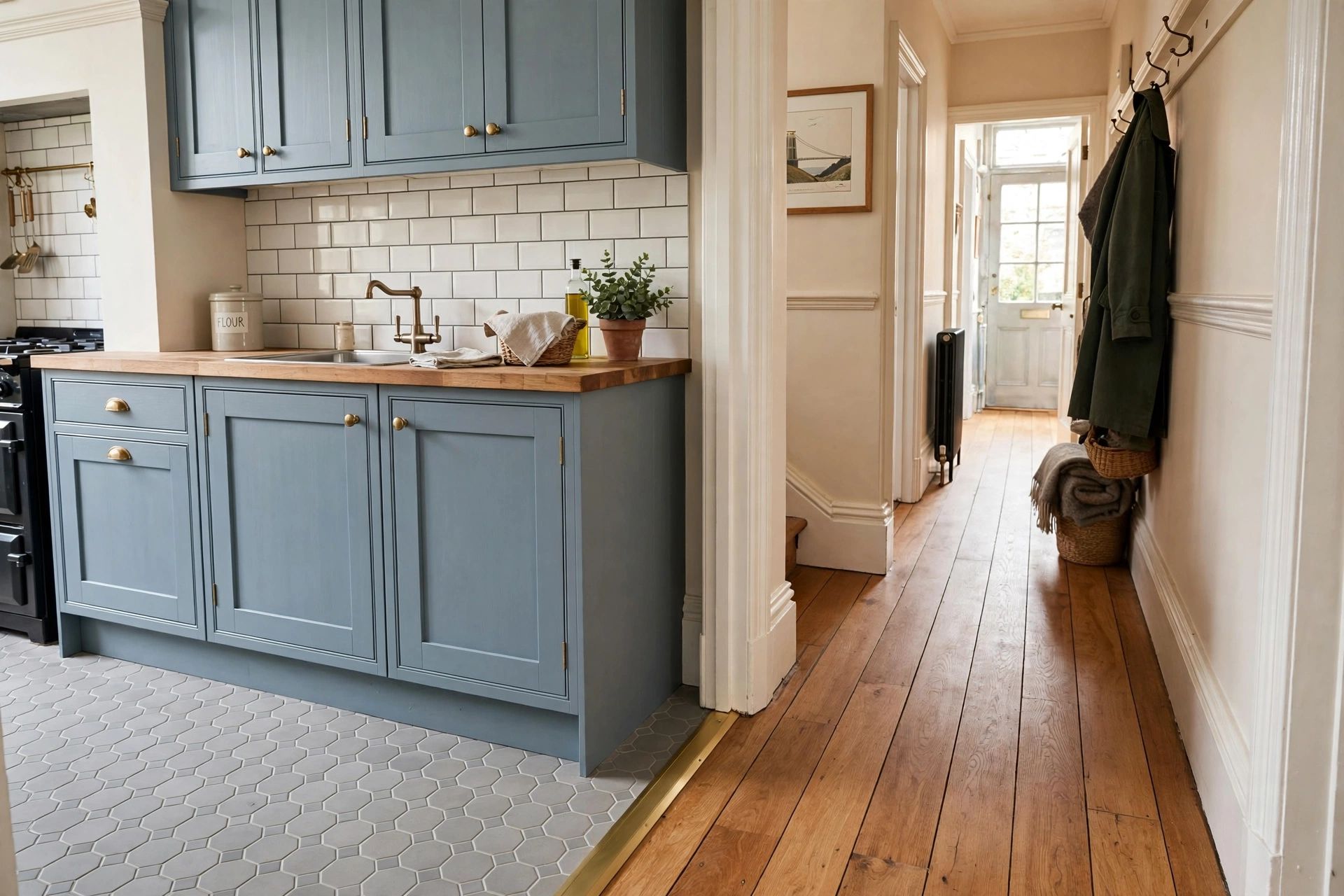
Avoid choosing the same laminate as the lounge simply to make the downstairs look continuous. If you want one look through adjoining spaces, ask whether the products and transitions are suitable for both rooms. Our guide to vinyl floor tiles in Bristol covers practical choices and fitting considerations.
Bathroom and wet room
Sheet vinyl leads in the bathrooms and cloakrooms we fit, with LVT second. Both give you a wipe-clean surface, but product choice alone doesn’t make a floor watertight. Pay attention to the room’s preparation, edges and the details around sanitaryware. A wet room also needs a suitable system and properly formed falls; it isn’t a case of laying ordinary flooring over a standard bathroom floor.
Avoid carpet and standard laminate here. Get advice on the specific room and floor build-up before settling on a product.
Utility room
Utilities get appliance movement, detergent, drips and foot traffic. Sheet vinyl is our most common fit, with LVT also used. Check the subfloor and the area around appliances before installation, particularly if an old leak may have gone unnoticed.
Living rooms, hallways and stairs
These spaces connect the house, but they don’t all take the same kind of wear. A lounge may suit a comfortable carpet; the hallway and stair nosings have to handle much more concentrated traffic. For room-by-room choices, see our guide to flooring for every room.
Living room
Carpet remains ahead in our lounge installs, though hard flooring has gained ground: roughly 60/40 in favour of carpet across the recent pattern we see. Carpet offers warmth underfoot; LVT and laminate give a hard surface that can be easier to wipe clean. Match the choice to how the room is used, rather than assuming one finish suits every household.
Hallway
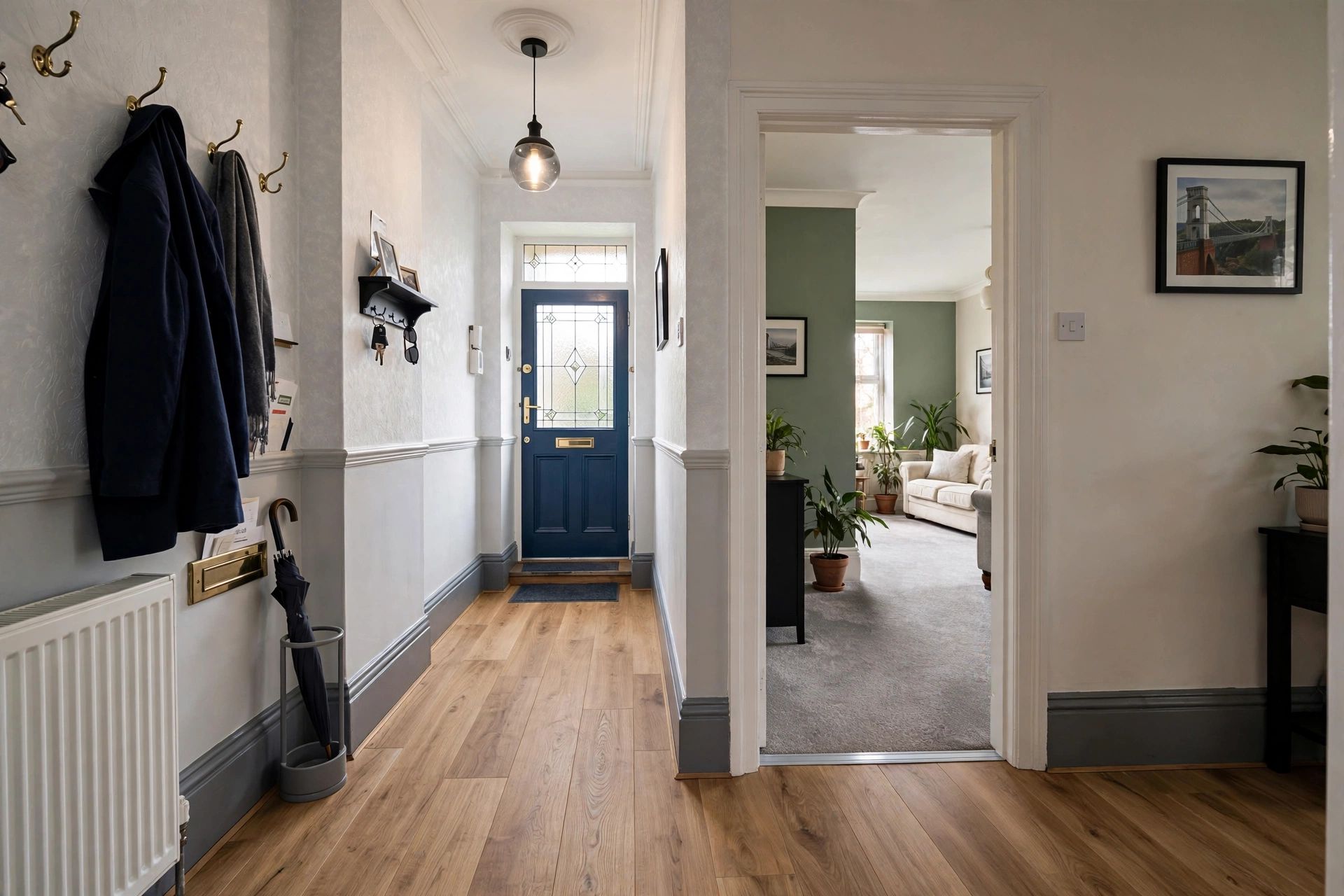
The hallway takes grit from the pavement, wet shoes, buggies and pets. In a Bristol terrace, the front door often opens straight onto this busy strip. A lounge carpet carried through the hall can develop a dark, crushed track down the middle. Once the pile is flattened, cleaning won’t restore its original texture.
Hard flooring—particularly LVT or vinyl—is increasingly common in the hallways we fit. If you prefer carpet, choose one suited to heavy traffic rather than using a soft lounge pile by default. Our carpet laying guide for homeowners explains what a proper fit involves.
Stairs and landings
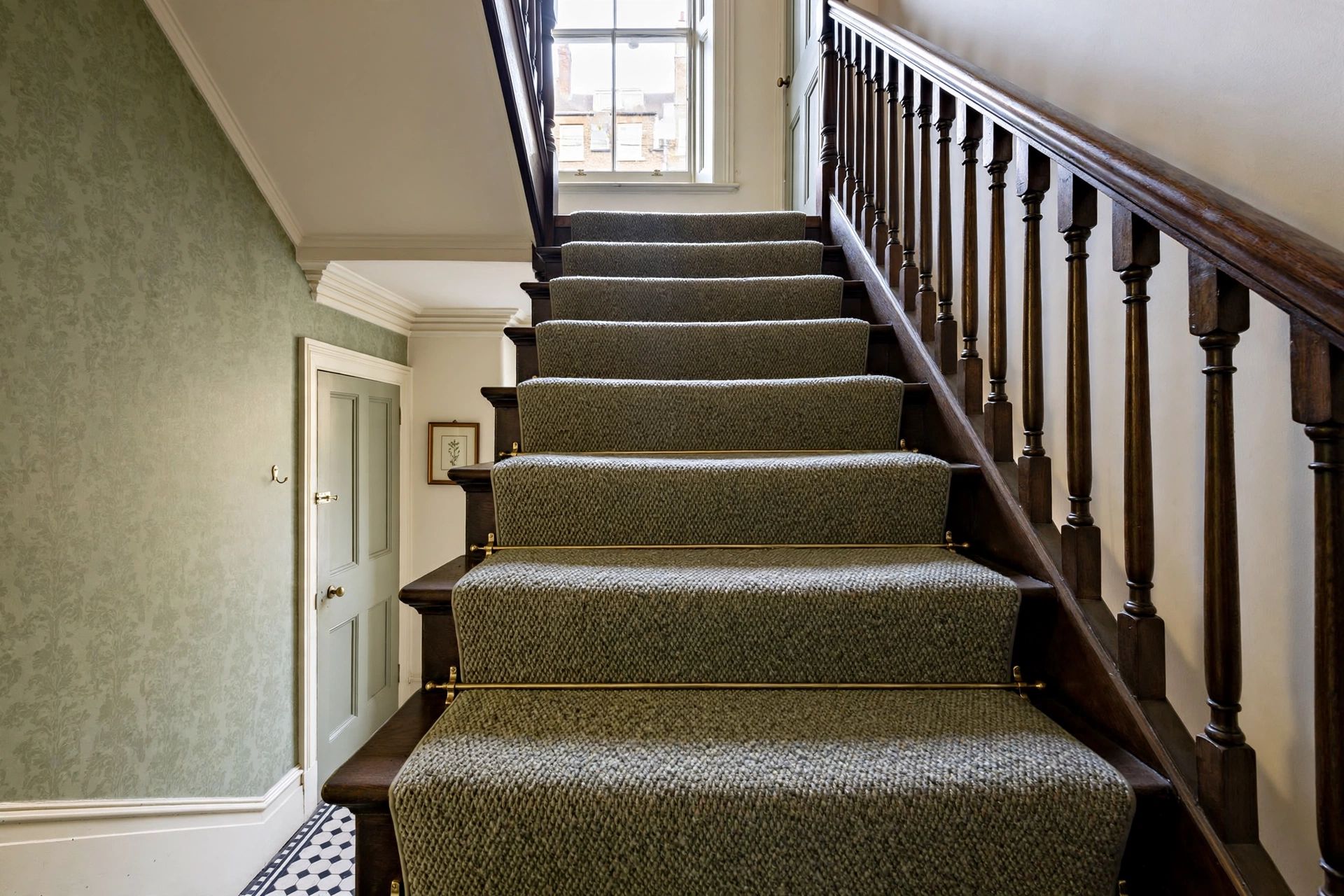
Stairs wear quickly because repeated footfall lands on a narrow strip at each nosing. We fit carpet on stairs almost universally. A firm, dense twist is usually a better choice here than deep, soft pile: in our experience, soft pile can crush at the nosing within a few years, while denser carpet holds up better.
Avoid using thick, luxurious bedroom underlay on stairs. It can feel spongy and roll over the nosing. Stair carpet needs to be selected and fitted for the shape and traffic of the staircase, not just matched to the bedrooms. See our carpet laying guide for more on fitting and finishing.
Bedrooms
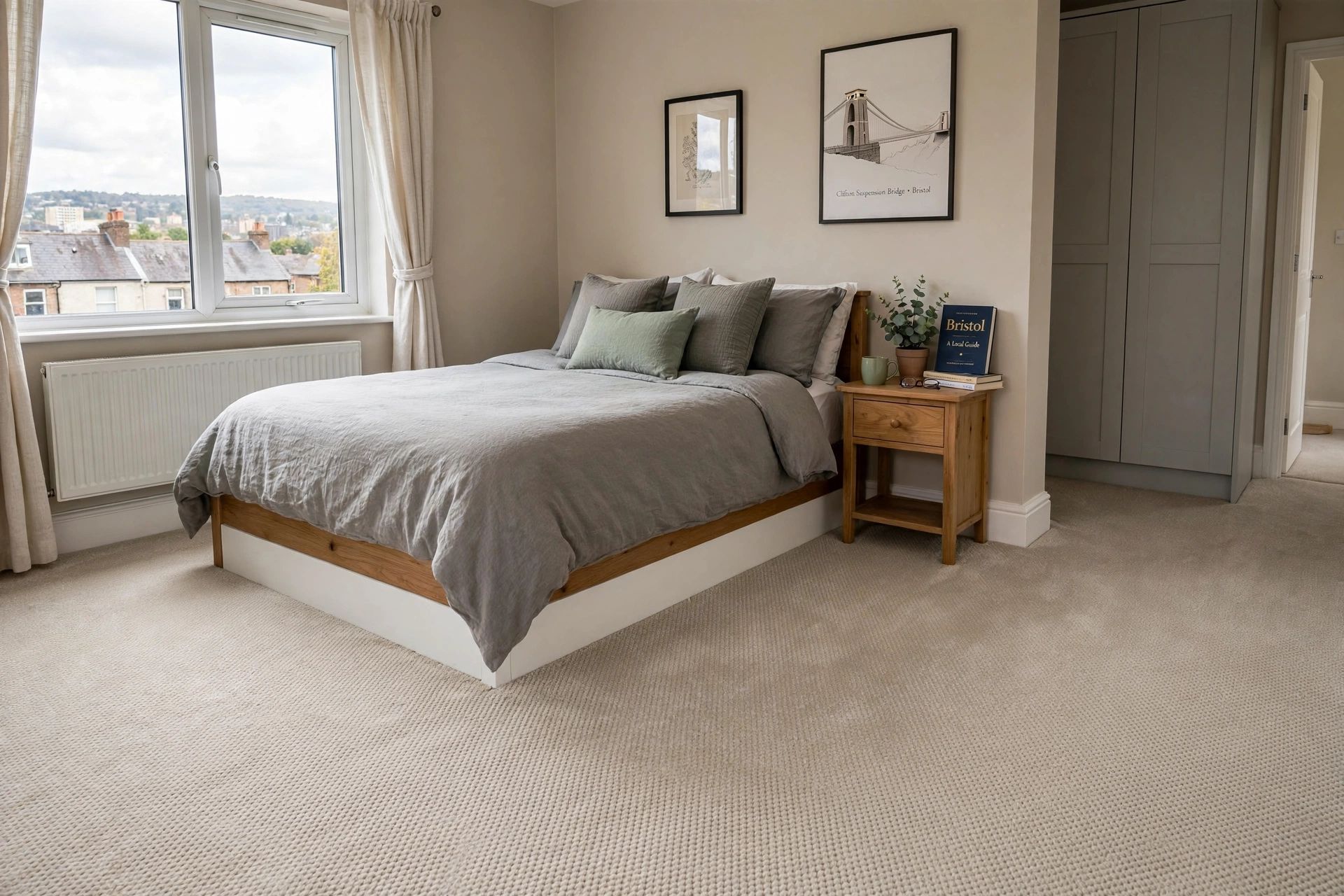
Bedrooms are carpet about 95% of the time across our installs. It feels warmer underfoot and softens a room where people often walk barefoot. A comfortable carpet and suitable underlay can work well here, but that same soft, deep pile isn’t automatically right for a hallway or stairs.
If you’re choosing between wool and synthetic, think about the room’s use, maintenance and budget as well as feel. Our comparison of wool and synthetic carpet looks at what we see after fitting both types.
The room people get wrong most
The biggest mistake is choosing one floor for the whole house and letting it run into rooms with different demands. Continuity can look tidy, and buying one flooring type may seem simpler, but the hallway, stairs, kitchen and bedroom don’t do the same job.
The clearest example is a lounge carpet carried into the hallway. The hall takes grit and wet shoes, so the pile can crush into a dark track while the lounge still looks fine. Another is using the same soft bedroom carpet on the stairs, where wear is concentrated at the nosing. And laminate that looks continuous from the lounge into the kitchen can be an early replacement if water reaches a joint.
Choose for each room first, then decide how to make the transitions look deliberate. A suitable threshold or a change in direction can make different floor types feel planned rather than piecemeal.
Subfloor, heating and how to decide
The visible floor is only part of the job. The subfloor needs to be suitable for the product: it may be concrete, screed or suspended timber, and it may be uneven, damp or contaminated with old adhesive. Preparation can involve lifting old materials, repairing the base or levelling it before fitting. Don’t assume a new floor will hide an unsuitable surface. Our guide to subfloor preparation in Bristol explains what happens before installation.
With UFH, check the flooring and underlay specifications and the heating system’s requirements before choosing. Thick underlay can insulate a room from the heat, while some floor products have specific limits for use over underfloor heating. The Energy Saving Trust’s advice on underfloor heating is a useful starting point; confirm product compatibility with the manufacturer and installer.
Then consider whether adjoining rooms should match, what level of comfort or easy cleaning you need, and the whole cost—including preparation, underlay, trims and fitting. The Flooring Industry Training Association offers further trade guidance on flooring and installation. If you’re unsure what the existing base is like, get it checked before ordering materials.
Frequently asked questions
What is the best flooring for each room?
It depends on how the room is used and what the subfloor can support. In our Bristol and Bath installs, bedrooms are usually carpet, kitchens tend to be vinyl or LVT, bathrooms and utilities are most often sheet vinyl or LVT, and stairs are almost always carpet. Hallways increasingly get hard flooring.
What is the best flooring for a kitchen?
Vinyl or LVT is a practical choice for spills and regular cleaning. LVT has overtaken sheet vinyl in the kitchens we fit. Avoid assuming laminate is suitable just because it is already fitted in the lounge; water at a joint can damage it.
What is the best flooring for a bathroom?
Sheet vinyl leads in our bathroom and cloakroom work, with LVT second. The floor needs appropriate preparation and well-finished edges. For a wet room, use a suitable system designed for the room rather than treating it as an ordinary bathroom floor.
What is the best flooring for a bedroom?
Carpet is the clear pattern in our fitting work: around 95% of bedrooms. It gives a warmer, softer feel underfoot. Choose the pile and underlay for the room rather than assuming the thickest option is best everywhere.
What is best for a hallway or stairs?
Hallways need to handle grit, wet shoes and frequent traffic, so LVT or vinyl is increasingly popular; a hard-wearing carpet can also work. Stairs need a secure fit and a firm, dense carpet that can cope with wear at the nosings. We fit carpet on stairs almost universally.
Should flooring flow between rooms?
It can, but it doesn’t have to. Continuity looks tidy, yet a single product may not suit a bedroom, stairway and wet room equally well. Choose for each room’s use first, then plan the transitions between them.
What flooring is most popular in Bristol homes?
There isn’t one winner across the whole house. In our roughly 1,500 floors fitted over five years, carpet leads in bedrooms and on stairs, kitchens are nearly always vinyl or LVT, and lounge choices are more evenly split. The hallway is moving towards hard flooring, and laminate is no longer the default hard floor it once was.
For advice on a whole-home flooring plan in Bristol, Bath or the surrounding areas, Seamless Floors can help you weigh up each room, the subfloor and the transitions before you choose.