




Across around 600 old carpets lifted over the last five years in Bristol, the biggest DIY mistake is levering gripper rods against the skirting and pulling the plaster down with them. About 1 in 6 old floors hide damp or rot, often at back door thresholds, under old appliances or at bay window joist ends, so the real job starts once the carpet is up.
Before you start: what removing old carpet actually involves
Lifting the carpet is usually the quick part. Underlay can be stapled down, gripper rods are sharp and firmly fixed, and the bare floor may need repair or preparation before new flooring goes down. You will also need a plan for disposing of bulky carpet and underlay.
Our experience is based on around 600 old carpet removals across Bristol, Bath and surrounding areas over the last five years. The number of jobs varies, but the pattern is familiar: the condition of the subfloor and the disposal arrangements often take more thought than pulling up the carpet itself.
If you are preparing for new flooring, check the steps to get your home ready for carpet fitting before you start, especially if furniture needs moving or the room needs to be clear for another trade.
What DIY guides tell you vs what we find on the job
Many guides finish at “roll it up and dispose of it”. In practice, you need to deal with what was holding the carpet down, check what has been exposed and make sure the waste can be taken away.
Step | What guides say | What we find on real jobs |
|---|---|---|
Lifting | Pull up a corner and roll the carpet | It may be tucked under door bars, cut around fitted units or stuck down at the edges. Cut it into manageable strips rather than wrestling with one heavy roll. |
Underlay | Take it up with the carpet | Underlay is often separately stapled or bonded. Bits left behind can interfere with the next floor covering. |
Grippers | Pull the rods up | They are fixed close to the skirting, with sharp pins pointing upwards. Lever them carefully from the floor side to reduce the chance of damaging the skirting or plaster. |
Subfloor | Sweep the floor | Look for damp, loose boards, old adhesive, broken screed and earlier repairs. These can affect whether the next floor can be fitted properly. |
Disposal | Take it to the tip | Check the local household waste recycling centre’s rules, vehicle restrictions and permit requirements first. Collection and skip costs vary. |
How to remove old carpet, step by step
Tools you’ll need
Have these ready before you start:
Work gloves and sturdy shoes to protect against pins, staples and debris.
A sharp Stanley knife, with spare blades. Cut the carpet from the back where possible and keep your other hand clear of the blade.
Pliers for staples and a bolster or flat pry bar for gripper rods.
A hammer, scraper, dustpan and brush, and heavy-duty bags or a way to bundle the carpet.
Eye protection if you are pulling up brittle material or working overhead on stairs.
A carpet selection guide for Bristol homes can help you think ahead about the next covering and what the exposed floor will need to support it.
Lift a corner and free the edges
Clear the room and remove the door if it is in the way. Check for door bars, pipes and cables before cutting.
Choose a corner and lift the carpet with pliers. If it is firmly held, ease it up a little at a time rather than giving it a sharp yank.
Pull the carpet back from the gripper rods. Work around the perimeter, keeping your hands clear of the pins.
Cut the loose carpet into strips about a metre wide, or smaller if the room is awkward. Roll and secure each strip as you go; a full room-sized roll is heavy and difficult to carry.
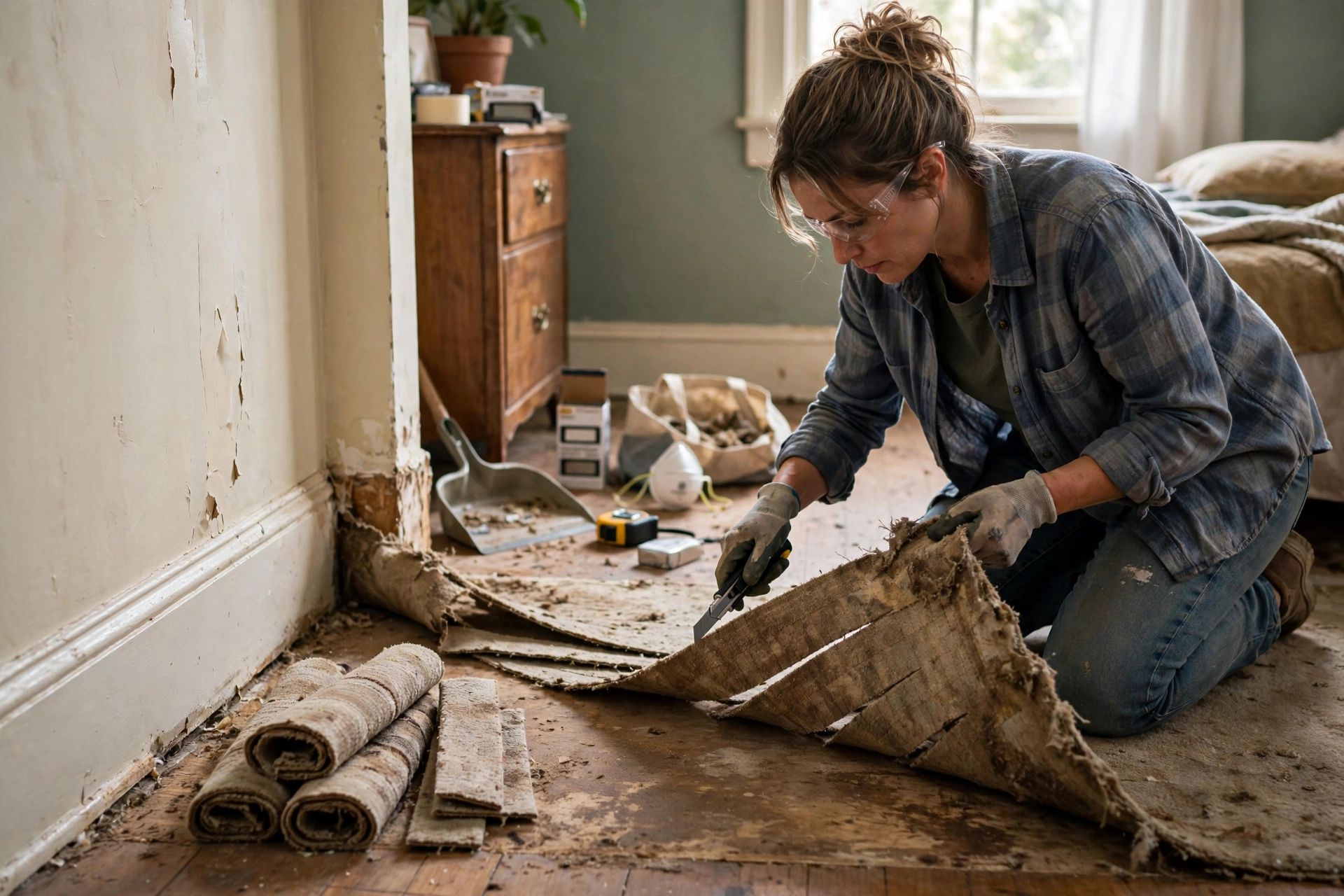
If you find that the carpet is extensively stuck down, stop and check what the adhesive is before scraping at it. For more on the fitting process after removal, see this guide to carpet fitting and what to expect.
Remove the underlay, gripper rods and staples
Lift the underlay separately. It may come up in sheets, or tear into small pieces if it has perished. Check for staples as you go; old underlay can be held down with many more than are visible at first.
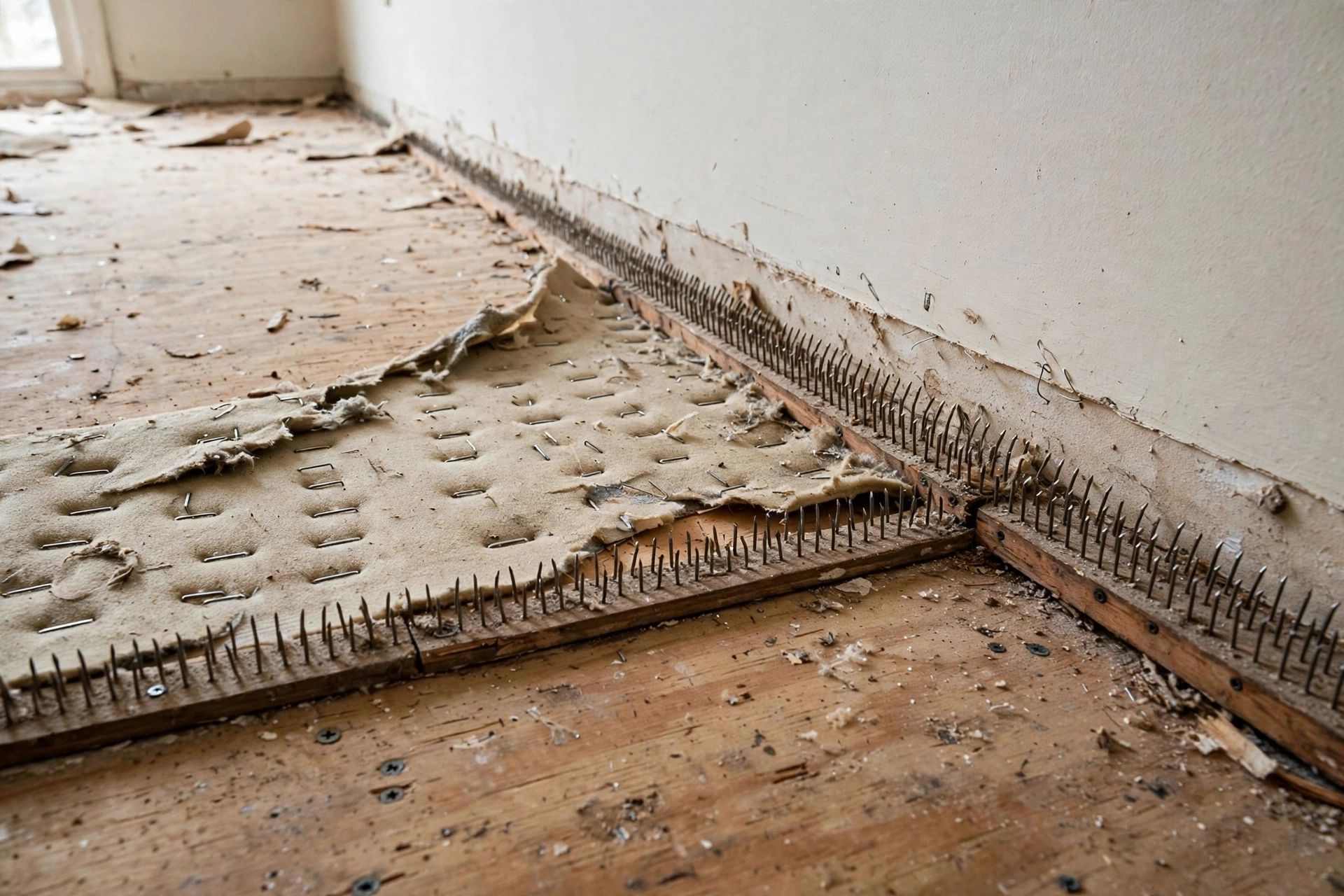
Gripper rods have sharp pins, so wear gloves and do not grab them along the pointed edge. Use a bolster or flat pry bar to ease the rod up from the floor, working along it in short sections. Keep the tool low and direct the force towards the floor, not into the skirting. This helps avoid the common mistake of levering against the skirting and pulling plaster away with the rod.
Lift staples and tacks with pliers or a suitable staple remover. Put them straight into a rigid container, not loose into a waste bag where they can pierce it. If you are unsure what the layers are, the practical step-by-step guide to removing old carpet covers the basics of the lift as well.
Inspect and clean the subfloor
Once the carpet, underlay and fixings are up, sweep and vacuum the floor so you can inspect it properly. Look for:
Damp marks, musty smells, soft or discoloured timber, especially near outside doors, appliances and bay windows.
Loose or broken floorboards, movement, gaps or squeaks.
Cracked or uneven screed, and patches of old adhesive that may affect the next floor.
Blocked airbricks or other signs that ventilation has been covered up.
Do not cover a damp or damaged floor and hope it will be fine. Find the cause of moisture and get the floor assessed before installing the next covering. Read about damp and rot found beneath floors in Bristol homes.
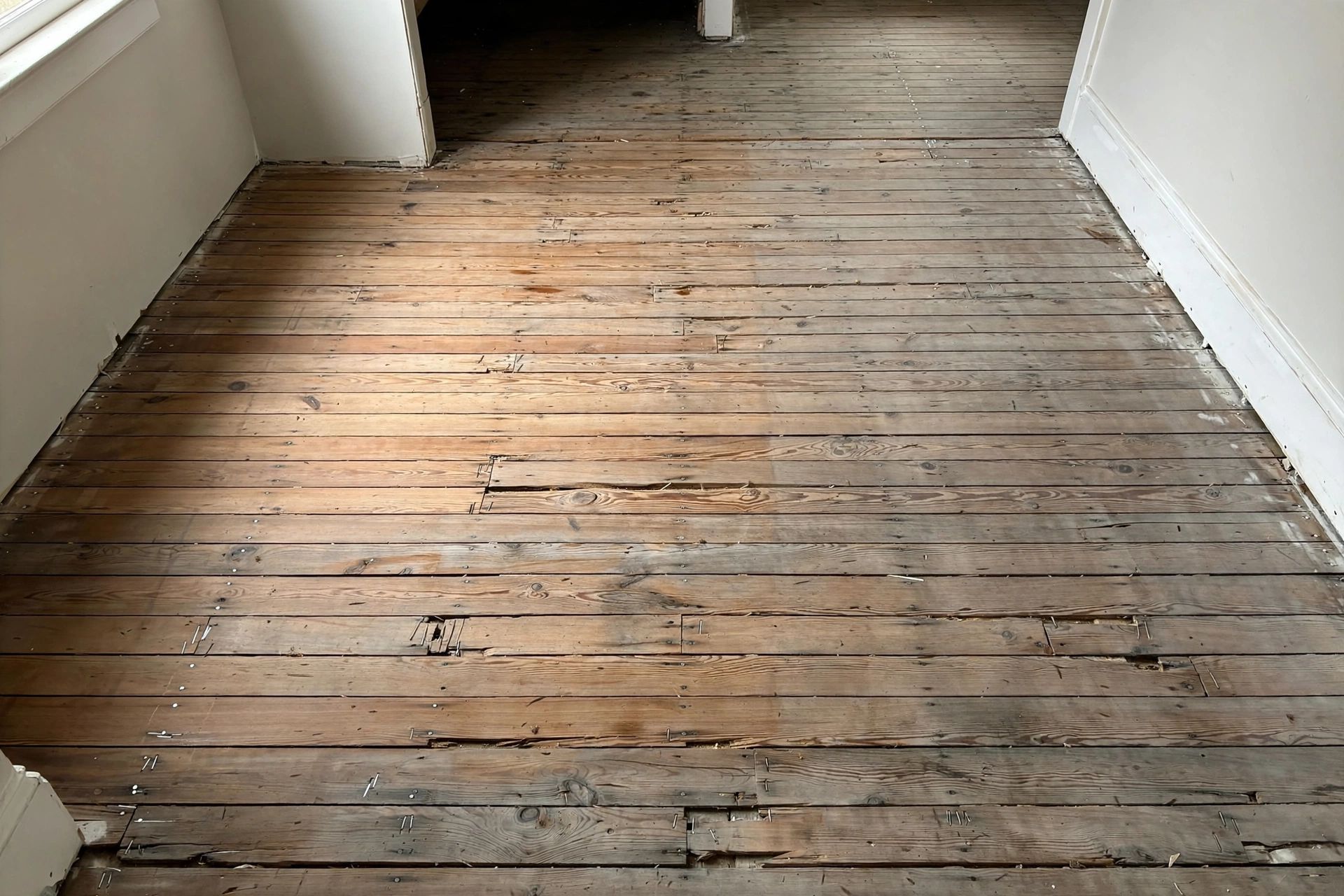
The right preparation depends on what is going down next. Boards may need fixing or patching; a concrete floor may need a suitable smoothing compound or other preparation. Follow the flooring manufacturer’s requirements and make sure the subfloor is sound, clean and dry before fitting.
What’s actually under your old carpet
The floor beneath can be less straightforward than expected. Across our Bristol work, about 1 in 6 old floors we lift show some damp or rot. It is most often found at back door thresholds, under old appliances or around the ends of joists at bay windows.
Other common finds include:
Victorian floorboards or parquet: These may be worth keeping, but check for loose boards, damage and movement before deciding whether they can be exposed or need to be covered.
Old black adhesive: It can remain on concrete or beneath an earlier floor covering. In pre-1980 homes, some black adhesive or backing materials may contain asbestos. Age alone cannot confirm what a material contains.
Hardboard and previous bodges: Layers of hardboard, patching or old floor coverings can hide an uneven or damaged base. Remove or retain them only after checking that they are sound and suitable for the next floor.
Slabs with no damp-proof membrane (DPM): A bare slab may show no obvious problem while covered, so check for damp and get advice before fitting a moisture-sensitive covering.
Blocked airbricks: Flooring or debris may have obstructed ventilation under a suspended timber floor. Keep vents clear and investigate signs of timber damp or rot.
If you uncover damp, rot or an unexpected layer, pause before installing anything over it. The issue may need attention before the new floor can be fitted.
How long it takes and what disposal costs
For a straightforward average bedroom, allow around 30–45 minutes to remove the carpet. A straight staircase can take an hour to two, depending on the number of steps, access and how the carpet is fixed. A three-bedroom house can take about half a day with a two-person team, not including repairs or extra subfloor preparation.
Disposal depends on how much material you have and how you transport it. A council bulky-waste collection is roughly £30–£50. In Bristol, disposal at Avonmouth or St Philips may be free with a permit, but check current site rules, booking requirements and vehicle restrictions before loading up. A man-and-van collection is typically around £60–£150. A skip can suit a larger clear-out, but get a current quote and check whether carpet waste is accepted.
Job | Typical time | Rough cost |
|---|---|---|
Average bedroom carpet removal | 30–45 minutes | DIY time; disposal extra |
Straight staircase | 1–2 hours | DIY time; disposal extra |
Three-bedroom house removal | Half a day with a two-person team | Varies with access and what needs removing |
Bulky collection, HWRC or man-and-van disposal | Depends on the amount and arrangements | Around £30–£50 for council collection; free at Avonmouth or St Philips with a permit; around £60–£150 for a man and van |
If you are comparing a full fitting quote with doing the removal yourself, check what is included. Our Bristol carpet fitting costs breakdown explains the items that can affect the total; carpet removal and disposal may be included in a supply-and-fit quote, but confirm that with the fitter.
Safety: sharp pins and older adhesives
Gripper pins, staples and tacks can puncture skin and footwear. Wear gloves and sturdy shoes, avoid kneeling on exposed grippers, and collect loose metal fixings as you work.
In older homes, including properties built before 2000, take care around old black or bitumen adhesive and backing materials beneath previous floors. Some materials, particularly in pre-1980 properties, may contain asbestos. You cannot confirm this by appearance alone. Do not sand, grind, scrape aggressively or break up a material you suspect may contain asbestos. Stop work and arrange testing or advice from a competent professional. The HSE’s asbestos guidance explains how to manage suspected asbestos safely.
For disposal, check the current Bristol Council recycling centre information before travelling, including permit and vehicle rules.
When to do it yourself and when to call someone
DIY removal is reasonable if the carpet is loose at the edges, you have suitable tools, can manage the rolls safely and have a confirmed disposal plan. It is also easier if you can leave the room empty and take your time lifting fixings carefully.
Get help if the carpet or underlay is extensively bonded, the floor feels soft or damp, boards are badly damaged, or you uncover an unknown old adhesive or backing. Avoid levering gripper rods against the skirting: that is the mistake most likely to turn a simple removal into plaster repairs. If the subfloor needs work before the next covering, a fitter can assess what preparation is needed. Seamless Floors serves Bristol, Bath and surrounding areas and can advise on the flooring work if removal exposes a problem.
Frequently asked questions
How do you remove old carpet?
Start at a corner, ease the carpet off the gripper rods, then cut it into manageable strips and roll them up. Remove the underlay separately, lever out the gripper rods carefully, lift staples and inspect the bare subfloor.
How long does it take to remove carpet?
Allow about 30–45 minutes for an average bedroom and an hour to two for a straight staircase. A three-bedroom house may take half a day for a two-person team, before any floor repairs or preparation.
How do you get carpet grippers up?
Wear gloves and sturdy shoes. Use a bolster or flat pry bar to lift the rod in short sections, directing the force towards the floor rather than the skirting. The pins are sharp, so do not pull the rod up by its pointed edge.
Do you have to remove old underlay?
Usually, yes. Old underlay may be worn, torn or stapled to the floor, and leaving it behind can affect the fit of new flooring. Remove it separately and check that no staples or stuck pieces remain.
How do you dispose of old carpet in Bristol?
Check Bristol’s current HWRC rules, including any permit, booking and vehicle requirements. Other options include a council bulky collection, typically around £30–£50, or a man and van, typically around £60–£150. Confirm prices and accepted materials before arranging collection.
Is it hard to remove carpet yourself?
A straightforward room is manageable if you can lift and carry the rolls, use a Stanley knife safely and deal with grippers and staples. The harder parts are often disposal and checking the floor underneath. For a fuller removal sequence, see our guide to removing old carpet.
Is there asbestos under old carpet?
Not necessarily, but some old black adhesives and backing materials beneath previous floors may contain asbestos, particularly in pre-1980 homes. Do not disturb material you suspect may contain asbestos; stop and arrange professional testing or advice.