




Across around 600 carpets we’ve fitted over five years in Bristol, a typical double bedroom costs £450 to £750 supplied and fitted. The biggest cost surprise is nearly always the stairs: a standard flight and small landing can cost £400 to £900, because the work is labour-intensive rather than because it uses a lot of carpet.
What it costs in Bristol — the short answer
For a standard Bristol double bedroom, roughly 3.5m x 4m, budget £450 to £750 supplied and fitted. A straight flight of 13 stairs with a small landing is £400 to £900. For a three-bed terrace with bedrooms, stairs and landing, allow £1,800 to £3,200. Adding a lounge in a three-bed semi brings the typical total to £2,400 to £4,000. Those are real job prices, not a low headline figure with the essentials left out. The quote depends on the carpet grade, room layout and what’s underneath the old floor covering. For more detail on room-by-room costs, see our Bristol carpet fitting cost breakdown.Where these numbers come from
These figures come from real supply-and-fit prices across around 600 Seamless Floors jobs over the last five years. The work spans Bristol, Bath and surrounding areas, including Kingswood, Hanham, Fishponds, Bedminster, Southville, Downend, Clifton and Redland. The jobs range from a single bedroom to full-house fits. They are not averages taken from a lead-generation platform or a national price list. We measure each property, check access and layout, and price the materials and fitting needed for that job. Our Bristol carpet fitting service includes a free, no-obligation measure and quote.What national cost guides say vs what Bristol actually costs
National cost guides can be a useful starting point, but they combine prices from different parts of the UK, often including London. That means their average may fit nowhere particularly well. The local figures below reflect the kinds of jobs we actually quote around Bristol. A national guide may separate fitting labour from carpet and extras. Our figures are for the specified job and are clearer when you check what is included. For a general comparison, Checkatrade’s carpet fitting cost guide sets out typical UK cost components; treat its ranges as national guidance, not as a Bristol quote.| Job | Typical national guide | What we charge in Bristol |
|---|---|---|
| Carpet per m² | Broadly about £6–£60/m² for carpet alone, depending on type and quality | Around £12–£30/m² for the carpet in the typical room examples below; underlay and fitting are extra if buying supply-only |
| Standard double bedroom | National averages vary with room size and what is included | £450–£750 supplied and fitted for roughly 14m² |
| Stairs and small landing | Often priced separately; layout and labour can make comparisons difficult | £400–£900 for a standard straight flight of 13 treads and a small landing |
| Three-bed house | A single national figure can hide differences in house size and specification | £1,800–£3,200 for a three-bed terrace with bedrooms, stairs and landing |
| Fitting labour/day rate | National guides commonly quote a per-m² fitting charge; day rates are not directly comparable | Our typical-room allowance for fitting, grippers and doorbar is about £6–£10/m²; we price the job rather than quote a standalone day rate |
Every job gets a free measure and a fixed price before anything starts. See what’s included in our carpet fitting service.
The national figures are broad reference points. A measured local quote is more useful than applying a blended UK average to a Bristol home.The real cost, job by job
A typical room
A standard double bedroom, around 14m²: £450–£750 supplied and fitted. That includes the carpet, underlay, gripper rods, doorbar and fitting, plus lifting and taking away the old carpet. The typical room costs we see across Bristol are also covered in our realistic Bristol carpet fitting cost breakdown. The carpet itself is usually £12–£30/m², with underlay at £5–£9/m² and the fitting, gripper and doorbar allowance at £6–£10/m². A mid-range synthetic with decent underlay tends to land around £500 for the room. Wool-rich 80/20 carpet can take it nearer £750. Room shape, doorway details and the amount of material needed can affect the final price, so the component rates should not simply be multiplied by floor area and treated as a fixed total.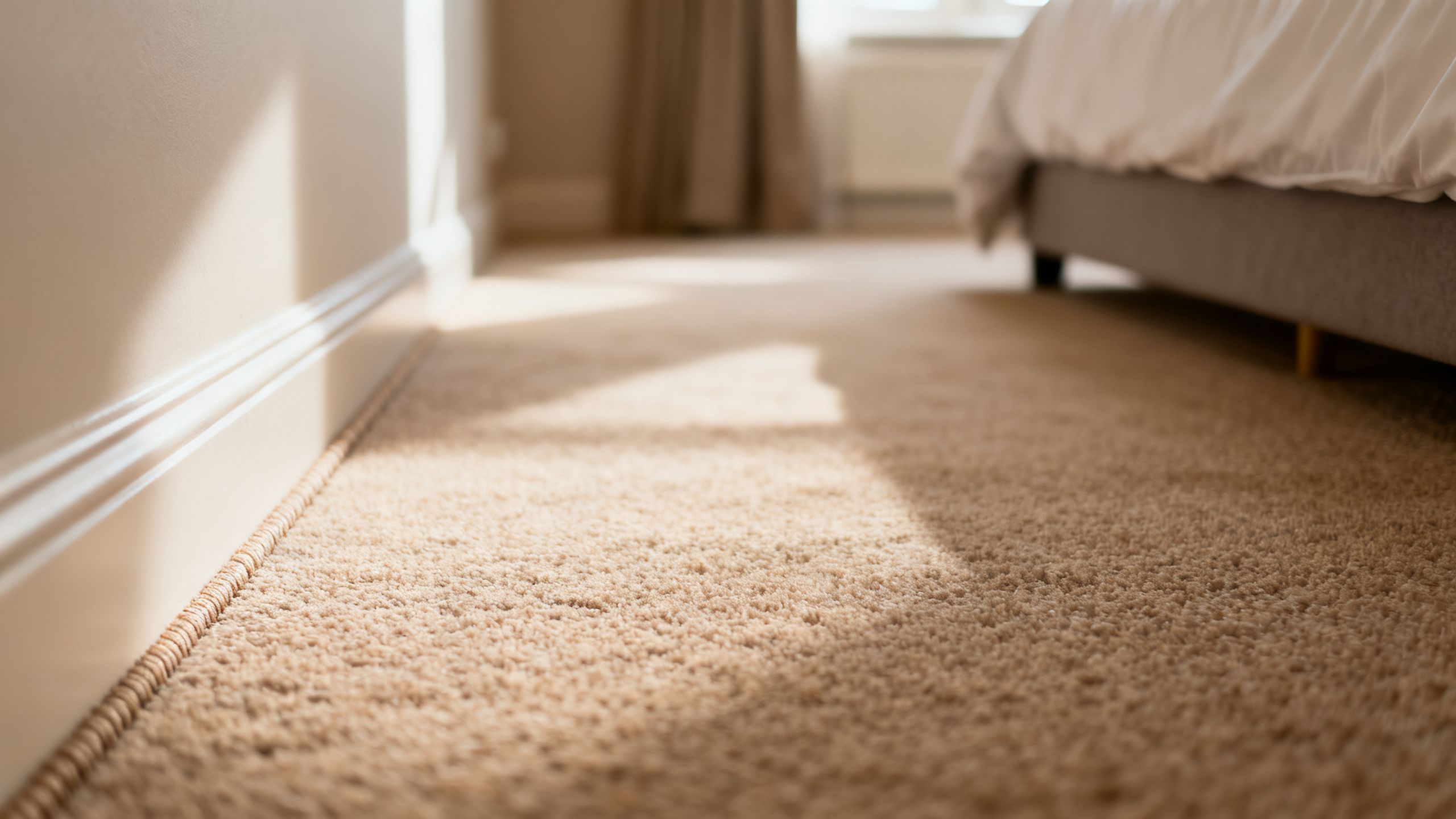
Stairs and landing
A standard straight flight of 13 treads and a small landing costs £400–£900. Stairs can cost roughly twice as much per square metre as a bedroom because each tread and riser needs careful measuring and cutting. The higher end is more likely with a Victorian dog-leg staircase, winders or a half-landing, where wedge-shaped pieces must be cut individually and aligned neatly. A straight flight is typically a morning’s work; a more involved staircase can take most of a day. A runner over sanded treads uses less carpet but needs extra labour, so it often comes out at a similar overall price. Our carpet laying guide for homeowners explains what goes into a proper fit.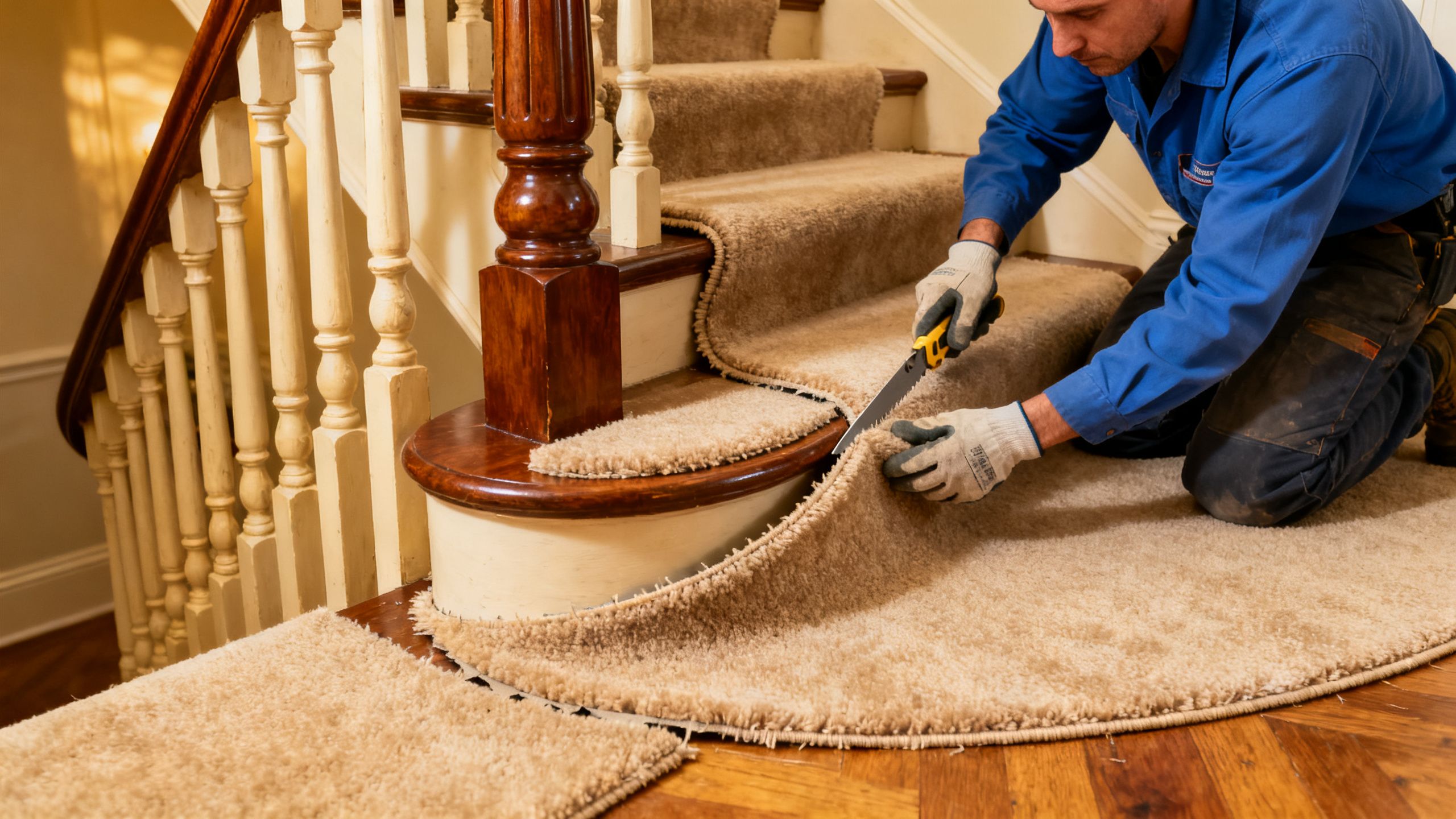
A whole 3-bed house
For a three-bed terrace, allow £1,800–£3,200 for bedrooms, stairs and landing. A three-bed semi with the lounge carpeted as well is usually £2,400–£4,000. A four-bed house throughout is typically £3,500–£6,000. Whole-house pricing is based on the rooms, carpet grade, underlay and fitting involved—not simply one bedroom price multiplied by the number of rooms. A larger order can make planning and fitting more efficient, but stairs, awkward layouts and different carpet choices still affect the total. Ask for a room-by-room quote so you can see what is included and change the specification without guessing.What you’re actually paying for
A supply-and-fit price combines the floor covering, the materials needed to fit it and the labour. In a typical room, carpet is £12–£30/m², underlay is £5–£9/m², and the allowance for fitting, gripper rods and doorbar is £6–£10/m². The final room total also reflects measuring, cutting and the material required for the room’s shape.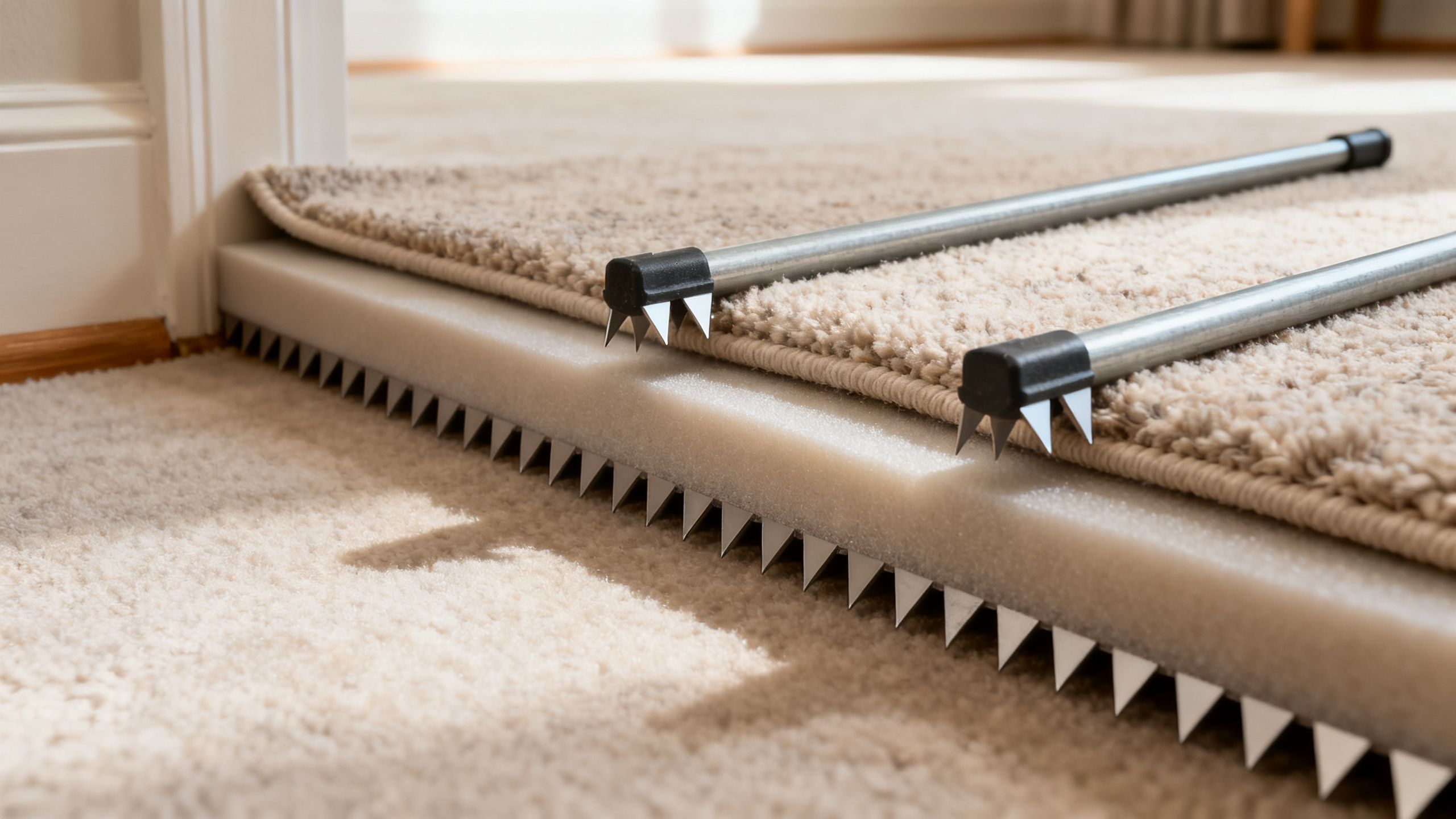
| Item | Typical cost or treatment | Included as standard? |
|---|---|---|
| Carpet | £12–£30/m² in the typical room examples | Included in a supply-and-fit quote; grade affects the price |
| Underlay | £5–£9/m² | Included in the quoted specification; check the grade and price rather than assuming |
| Gripper rods and doorbar | Covered with fitting in an allowance of about £6–£10/m² | Included in the typical supply-and-fit room quote |
| Fitting labour | Not quoted as a separate day rate; part of the measured job price | Included in supply-and-fit |
| Lifting and disposing of old carpet | Included in our typical room quote | Included; confirm if the job has unusual waste or access needs |
| Door trimming and subfloor preparation | Depends on the door and the floor condition | Normal preparation and levelling are included in the fixed quote; door trimming or repair work is confirmed separately if needed |
The costs that catch people out
Stairs are the first surprise. People often estimate from a bedroom rate and apply it to the rest of the house. A staircase may have a small floor area, but a fitter has to work through every tread, riser, edge and turn. That is why a straight flight and small landing can be £400–£900, even when the carpet quantity is modest. The condition of the floor is the second. Normal preparation and levelling are included in our fixed quote. But about one in six old floors we lift has some damp or rot underneath, often near a back door or beneath an old washing machine. A spot repair can cost £150–£350; re-boarding a room properly can be £400–£900. We identify the issue and give you the cost before going ahead with extra work. The third mistake is spending the whole budget on the carpet and choosing the thinnest underlay. A mid-range carpet on decent underlay often feels better and lasts longer than an expensive carpet over thin foam. If the budget is tight, consider stepping down a carpet grade before cutting back on underlay. Old carpet removal and disposal are included in our typical room price. Door trimming is different: it may be needed if a new carpet and underlay prevent a door from opening, but it depends on the door and should be confirmed as a separate item if required. Ask for those details when you get your Bristol carpet fitting quote.Carpet type and what it does to the price
For the standard double bedroom, carpet material usually falls between £12 and £30/m² in the examples behind our local figures. Budget polypropylene twist sits towards the lower end; wool-rich options sit towards the upper end. A premium carpet can cost more than that range, so the sample and specification matter more than the label alone.| Carpet choice | What to expect | Effect on a typical room |
|---|---|---|
| Budget polypropylene twist | Practical synthetic option at the lower end of the carpet range | Helps keep the total down; don’t compromise on suitable underlay just to buy a thicker carpet |
| Mid-range synthetic | A common choice for bedrooms and busy family homes | Often brings a standard room to around £500 with decent underlay |
| Wool-rich 80/20 | Higher carpet material cost and a different feel underfoot | Can bring the room nearer £750 |
| Premium carpet | Price depends on the specific product and construction | Ask for the exact product and a full supply-and-fit total rather than relying on a broad estimate |