



A ripple across the landing, a seam that’s opened up in a doorway, a patch the dog has had a go at — none of that means the carpet is finished. Most of what we’re called out to look at is repairable, and a repair usually costs a fraction of replacing the room.
What follows is what can genuinely be fixed, what can’t, and how to tell the difference before you spend anything.What we can usually fix
Ripples and loose carpet
Carpet that’s gone wavy or baggy is the most common call we get, and it’s nearly always a fitting fault rather than a fault with the carpet. If it wasn’t power-stretched properly when it went down, it relaxes over the first year or two and you get ridges — usually running across the room or down a hallway. Re-stretching pulls it taut again with a power stretcher and re-trims the edges onto the gripper. It’s a couple of hours in a normal room and the result is a floor that lies flat and stops being a trip hazard. More on why it happens in our guide to carpet ripples and how to fix them.Burns, holes and pet damage
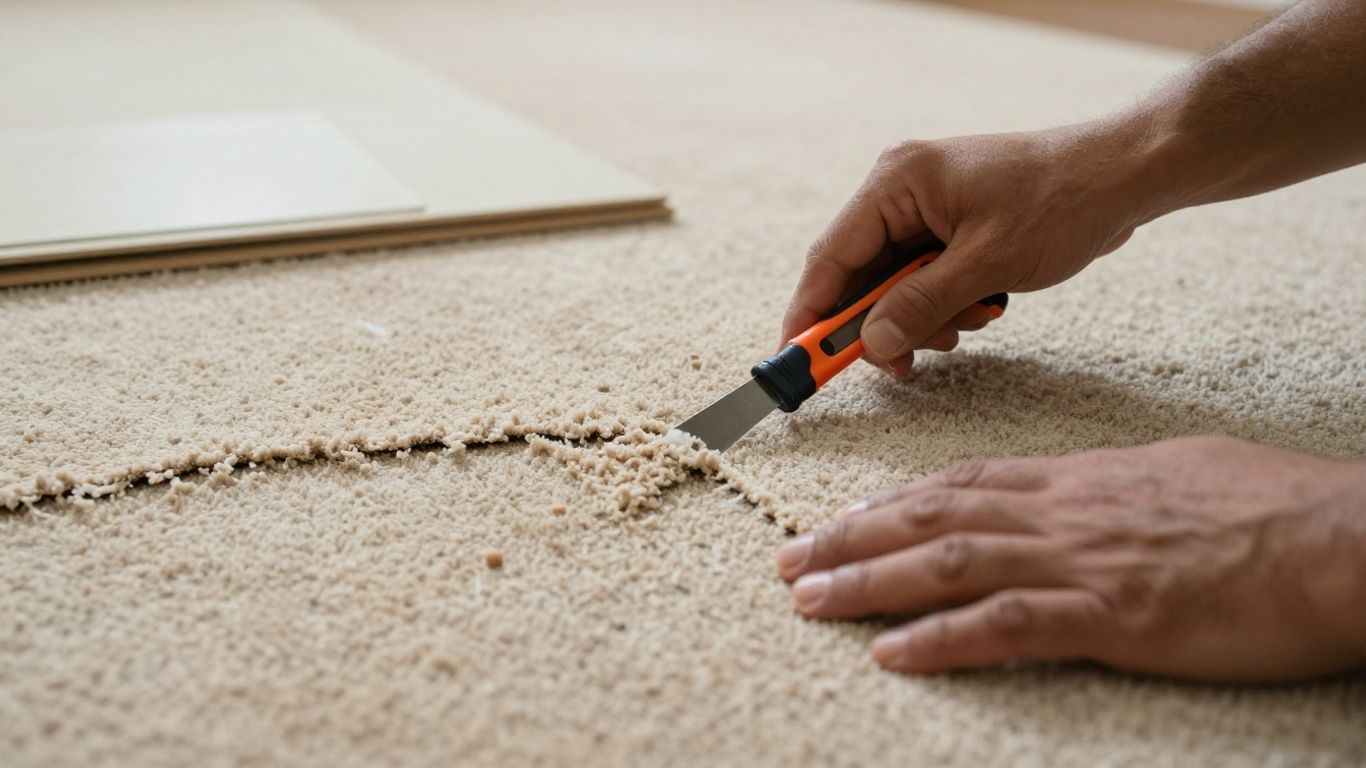
A localised bit of damage — a cigarette burn, a tear from dragged furniture, a corner a cat has worked on — can usually be patched. We cut out the damaged section and let in a matching piece. The whole job depends on having carpet to patch it with. Offcuts from the original fit are ideal, which is why we always tell people to keep them. Failing that, we can sometimes take a piece from inside a fitted wardrobe or under a sofa where it’ll never be seen, and patch that spot instead. Done properly on a patterned or flecked carpet, you won’t find it afterwards. On a plain carpet it’s harder, because any slight difference in pile direction shows.Open seams
Seams split in doorways and across wide rooms, usually where the original join wasn’t taped and bonded properly or where the carpet has moved. Re-seaming means lifting the join, cleaning the backing, laying new seaming tape and bonding it under heat, then rolling it in.Frayed edges and loose doorbars
Small stuff, quick to put right, and worth sorting before it spreads. A frayed edge at a doorway will keep unravelling if it’s left, and a loose doorbar is a trip hazard.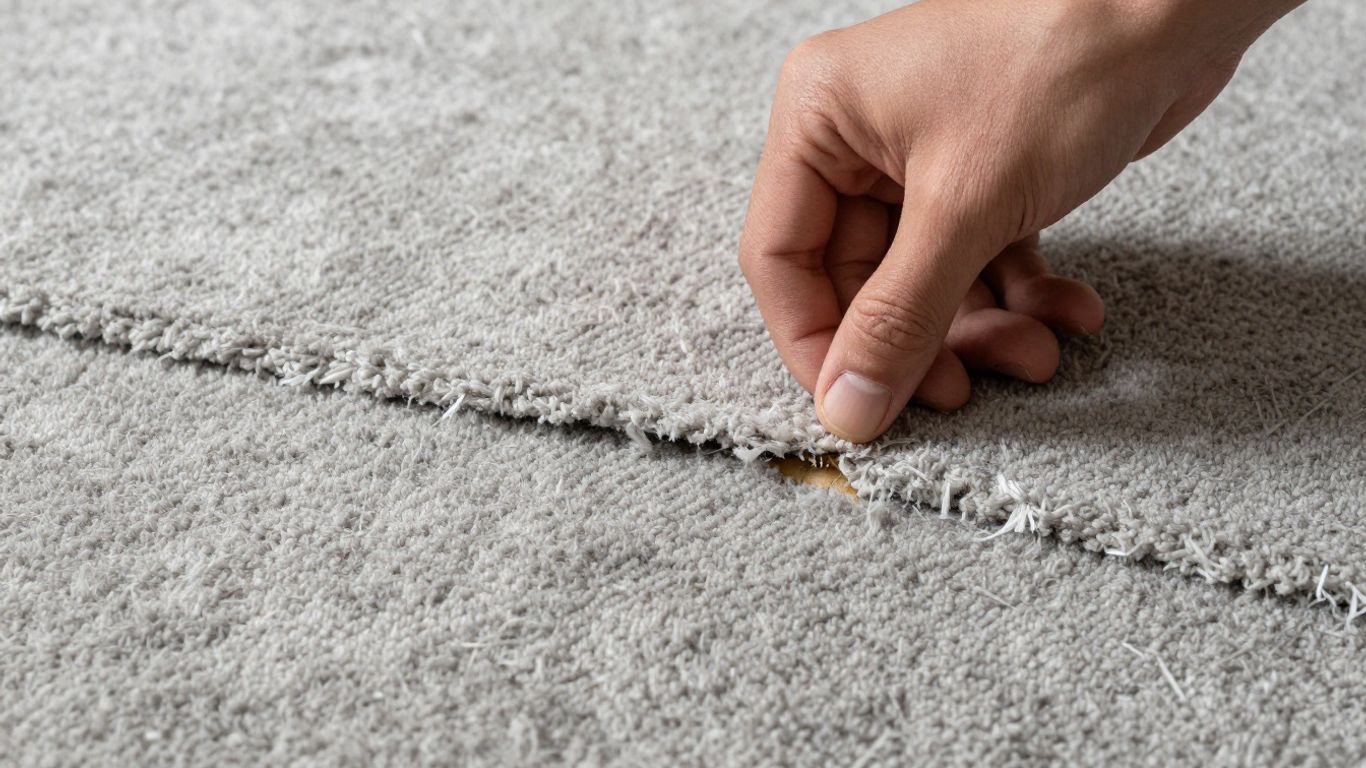
What we can’t fix
We’d rather tell you this before coming out than after. Traffic lanes. That darker track down a hallway or the stairs usually isn’t dirt — it’s crushed pile. The fibres have bent flat and lost their twist, so they catch the light differently to the carpet either side. Nothing restores that. No cleaner, no repair. The carpet has physically changed shape. Widespread wear. If the pile has gone across a whole room rather than in one patch, patching it just makes the worn areas more obvious. Old carpet with no match available. If there are no offcuts and nowhere to borrow a piece from, there’s often nothing to patch with. Carpets are made in batches and a close colour from a current range will still read as different in daylight. Damage from a wet subfloor. If the carpet’s gone because something underneath it is wet, repairing the carpet solves nothing. Around one in six old floors we lift has damp or rot somewhere underneath — see what we find under Bristol floors.What a repair costs
Indicative figures, and every job gets a proper price before any work starts.| Job | Typical cost |
|---|---|
| Re-stretching one room | £80 – £150 |
| Patch repair, where matching carpet is available | £80 – £180 |
| Seam repair, single join | £80 – £150 |
| Re-stretching a full ground floor or landing and stairs | £200 – £350 |
When replacing is the better value
We’ll say so if it is. Repair makes sense when the damage is in one place and the rest of the carpet has life in it. Replacing makes more sense when:- the wear is across the whole room rather than one patch;
- there’s no matching carpet to patch with;
- the carpet is at the end of its life anyway — most last eight to fifteen years depending on fibre and traffic;
- the stairs have gone, because stair carpet wears two to three times faster than anywhere else and a patched tread rarely looks right;
- or something underneath needs sorting first.