




Across around 1,500 floors fitted over the last five years in Bristol and Bath, carpet is what we install most in Bristol homes. But the biggest local factor is the subfloor: old suspended timber, uneven boards and hidden damp can decide what will last before the room or style does.
Choosing a floor in Bristol — the short version
Carpet still makes up roughly four in ten floors we fit, with vinyl and LVT together accounting for about the same share. Laminate is around two in ten. But the building beneath the floor matters more than those overall figures: a Victorian terrace with moving floorboards needs a different plan from a new-build with a concrete slab and underfloor heating.
In bedrooms, carpet is still our usual choice. In kitchens, bathrooms and utility rooms, we nearly always fit vinyl or LVT. Hallways are changing fastest, with more people choosing hard-wearing LVT or vinyl. For an overview of what we fit locally, see our Bristol carpet and flooring services.
Where this comes from
This is based on our records and experience from around 1,500 floors fitted over five years across Bristol and Bath, including Victorian terraces in Bedminster and newer homes around Lyde Green. It is a record of real local installations—not a manufacturer’s list or a national survey. We have been in the trade for over 25 years, with experience across thousands of jobs.
Across that work, carpet has been the most-fitted flooring overall. The figures shift by room: carpet goes into bedrooms around 95% of the time and is still the near-universal choice for stairs and landings. Kitchens, bathrooms and utility rooms are usually vinyl or LVT. Laminate has lost ground to LVT over the last decade, particularly where water spills are likely.
These figures describe our installs, not every Bristol household. The useful pattern is how the flooring choice changes with the age and construction of the property. Our guide to preparing a subfloor before fitting explains why that work can matter as much as the floor covering.
What national flooring guides say vs what Bristol homes actually need
National guides often start with the room: carpet for a bedroom, tile for a bathroom, hard flooring for a kitchen. That can be a useful first pass, but it leaves out the thing we check first on a Bristol survey: what the existing floor is made of and what condition it is in.
Factor | What national guides say | What Bristol homes need |
|---|---|---|
Subfloor | Choose a product for the room | Check whether it is suspended timber, concrete or screed, and whether it is flat enough for the chosen flooring |
Damp | Pick a water-resistant surface for wet areas | Find the source of moisture first; a waterproof top layer will not fix damp below it |
Heating | Check whether flooring suits underfloor heating | Confirm the floor and adhesive are approved for the heating system, and follow its temperature guidance |
Noise | Consider comfort and appearance | Flats and conversions may have lease conditions or acoustic requirements for impact sound |
Best-fit floor | Match a floor type to a room | Match it to the building, subfloor, moisture exposure and how the space is used |
For flats, check the lease and building requirements before buying a hard floor. In England, Approved Document E covers resistance to the passage of sound in buildings, but the specific rules for an existing flat can depend on its lease and management arrangements.
Flooring by Bristol property type
Period and Victorian terraces
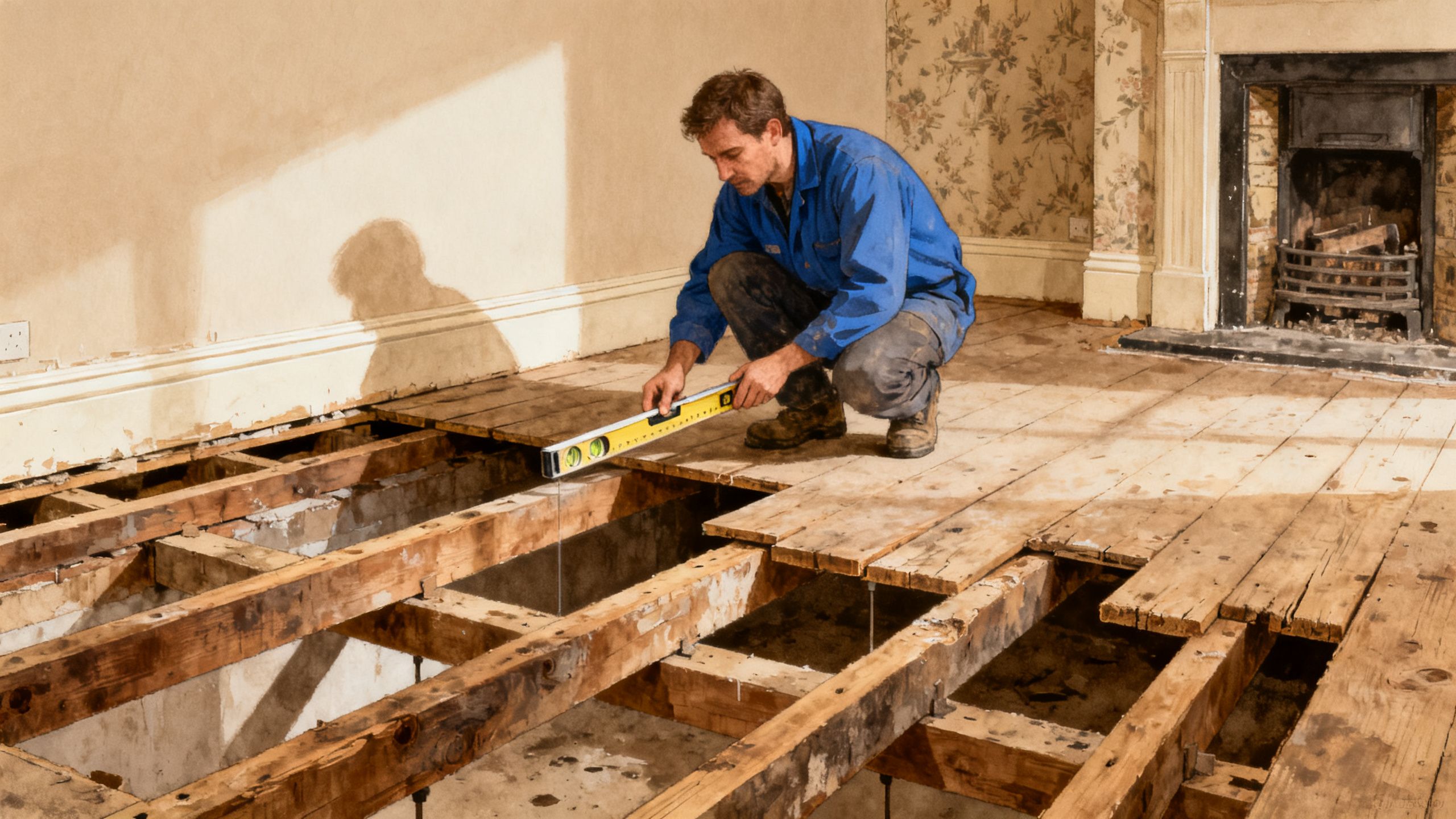
The home: Pre-1919 terraces in areas such as Bedminster, Southville, Ashton Gate, Bishopston, Cotham, Redland, Knowle and Brislington often have suspended timber ground floors. Floorboards sit over joists, with airbricks intended to ventilate the void beneath.
What it demands: Boards may be uneven, cupped or patched after plumbing work. Carpet is forgiving of small imperfections. Sheet vinyl and LVT need a smoother base, so boards may need securing and the surface may need plywood and levelling compound first. Check that airbricks are not blocked by a patio, extension or garden build-up. A DPC or a new surface floor covering will not solve a ventilation problem beneath suspended timber.
What we fit most: Carpet upstairs and on stairs; downstairs, carpet or LVT over a properly prepared floor. In our older terraces, roughly one in four of the floors we lift has some sign of damp or rot. That is our job experience, not a city-wide survey. Our guide to damp and rot beneath Bristol floors explains the signs we look for.
Avoid: Laying vinyl or LVT straight over lumpy boards, or covering suspected damp before finding its source. Both can lead to visible board lines, failed flooring or hidden damage. Allow for preparation in the budget rather than treating it as an optional extra.
Cost steer: The floor covering is only part of the price. Plywood, levelling and repairs can add to the fitting bill, and the amount depends on what we find after lifting the old floor.
New builds
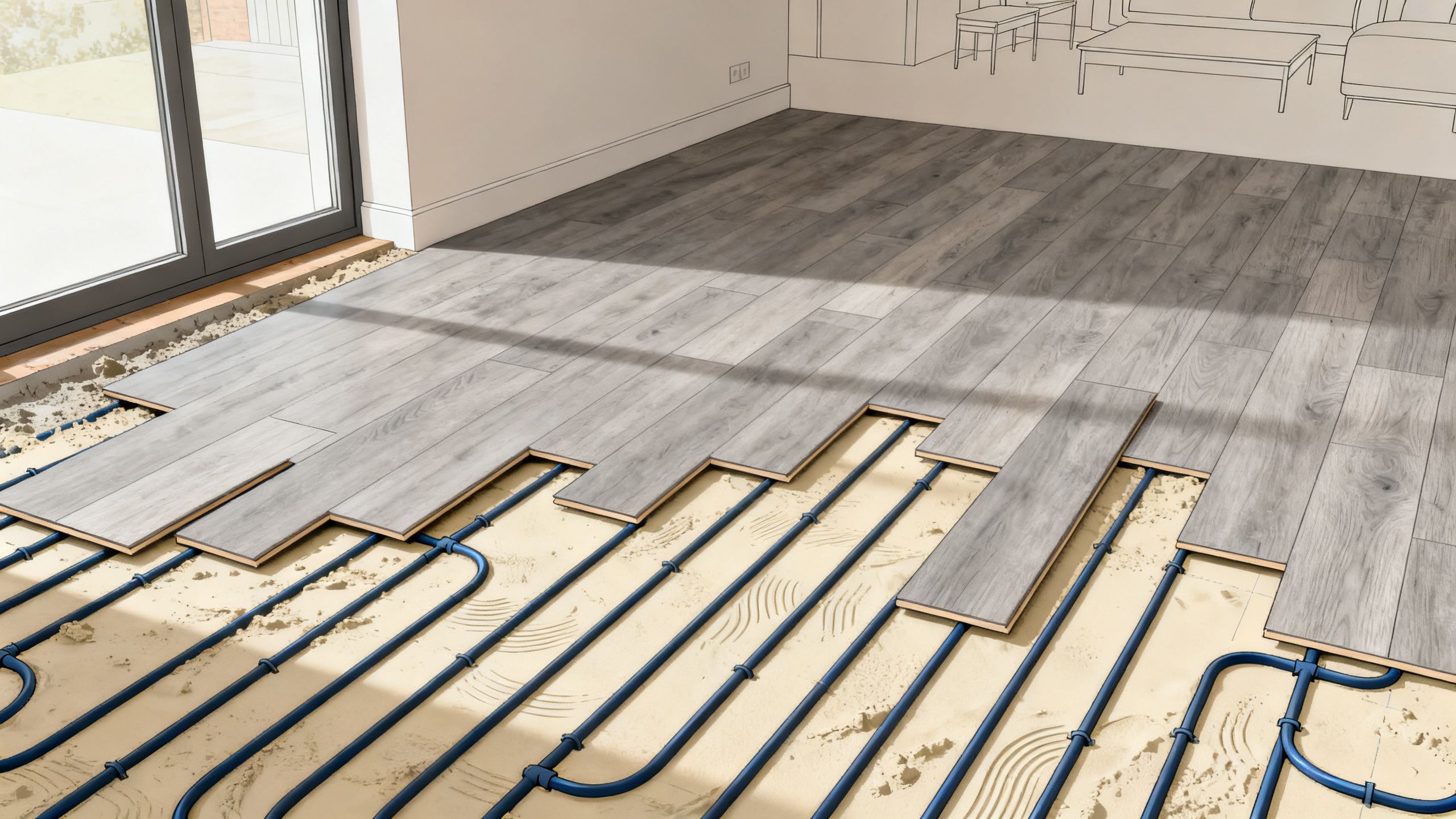
The home: Post-2000 estate homes, including properties around Lyde Green, Emersons Green, Patchway, Stoke Gifford and Filton, commonly have a concrete slab or screed on the ground floor. Some have underfloor heating (UFH); bedrooms are often carpeted upstairs.
What it demands: New screed needs enough drying time, and its moisture should be tested before flooring is installed. A slab that looks dry on top may still hold moisture. With UFH, check the flooring manufacturer’s limits for surface temperature and make sure the adhesive or underlay is suitable for the system. The Energy Saving Trust’s guidance on underfloor heating is a useful starting point, but the flooring specification still needs checking for the exact product.
What we fit most: LVT or vinyl downstairs, with carpet upstairs. These homes are usually more level than older terraces, but newness is not proof that the screed is ready. For product-specific options, see our guide to vinyl floor tiles in Bristol.
Avoid: Fitting over screed before it has reached the required moisture condition, or choosing flooring without checking UFH compatibility. Underfloor heating can affect the installation requirements, so follow the instructions for the flooring, adhesive and heating system.
Cost steer: A sound, dry and level slab can mean less preparation than an old timber floor. If the screed needs drying, testing or levelling, allow time and budget for that before the fitting date.
Flats and conversions
The home: Bristol flats range from purpose-built blocks to conversions in older houses. The floor might be concrete, timber or a mix, depending on the building and which level the flat occupies.
What it demands: Noise is a key consideration. A hard floor can transmit impact sound to the flat below, so check the lease, freeholder or managing agent’s requirements before choosing a product. Some specify carpet in habitable rooms; others allow hard flooring if it meets an acoustic specification. Underlay can help in some installations, but it must be suitable for the flooring system and any stated requirements.
What we fit most: Carpet remains a straightforward choice where sound control is a priority or the lease requires it. Where hard flooring is permitted, LVT or another approved system may suit, provided the subfloor and acoustic requirements are addressed.
Avoid: Buying hard flooring first and checking the lease afterwards. Also avoid assuming that a particular underlay automatically meets a building’s acoustic requirement—check the relevant specification and obtain approval where needed.
Cost steer: The product is only one part of the cost. Acoustic underlay, floor preparation and any required specification can affect the total. Get the building’s requirements before asking for a final quote.
The local factor that decides it
The subfloor is the first thing we assess because Bristol has a substantial stock of older terraces with suspended timber floors. Their boards can be uneven, and the floor void needs to breathe through clear airbricks. That combination affects both which flooring can go down and how much preparation is needed.
When we lift an old floor, we check the boards, joists and perimeter for movement or signs of moisture. Blocked airbricks, a raised patio, a leaking appliance or a back-door threshold can all be relevant. About one in six older floors we lift has some damp or rot; among the pre-1919 terraces we work on, the proportion is closer to one in four. Those are figures from our own jobs, not an estimate for every Bristol property.
A hard covering cannot correct a wet or unstable subfloor. If there is a moisture problem, deal with its cause and allow the structure to dry before fitting. For a suspended timber floor, this includes keeping ventilation paths clear. Our subfloor preparation guide covers the checks and prep that can make the difference between a neat finish and visible movement later.
The main floor types, and where each fits in Bristol
Carpet: A strong fit for bedrooms, stairs and landings, and a forgiving option over older boards. It also helps reduce impact noise, though flats may have specific lease requirements. We fit carpet in around four in ten of our local jobs.
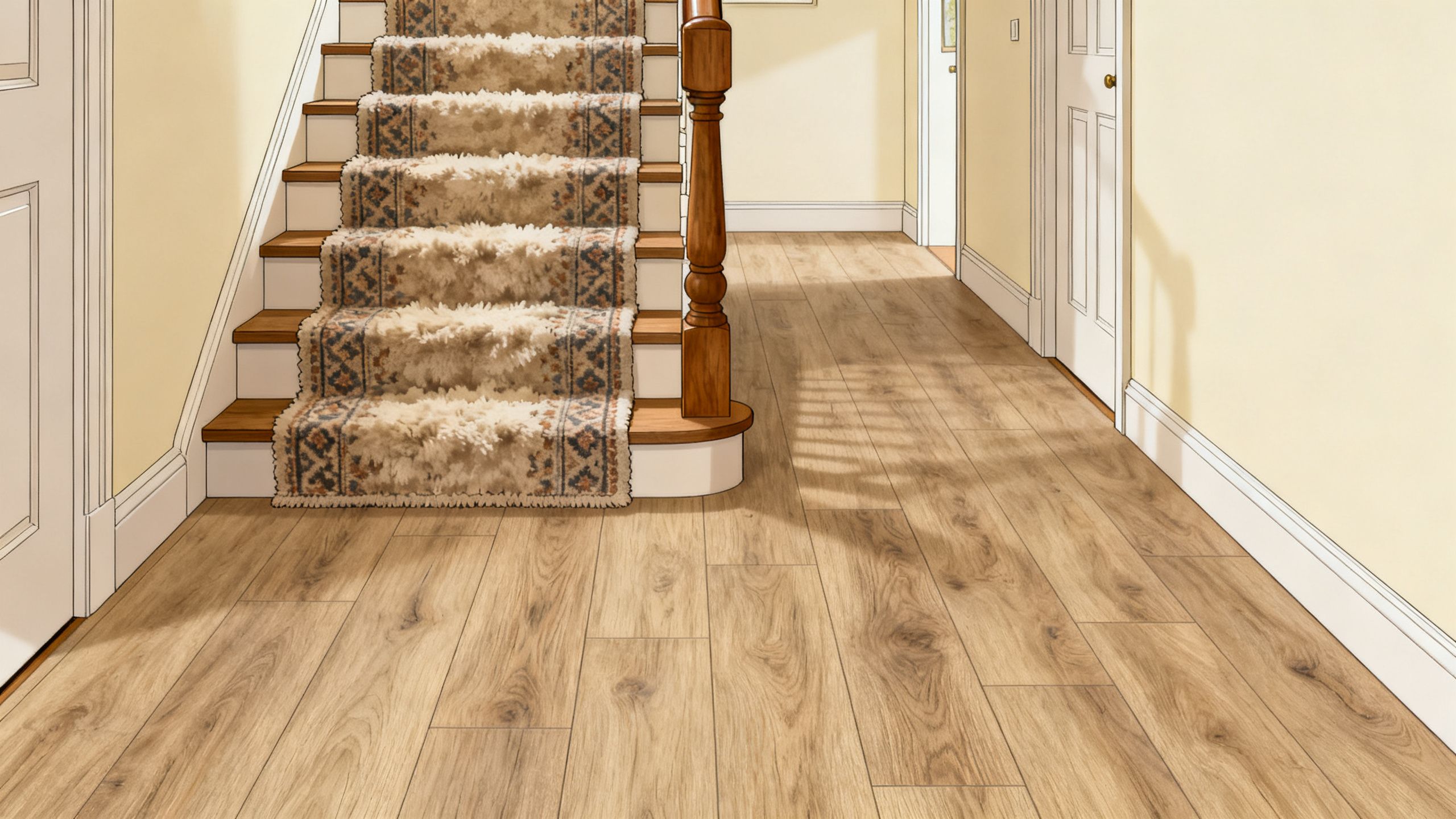
LVT: A practical hard-floor option for kitchens, hallways and many ground floors. It is commonly chosen in newer homes and can work over timber when the base is prepared flat. It is not a remedy for damp or an uneven floor. Compare the practical differences in our LVT vs laminate guide.
Vinyl: Sheet vinyl and vinyl tiles suit moisture-prone spaces such as kitchens, bathrooms and utility rooms. The base still needs suitable preparation, particularly over old boards, and the floor covering does not fix a leak or damp subfloor.
Laminate: Can work well in a dry lounge or bedroom over a suitable, level base. It is less forgiving of water around dishwashers, washing machines and bathroom doors; swollen boards are a common reason we replace it early.
Engineered wood: A possible choice where you want a timber finish, but it needs a suitable, stable subfloor and careful attention to moisture and UFH instructions. Check the product specification before choosing it for a heated floor.
Tile: A durable option for some kitchens and bathrooms, usually over a suitably stable base. Timber floors may need additional preparation to limit movement; tiles are not a simple cover-up for flexible or damaged boards.
What it costs and how to choose
There is no useful single “Bristol price” for a floor without knowing the product, room size and condition of the subfloor. As one local guide, a standard double bedroom of roughly 3.5m by 4m is typically around £450–£750 supplied and fitted for carpet, depending on the carpet and what the job needs. Our carpet fitting cost breakdown for Bristol explains what can change that figure.
For any flooring, ask whether the quote includes uplift and disposal, subfloor repairs, plywood or levelling, underlay and door trimming where needed. A survey should check the floor construction, flatness, moisture concerns, ventilation and access—not just measure the room. Hills, split levels and narrow staircases in Bristol terraces can also affect how materials are brought in and fitted.
Seamless Floors surveys homes across Bristol, Bath and surrounding areas. If you are choosing between carpet, vinyl, laminate, LVT or engineered wood, we can inspect the actual floor and provide a free survey and quote for your property.
Frequently asked questions
What is the best flooring for a Victorian terrace in Bristol?
It depends first on the floor beneath it. Carpet is forgiving upstairs and on stairs. Downstairs, carpet or LVT can work, but LVT usually needs a flat, prepared base. Check the suspended timber floor and airbricks before fitting, especially if there are signs of damp.
What is the best flooring for a Bristol new build with underfloor heating?
LVT or vinyl downstairs and carpet upstairs are common choices in our new-build work. Check that the chosen product, adhesive and any underlay are approved for the UFH system. The screed must also be dry enough before installation.
What flooring is best for a flat?
Carpet is often a practical choice where impact noise matters, and some leases require it. Hard flooring may be allowed if it meets the building’s acoustic requirements. Check the lease and get approval before ordering.
What flooring suits suspended timber floors?
Carpet can accommodate minor irregularities. LVT, vinyl, laminate, engineered wood and tile need a stable, appropriately prepared base, with the preparation depending on the product. Repair loose boards and address damp or ventilation issues before covering the floor.
What is best for damp-prone rooms?
For a kitchen, bathroom or utility room, vinyl or LVT can be a suitable surface when correctly installed. But if the subfloor is damp, fix the source first. A water-resistant floor covering does not stop moisture rising or repair a leak.
What is the most popular flooring in Bristol homes?
In our records from around 1,500 local floors, carpet is the most-fitted type overall, at roughly four in ten. The room makes a difference: bedrooms are carpet around 95% of the time, while kitchens, bathrooms and utility rooms are usually vinyl or LVT. These figures reflect our installs, not a city-wide census.
What is the cheapest flooring to fit?
The answer depends on the product, room and preparation required. A lower-cost covering can become less economical if the subfloor needs substantial work or if it fails early in a wet area. Compare the full supplied-and-fitted cost, including preparation, rather than the price per square metre alone. For local guidance, see our Bristol flooring services.